

 Phoenix 24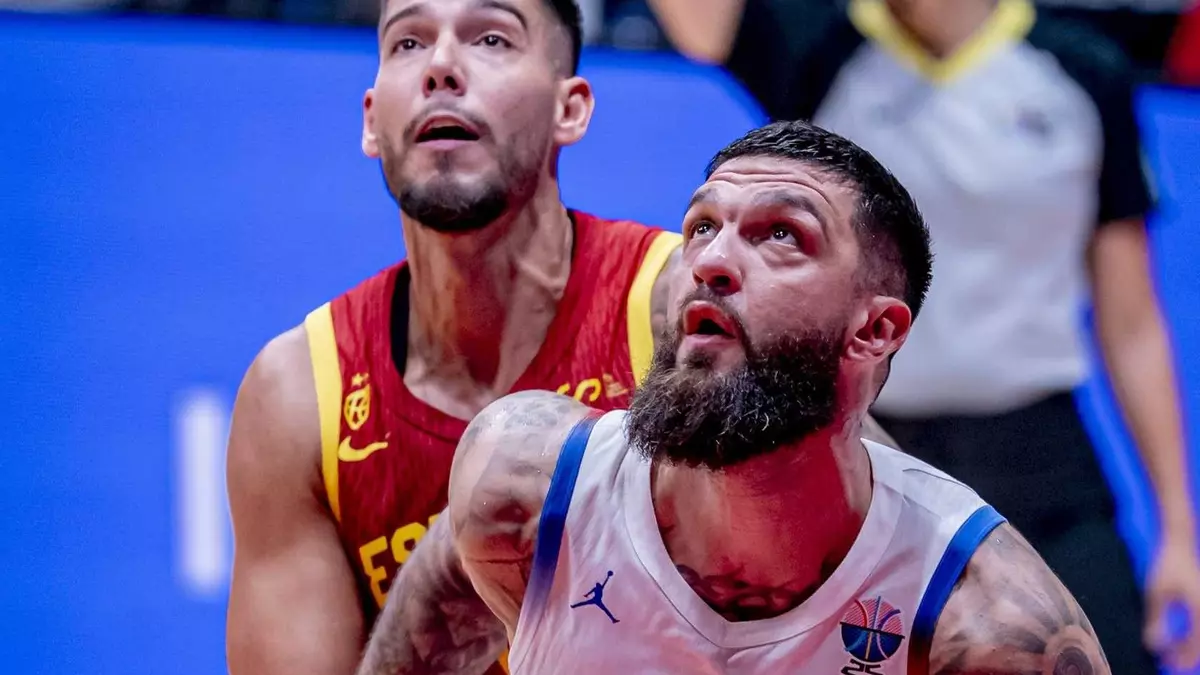
Facing a litany of sidelined stars, France enters the EuroBasket as a podium favorite—but without its backbone in the paint, the team now leans on youth, adaptability and depth to sustain its title ambitions.
La Paz, August 2025.
France’s roster for EuroBasket 2025 has arrived with promise—and a conspicuous void. Vincent Poirier, the veteran center and expected anchor of the paint, has been ruled out due to a serious knee injury, according to medical disclosures by the national federation. His absence comes amid a tragic cascade of losses in the frontcourt: Victor Wembanyama (venous thrombosis), Rudy Gobert (personal decision), Mathias Lessort (leg injury), and now Poirier. The result is a seismic reshuffle in both leadership and strategy for a team that was defense-first and dominance-at-the-rim.
In his absence, the mantle of experienced leadership falls to Guerschon Yabusele, whose 55+ caps and physical presence will be pivotal. Coach Frédéric Fauthoux has opted to lean on a bridge between generations: 20-year-old Alex Sarr, the No. 2 pick in the 2024 NBA Draft, and stalwart Mouhammadou Jaiteh, a veteran at 2.08m, now form the revised twin-tower frontcourt. Their success—or lack thereof—could determine France’s medal ceiling.
France still enters the tournament as a heavyweight: FIBA’s Power Ranking places them third behind Serbia and defending champion Germany. Their Olympic silver medal in Paris and unbeaten build-up, including victories against Spain, affirm their resilience and adaptability. However, the loss of four centers forces a profound tactical pivot—from rim protection to pace, spacing, and perimeter orientation.
Context matters. In a tournament dominated by orthodox interior warfare, France’s future now lies in the triumph of its young wings, NBA talents like Zaccharie Risacher and Theo Maledon, and creative scheming. The pressure will fall on the versatility of wait-ins and two-way guards—Isaia Cordinier, Elie Okobo, Matthew Strazel, Sylvain Francisco—each responsible for picking up slack in rebounding, screening, and defensive rotations.
Beyond the court, this collapse delivers strategic implications. France aimed to make a statement heading into the 2028 Olympics; now, its pursuit depends on internal cohesion and tactical ingenuity. A podium finish would reflect organizational depth and coaching acumen. A stumble, however, would expose France to criticism for failing to engineer long-term frontcourt development—a complaint once aimed at the overreliance on Wembanyama and Gobert.
But there is silver lining in shock readiness. The Euro rotates fast, and France’s ability to prevail without Poirier transforms them into a national experiment in adaptability. If Sarr and Jaiteh rise to the occasion, their Gaulish mix of youth and veteran grit could redefine what French basketball means post-Gobert era.
Ultimately, France’s EuroBasket challenge crystallizes a broader story: the vulnerabilities of dynastic dependence and the promise of a new generation. In Katowice, amid the Group D battle, France will test whether depth can trump disruption—and whether they can defend not just a scoreboard, but a legacy of resilience.
Esta pieza fue desarrollada por el equipo editorial de Phoenix24 con base en fuentes confiables, datos públicos y análisis riguroso, en coherencia con el contexto global vigente.
This piece was developed by the Phoenix24 editorial team using reliable sources, public data, and rigorous analysis in alignment with the current global context.