

 Phoenix 24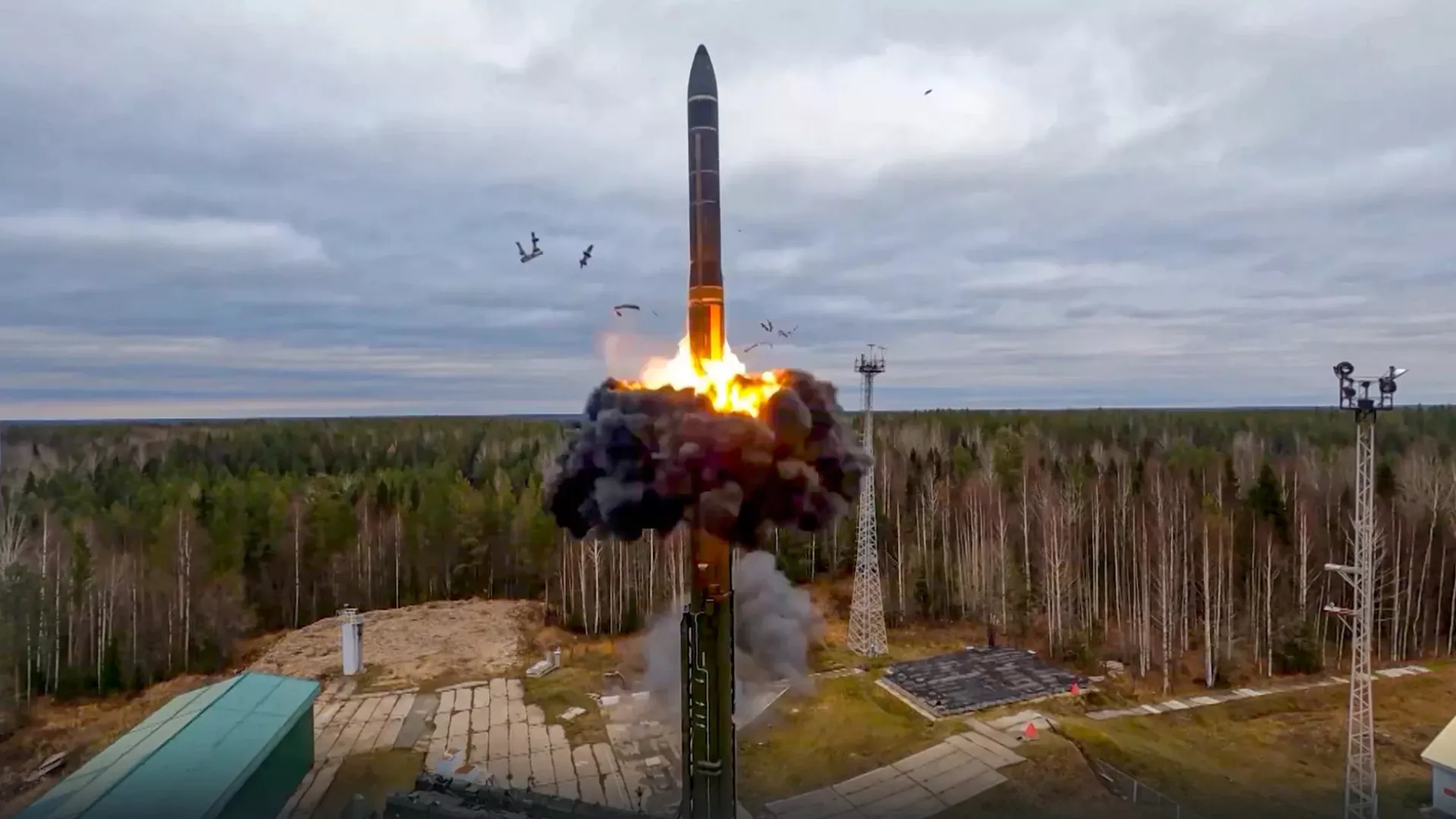
When the instruments of war become the language of diplomacy, the world listens—and trembles.
Moscow–Minsk axis, August 1, 2025
Russian President Vladimir Putin has formally announced the deployment of the Oreshnik hypersonic intermediate-range missile system in Belarus before the end of 2025. Joined by Belarusian President Alexander Lukashenko, the two leaders confirmed that sites for the missile batteries have already been selected, and technical preparations are underway. The announcement represents a significant escalation in Russia’s posture against Ukraine and the NATO alliance.
The Oreshnik missile system, first operationalized in late 2024 during a strike on a defense facility in Dnipro, is believed to reach speeds exceeding Mach 10 and can carry multiple independently targetable warheads—both conventional and nuclear. According to military analysts, its flight time to Brussels or Warsaw could be under 12 minutes, effectively neutralizing most current missile defense systems. Whether its battlefield reliability matches its strategic symbolism remains uncertain, but its psychological impact is immediate.
Since 2023, Belarus has allowed the permanent stationing of Russian tactical nuclear assets and Iskander systems, effectively dismantling its previous non-nuclear neutrality. Minsk is now a de facto extension of Russia’s strategic depth—both geographically and doctrinally. The inclusion of Oreshnik reinforces this alignment, turning Belarus into a forward-operating platform for Russian deterrence.
Western military analysts interpret the move as a deliberate provocation in response to NATO’s increasing support for Ukraine, particularly in the form of long-range missile systems and enhanced surveillance capabilities. From the Kremlin’s perspective, deploying Oreshnik in Belarus serves both as a counterweight to U.S. systems in Poland and as a coercive message to European capitals: escalation is not only possible—it is already underway.
Defense think tanks such as RUSI and CSIS warn that the weapon’s presence alters the strategic landscape of Eastern Europe. It resurrects a theater once governed by the now-defunct INF Treaty and places European deterrence under renewed stress. These developments, combined with the absence of transparency mechanisms, increase the risk of miscalculations or false-flag incidents that could spiral into direct confrontation.
Governments across the NATO perimeter have responded with alarm. Emergency consultations are underway in Brussels, and defense attachés in Warsaw, Vilnius, and Berlin are recalibrating operational scenarios. The Baltic states, already reinforcing their borders with physical and electronic barriers, now cite not just hybrid threats, but a return to hard-power encirclement as a central concern.
Lukashenko’s role in facilitating the deployment has drawn international condemnation, but inside Belarus, the narrative is tightly controlled. State media frames the announcement as a protective measure against NATO “aggression,” while joint military exercises under the Zapad 2025 banner—scheduled for September—are being used to normalize the presence of advanced Russian hardware. Over 13,000 troops are expected to participate, with a focus on rapid response and multi-domain coordination.
For Ukraine, the strategic implications are severe. The potential deployment of Oreshnik within striking distance of Kyiv and Lviv adds complexity to defensive planning. While Ukrainian officials emphasize continued resilience and coordination with Western partners, they acknowledge that Russia’s expanding arsenal—both in capacity and geography—requires a recalibration of deterrence doctrine.
Beyond the immediate military calculus, the announcement represents a broader shift: Russia’s transformation from a reactive actor to a proactive architect of confrontation. By introducing Oreshnik into Belarusian territory, Putin is not merely reacting to NATO’s encirclement rhetoric—he is redefining it, operationalizing it, and using it as pretext for embedding long-range threats at Europe’s doorstep.
Critics question the true readiness and reliability of Oreshnik, suggesting it may be more theater than transformation. Nonetheless, as one senior European defense official noted, “Strategic posture is not just about what you can fire—it’s about what your adversaries believe you will.”
As the region braces for heightened tension, the world is reminded that missiles do not merely travel in straight lines. They arc through politics, perception, and history—and in this case, through the fragile stability of a continent still recovering from the last cold war.
Elaborado por Phoenix24 con información internacional verificada y análisis independiente, este reportaje refleja nuestro compromiso con el periodismo de calidad y la responsabilidad geopolítica.
Produced by the Phoenix24 editorial team with verified international information and independent analysis, this report reflects our commitment to quality journalism and geopolitical responsibility.