

 Phoenix 24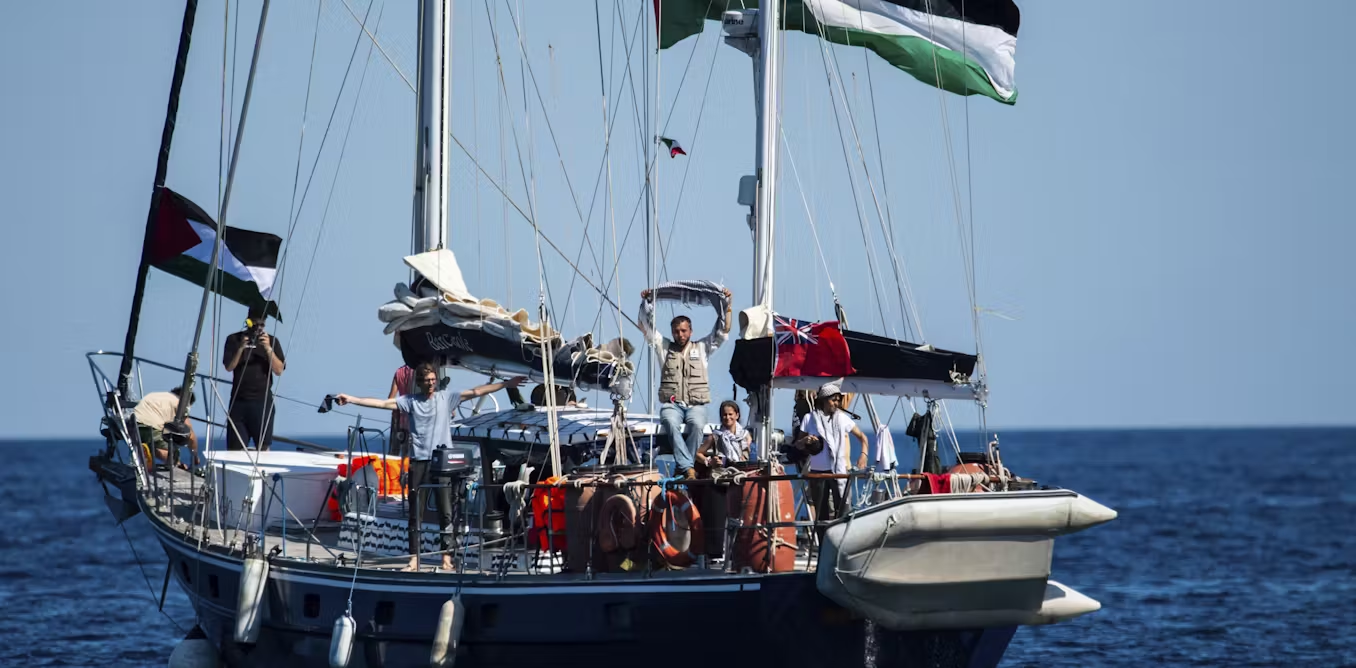
A bold act that reignites scrutiny over Israel’s maritime blockade and raises urgent questions about legality, humanitarian access, and global diplomacy.
Tel Aviv / Eastern Mediterranean, July 2025
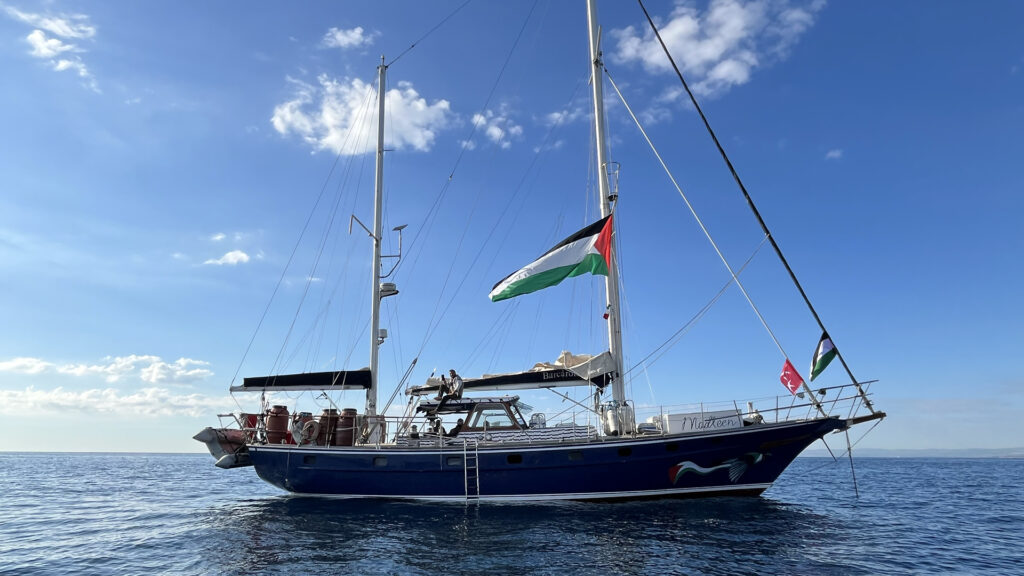
Over the weekend, Israeli naval forces intercepted the Handala, a vessel operated by the Freedom Flotilla Coalition carrying humanitarian aid toward Gaza. The operation took place in international waters—approximately 40 nautical miles offshore—resulting in the detention of 21 international activists and journalists, as well as the seizure of cargo that included baby formula, food staples, and emergency medical supplies. According to the coalition, the boarding was executed shortly before midnight under aggressive conditions. Communications and live feeds from the vessel were abruptly terminated, and the ship was redirected to the Israeli port of Ashdod.
The Handala is the second flotilla ship intercepted in recent months. In June, the Madleen, carrying high-profile activists including climate campaigner Greta Thunberg, was also stopped en route to Gaza. Human rights organizations, including the Israeli NGO Adalah, argue that the interception violates international maritime law, especially since the ship was operating outside Israel’s territorial waters and heading toward a coastal zone internationally recognized as Palestinian.
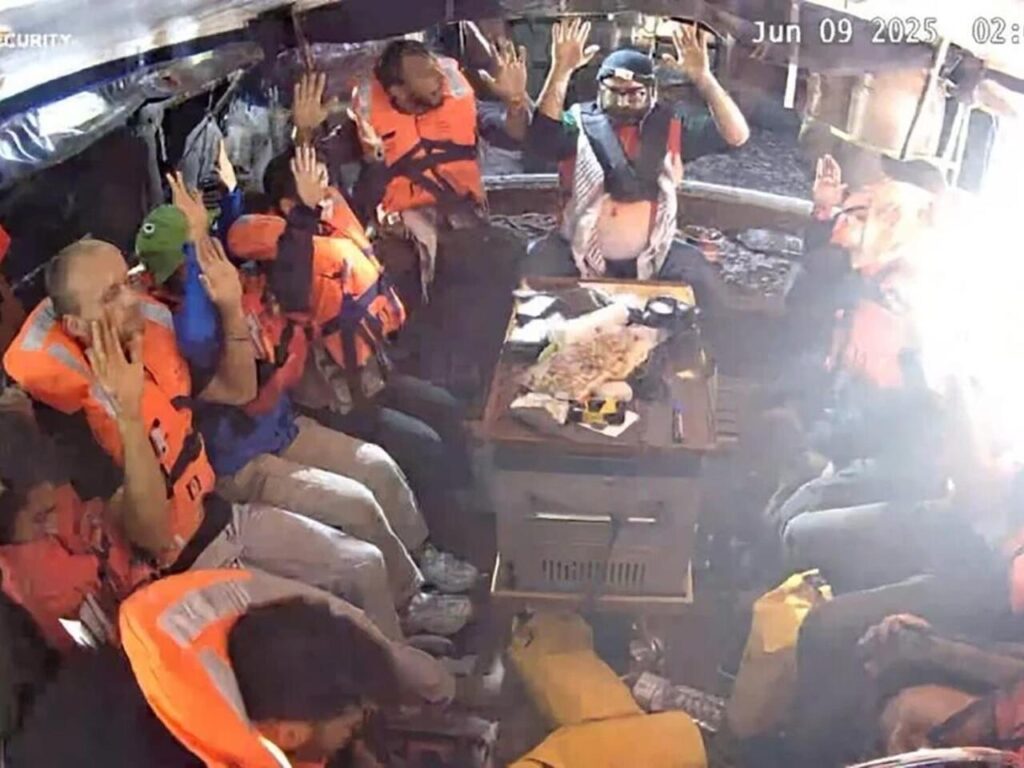
Activist representatives reported that onboard footage captured the moment of interception, including appeals to the international community, before devices were confiscated. Among those detained are two Australian citizens, a French member of the European Parliament, and accredited journalists from several countries. Australia’s foreign affairs ministry has confirmed consular assistance is being extended to its detained nationals. European lawmakers have already called for an inquiry into the incident and are expected to bring it before the UN Human Rights Council.
Israel’s official position maintains that the naval blockade is a lawful measure grounded in national security concerns. Authorities claim that unauthorized maritime missions jeopardize coordination mechanisms with the UN and Egypt, which manage humanitarian deliveries to Gaza. They assert that all passengers were treated according to protocol and that the vessel’s course would have constituted an illegal breach of controlled waters.
This latest interception comes amid intensifying scrutiny of Israel’s management of the Gaza humanitarian crisis. Aid agencies have repeatedly warned of a man-made famine scenario, exacerbated by the restriction of thousands of UN-coordinated relief trucks. Critics point out that while Israel permits limited aid through designated checkpoints, its denial of alternative channels—particularly maritime and independent civilian efforts—has deepened the crisis on the ground.
From a geopolitical perspective, the seizure of the Handala heightens tensions between proponents of Israel’s maritime security doctrine and international advocates of unimpeded humanitarian access. For Israeli officials, flotilla missions are seen as political stunts cloaked in humanitarian rhetoric, undermining state control and potentially opening corridors for smuggling. For activists and legal observers, the recurring interdictions represent an overreach of sovereign force, raising ethical and legal alarms about the proportionality of military actions against unarmed civilians.
Three scenarios now loom on the horizon. In a continuity scenario, Israel reinforces its blockade policies and deters future flotilla initiatives, but at the cost of rising international condemnation and legal disputes in global tribunals. In a disruption scenario, mounting diplomatic pressure could lead to the establishment of internationally monitored humanitarian corridors by sea, compelling Israel to modify its enforcement approach without fully lifting the blockade. In a bifurcation scenario, flotilla organizers may abandon maritime missions altogether in favor of overland or aerial delivery tactics, transforming humanitarian aid into a new front of civil disobedience beyond Israeli naval reach.
The Handala may have been stopped at sea, but the larger struggle it represents—between state sovereignty, humanitarian urgency, and global norms—continues to ripple across the diplomatic waters of the Eastern Mediterranean. It is not just a vessel that was seized; it is a symbol of contested legitimacy in one of the world’s most complex geopolitical conflicts.
Based on open sources, official reports, and verifiable contrasts, Phoenix24 presents this analysis as part of its professional and autonomous journalistic work.
Con base en fuentes abiertas, reportes oficiales y contrastes verificables, Phoenix24 presenta este análisis como parte de su ejercicio informativo profesional y autónomo.