

 Phoenix 24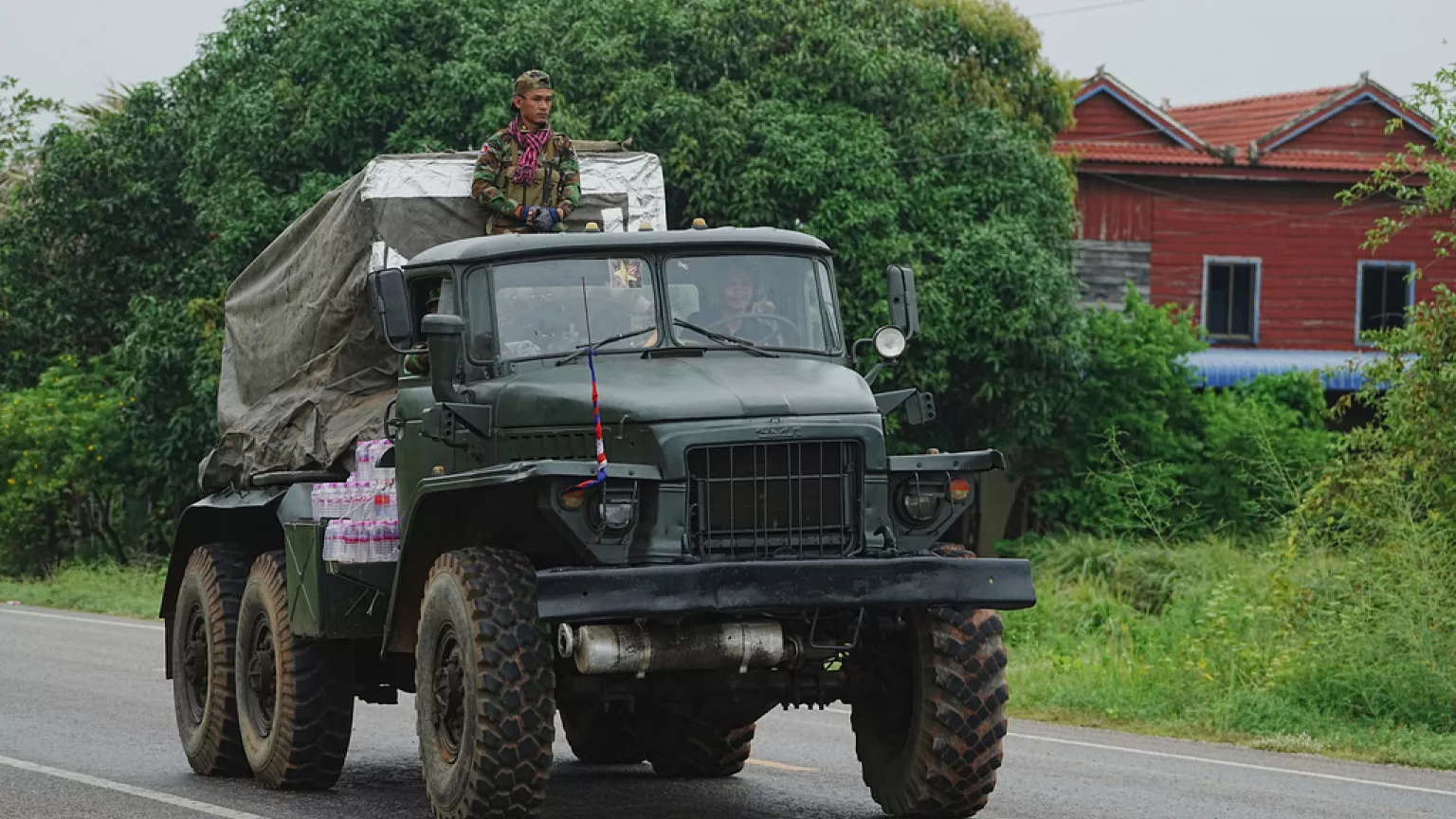
A fragile peace initiative emerges under external pressure as regional fault lines expose the fragility of postcolonial narratives and immediate human suffering.
Bangkok / Phnom Penh, July 2025
The borderlands between Thailand and Cambodia, scarred by decades of unresolved territorial disputes, have once again erupted into conflict. After four days of artillery shelling, sniper fire, and civilian panic, both governments announced their willingness to engage in a US-backed ceasefire process mediated by Malaysia. The decision, however, was less a product of regional diplomacy and more the result of coercive economic leverage. Washington issued a direct warning: unless the violence ceased immediately, new tariffs of up to 36 percent on bilateral trade would be enacted. Faced with that pressure, Cambodia confirmed its “unconditional commitment” to the ceasefire while Thailand responded with guarded optimism, demanding verifiable restraint from Phnom Penh before standing down its forces.
The immediate cause of the violence was a familiar one. The disputed area near the ancient Preah Vihear temple, a flashpoint of nationalist fervor on both sides, once again became a battlefield. Artillery exchanges displaced more than 168,000 civilians, with over 33 reported dead, including both soldiers and non-combatants. Villages in Cambodia’s Oddar Meanchey province were evacuated as entire populations fled to makeshift shelters. On the Thai side, in Sisaket and Surin provinces, homes and schools were destroyed and emergency medical facilities overwhelmed. Roads leading away from the conflict zone were choked with families, livestock, and personal belongings hastily bundled into cars or carts—signs not only of a humanitarian emergency, but of just how fragile the border’s so-called normalization had been.

Despite mutual blame and political posturing, both governments have signaled a willingness to de-escalate under ASEAN mediation, with Malaysia offering to host the first round of negotiations. The move comes amid mounting criticism from human rights observers and foreign ministries, many of whom view the clashes as a failure of ASEAN’s non-interference doctrine. For regional analysts, the timing is no coincidence. Thailand, still navigating internal tensions after last year’s disputed parliamentary elections, may be using external conflict to project unity, while Cambodia’s leadership faces growing economic discontent that it hopes to redirect toward nationalist rallying cries.
In this volatile environment, external actors have seized a greater role. The United States, with its trade ultimatum, has reasserted its influence in Southeast Asia at a time when China’s Belt and Road initiatives are undergoing strategic recalibration. Beijing, though officially neutral, issued statements urging “mutual restraint” while quietly reaffirming its infrastructure investments in both countries. For both Thailand and Cambodia, the current ceasefire effort is less about bilateral reconciliation than it is about navigating this multipolar pressure cooker—where alliances are transactional and sovereignty often collides with strategic dependence.
Behind the scenes, think tanks such as the Center for Strategic and International Studies (CSIS) and Stratfor describe the ceasefire push as a textbook case of “conditional stabilization.” They argue that the US’s ability to rapidly link economic tools with security outcomes signals a shift in how Washington manages regional conflicts: not with troops or treaties, but with tariffs and targeted diplomacy. Meanwhile, observers from the Lowy Institute warn that the current crisis could set a precedent for how ASEAN member states resolve disputes—through external arbitration rather than internal consensus.
While diplomats prepare talking points and ceasefire monitors are dispatched, three strategic scenarios loom. In a scenario of continuity, both sides comply with the ceasefire under ASEAN supervision, civilian evacuations slow, and border forces begin phased withdrawals—offering a fragile but tangible reduction in hostilities. In a disruption scenario, deep mistrust or rogue provocations reignite violence, drawing in paramilitary actors and leading to broader regional instability. In a bifurcation scenario, diplomatic mechanisms collapse altogether, forcing Cambodia and Thailand to deepen alignments with opposing great powers—China and the United States, respectively—potentially fracturing ASEAN’s already strained cohesion.
This conflict has once again exposed the raw nerves of nationalism, historical grievance, and geopolitical competition that run beneath Southeast Asia’s modern facade. The images of temples in flames, families fleeing through mine-laced forests, and leaders trading accusations before cameras remind the world that borders drawn on colonial maps still bleed. And in a region where peace is too often a performance, the true test begins not when the guns fall silent, but when the negotiations must turn symbolism into structure.
Based on open sources, official reports, and verifiable contrasts, Phoenix24 presents this analysis as part of its professional and autonomous journalistic work.
Con base en fuentes abiertas, reportes oficiales y contrastes verificables, Phoenix24 presenta este análisis como parte de su ejercicio informativo profesional y autónomo.