

 Phoenix 24
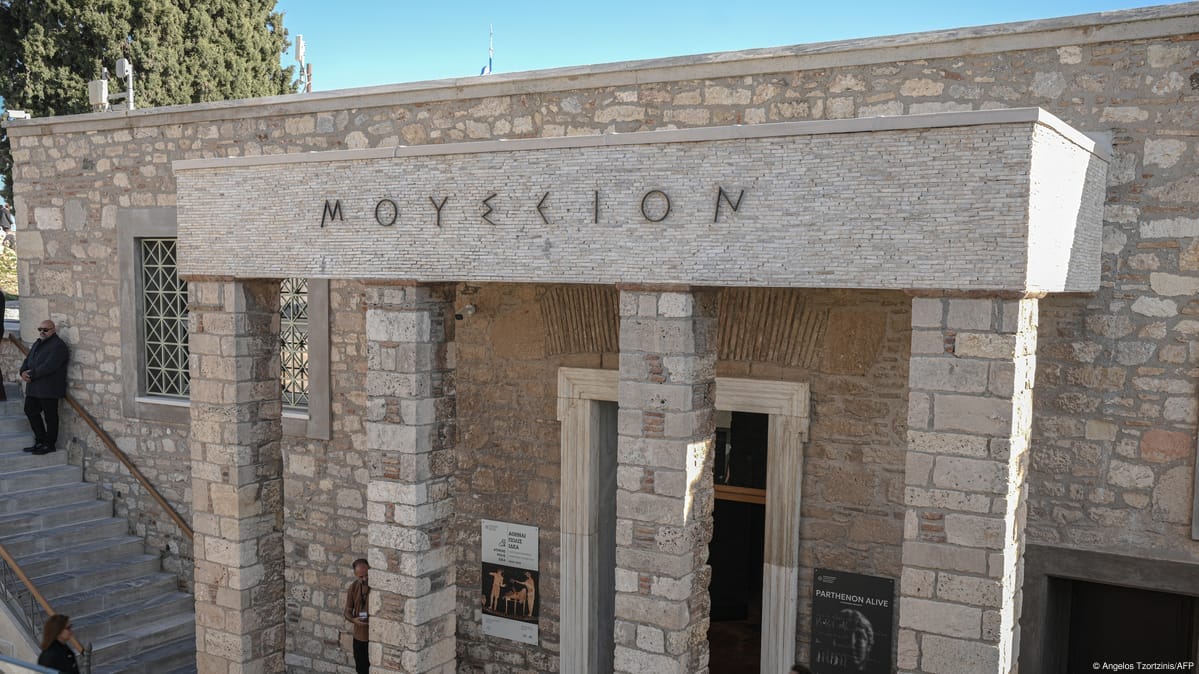
Ancient heritage meets modern stories of migration and identity.
ATHENS, GREECE
Greece has reopened the Old Acropolis Museum after nearly two decades, transforming one of the country’s most historically significant cultural institutions into a space where ancient archaeology meets contemporary art. The reopening on November 23 introduces an exhibition by Iraqi-American artist Michael Rakowitz, marking the first contemporary art presentation on Athens’ Acropolis Hill.
Built in 1874 and designed by architect Panagis Kalkos, the museum was the first institution established by the modern Greek state specifically to house archaeological discoveries from the Acropolis. It closed in 2007 as preparations began to transfer its collections to the new Acropolis Museum, which opened below the ancient citadel in 2009.
Following extensive restoration, the historic building has regained its original cultural purpose with a substantially expanded mission. Rather than functioning exclusively as a conventional archaeological museum, it now combines historical collections, conservation facilities, digital interpretation and exhibitions examining the relationship between ancient civilizations and contemporary society.
The inaugural contemporary exhibition, What You Leave Behind Is Not What Is Engraved, forms the final chapter of Rakowitz’s trilogy developed with the Greek cultural organization NEON and the Ministry of Culture. Curated by NEON director Elina Kountouri, the installation explores migration, displacement and the ways communities preserve their identities after leaving their homelands.
At its center stands a large kiln-inspired structure constructed with approximately 11,000 bricks. Some incorporate markings associated with communities displaced during the population exchanges between Greece and Turkey in the early twentieth century, while others reflect the memories of contemporary refugees and migrants who participated in workshops with the artist.
The material carries particular historical significance. For people forced to abandon their homes, a brick can become both a remnant of what was lost and a physical connection to a place that may no longer exist in its original form.
The museum also presents Athens: City, Idea, an archaeological exhibition featuring more than 750 objects, many displayed publicly for the first time. Another installation, Parthenon Alive, employs artificial intelligence, three-dimensional reconstructions and immersive technologies to explore the architectural and cultural history of the ancient site.
Greek Culture Minister Lina Mendoni has described the reopening as part of a broader effort to connect archaeological conservation with contemporary cultural participation. Prime Minister Kyriakos Mitsotakis attended the inauguration and renewed Greece’s longstanding demand for the return of the Parthenon Sculptures held by the British Museum.
The project introduces a potentially significant shift in how major historical monuments communicate their relevance. Rather than treating the Acropolis exclusively as evidence of a distant civilization, the museum places ancient political ideals, human mobility and cultural memory in conversation with experiences that remain familiar today.
Rakowitz’s exhibition is scheduled to remain on display through 2028, extending that dialogue beyond the reopening celebrations.
The renewed museum ultimately presents a question that archaeology alone cannot answer: how should societies preserve the material traces of their past while acknowledging the people, migrations and conflicts that continue to reshape their cultural identities?
Behind Every Fact, a Deeper Story.