

 Phoenix 24
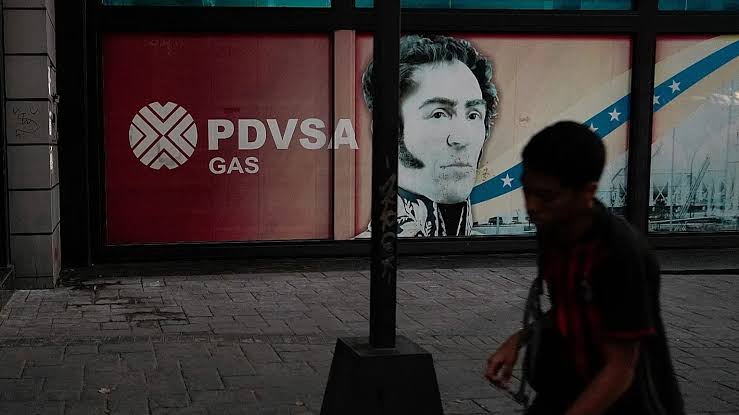
An unprecedented financial disclosure exposes the cost of prolonged economic collapse.
CARACAS, VENEZUELA — November 2026
Venezuela has officially acknowledged public-sector liabilities totaling $237.54 billion, equivalent to approximately 242% of its gross domestic product, in a disclosure that reveals the extraordinary scale of the country’s financial crisis. The figures, published on November 24 by the Ministry of Economy and Finance, represent one of the most comprehensive assessments of Venezuelan public finances released in years. The announcement also marks a significant step toward restructuring obligations that have accumulated through prolonged economic contraction, sovereign default and international financial isolation.
The debt figures reflect Venezuela’s financial position at the end of 2025, rather than its outstanding obligations as of November 2026. They appear in Venezuela Renace, a nearly 200-page macroeconomic framework outlining the government’s proposed strategy for stabilization, economic recovery and renewed access to international financing. Under the administration of acting President Delcy Rodríguez, the document acknowledges that the existing debt burden cannot be sustained without substantial changes to the country’s economic and financial arrangements.
The composition of the debt reveals a problem considerably more complex than conventional sovereign bond obligations. Approximately $116.55 billion consists of commercial liabilities, including $110.13 billion in Eurobonds and $6.42 billion in loans and credit facilities. Another $67.28 billion corresponds to nonfinancial obligations concentrated within the state-owned petroleum company PDVSA, including commitments to suppliers, joint ventures, holders of promissory notes and other counterparties.
Outstanding arbitration-related claims account for approximately $26.29 billion, while bilateral government obligations total $23.26 billion. China represents the largest identified bilateral creditor, with $16.87 billion, followed by Russia with $5.08 billion. Multilateral obligations amount to a further $4.16 billion, demonstrating the breadth of institutions and creditors involved in any potential restructuring.
One particularly important finding concerns the accumulation of unpaid interest. Of the $110.13 billion associated with Eurobonds, approximately $45.94 billion represents overdue interest rather than the original principal. The distinction illustrates how prolonged default can increase the financial burden even when a government has largely lost access to new international borrowing.
Venezuela has remained in default on much of its international debt since 2017. During the intervening years, declining petroleum production, severe macroeconomic imbalances, restrictions on financial transactions and limited access to international markets complicated the government’s capacity to service existing obligations. The new report identifies these factors as contributing to the deterioration, although determining their relative importance requires analysis extending beyond the government’s own assessment.
The headline figure also requires careful interpretation. Not every obligation included in the $237.54 billion total is owed to an external creditor, and some commitments represent transactions between entities within Venezuela’s public sector. The government has also clarified that listing certain disputed claims does not necessarily constitute legal recognition of their validity or amount. Consequently, the total provides a broad picture of identified liabilities but does not establish precisely how much must ultimately be paid under a negotiated settlement.
These distinctions will become essential as Venezuela approaches international creditors. A comprehensive restructuring could involve sovereign bonds, PDVSA obligations, bilateral loans and arbitration claims governed by different contractual arrangements and legal jurisdictions. Reconciling those obligations into a sustainable repayment framework will require negotiations over maturities, interest rates, potential reductions in principal and the treatment of competing creditor interests.
The restructuring agenda has acquired new geopolitical importance following the January 2026 capture of former President Nicolás Maduro by United States forces. The subsequent administration under Rodríguez has pursued closer economic engagement with Washington while seeking to restore relations with international financial institutions. Venezuela’s renewed participation in the International Monetary Fund and World Bank creates opportunities for technical cooperation and financial dialogue, although neither institution has committed to financing the government’s proposed recovery strategy.
The International Monetary Fund has acknowledged receipt of the new financial information but indicated that a detailed assessment remains necessary. Establishing fiscal and debt sustainability will require credible projections concerning government revenue, economic growth, financing requirements and the capacity to meet future obligations. The publication of a debt inventory represents an important beginning, but it is not equivalent to securing a restructuring agreement.
Petroleum remains central to the government’s proposed recovery. The framework projects that oil production could increase by an average of 9.1% annually, reaching approximately 2.9 million barrels per day by 2036. Achieving that objective would require extensive investment in infrastructure, drilling capacity, technical services and operational modernization after years of declining production.
The government estimates that approximately $160 billion in petroleum-sector investment will be necessary through 2036. Of that amount, $85 billion would come from operating partners and $75 billion from PDVSA. These figures constitute financing assumptions rather than investment commitments already secured, making their realization dependent on regulatory conditions, investor confidence, operational stability and the broader geopolitical environment.
For 2026, Venezuela projects approximately $30.1 billion in petroleum export revenue, while net public hydrocarbon revenue, including PDVSA’s fiscal position, is estimated at $12.8 billion. The distinction is significant because export receipts cannot be treated as resources freely available for debt servicing. Production expenses, investment requirements and other financial commitments reduce the amount that can ultimately support public finances.
The broader macroeconomic projections are equally ambitious. Caracas expects real economic growth of approximately 5% in 2026 and forecasts that nominal GDP measured in US dollars will rise from $98.1 billion in 2025 to $200.9 billion by 2031. Such an increase would reflect assumptions concerning economic expansion and currency valuation, rather than a guaranteed doubling of real economic output.
The government also anticipates continued primary fiscal deficits through 2030 before reaching balance in 2031. These projections illustrate the difficulty of simultaneously expanding public investment, rebuilding economic capacity and restoring the ability to service debt. Achieving all three objectives would require unusually disciplined fiscal management and sustained improvements in the country’s productive performance.
For Venezuelan households, the implications extend well beyond international bond markets. A successful restructuring could eventually improve access to financing and create conditions for stronger investment, employment and public services. Conversely, a poorly designed adjustment could place additional pressure on social spending and household purchasing power in an economy already affected by prolonged inflation and declining living standards.
Economic recovery cannot therefore be measured exclusively through petroleum output or the restoration of relationships with international lenders. Its durability will depend on whether increased revenue supports diversified production, reliable infrastructure, stronger institutions and improvements in living conditions. Without these changes, higher export earnings may provide temporary financial relief without resolving the structural vulnerabilities that contributed to the crisis.
The publication of Venezuela’s debt figures introduces greater transparency into a financial system whose obligations have long been difficult to assess. It also exposes the distance between acknowledging a problem and establishing a credible mechanism for resolving it. Creditors will require reliable financial information and enforceable commitments, while Venezuelan institutions must demonstrate that economic stabilization can coexist with the recovery of public services and productive capacity.
Venezuela’s $237.54 billion debt burden is consequently more than a balance-sheet challenge. It reflects years of accumulated institutional, financial and economic decisions whose consequences will shape the country’s development for generations. The ultimate measure of restructuring will not simply be how much debt creditors agree to renegotiate, but whether the process creates the conditions for a sustainable recovery that reaches the Venezuelan population.
Beyond the Numbers, the Consequences.