

 Phoenix 24
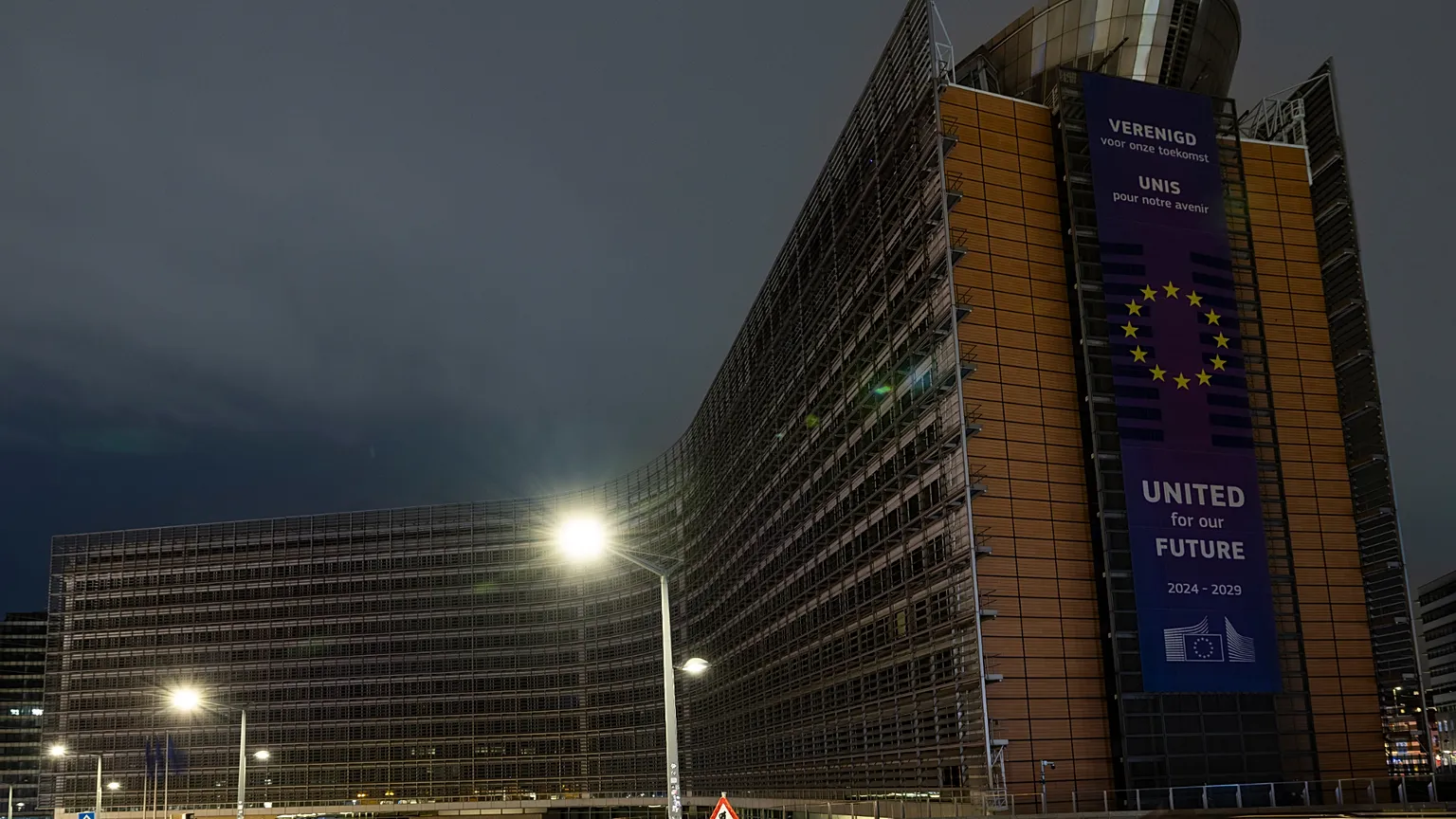
An AI-assisted intrusion tests Europe’s digital defenses.
BRUSSELS
The European Commission is investigating a sophisticated cyberattack that has disrupted its digital infrastructure for more than a month, with suspicions increasingly pointing toward hackers associated with China. The intrusion, first detected on October 22, has affected internal applications and compromised personal information belonging to users of the EU Academy educational platform. Although European officials have confirmed the security breach and the use of artificial intelligence-assisted techniques, they have not formally attributed responsibility to any country or hacking organization.
According to an investigation published by Euronews on November 23, two sources familiar with the incident indicated that cybersecurity specialists suspect a network of threat actors connected to Chinese interests. The designation Panda has reportedly circulated internally as a reference to the potential perpetrators, reflecting terminology commonly used in cybersecurity intelligence to classify suspected state-linked hacking groups. However, the available evidence remains preliminary, and the Commission has explicitly declined to identify those responsible while its investigation continues.
The most significant confirmed consequence involves EU Academy, an online learning platform offering training and educational resources related to European Union policies. Commission spokesperson Thomas Regnier confirmed that attackers accessed personal information, including names and email addresses belonging to platform users. The institution has not established how many individuals were affected, and the complete extent of the compromised information remains under examination.
As a precautionary measure, the Commission suspended public access to EU Academy and introduced additional security controls intended to contain the intrusion. Users have been warned that their information could be exploited in subsequent phishing attempts, including deceptive emails designed to obtain passwords or other sensitive details. The incident illustrates how seemingly limited personal information can become useful to attackers when combined with impersonation techniques and knowledge of an institution’s legitimate activities.
Several internal Commission applications were also temporarily disconnected during the investigation, disrupting administrative functions and requiring additional technical assessments. While most services have reportedly been restored, some remain unavailable. Cybersecurity officials have not confirmed theft of data affecting Commission personnel through the wider intrusion, a distinction that prevents the confirmed EU Academy exposure from being interpreted as evidence of a comprehensive compromise of institutional records.
Artificial intelligence represents one of the most consequential dimensions of the investigation. European authorities confirmed that the campaign involved an AI-assisted tool capable of supporting the identification and exploitation of cybersecurity vulnerabilities. According to Euronews, investigators suspect the use of ARTEX, a cybersecurity application developed in China that can automate aspects of vulnerability discovery. The Commission has not publicly established that a particular tool or its country of development identifies the perpetrators.
The distinction between technological origin and criminal responsibility is essential. Software developed in one country can be used by individuals or organizations operating elsewhere, and technical similarities between cyberattacks do not independently demonstrate coordination by a national government. China has repeatedly denied supporting cyber operations against foreign governments and international institutions, while European investigators continue examining evidence that could clarify the operation’s origin.
The Commission’s cybersecurity concerns extend beyond this particular incident. Earlier in 2026, its digital infrastructure experienced separate attacks affecting mobile systems and cloud services associated with European institutional websites. Although intelligence assessments have reportedly examined possible connections to Chinese cyber threat networks, those earlier incidents were not formally attributed to specific perpetrators. Their occurrence nevertheless illustrates the persistent operational challenges facing institutions that manage extensive digital services and sensitive administrative information.
The current attack has also generated criticism within the Commission itself. Staff representatives have questioned whether employees received sufficient information about the security incident, particularly after some learned of the breach through media reporting. The disagreement exposes a difficult aspect of cybersecurity governance: communicating transparently with employees and affected users without disclosing operational information that could help attackers evade containment measures.
Commission officials have defended their communication strategy, arguing that premature public disclosure can undermine ongoing defensive operations. Nevertheless, effective incident management requires distinguishing information that could compromise technical investigations from information individuals need to protect themselves. The responsibility to maintain operational security must coexist with institutional obligations concerning data protection, employee awareness and appropriate notification of affected users.
The European Data Protection Supervisor has been informed of the incident, reflecting the regulatory obligations associated with the processing of personal information by European institutions. The investigation also involves broader cybersecurity responsibilities connected to CERT-EU, the body supporting digital security across the Union’s institutions and agencies. These mechanisms provide a framework for technical coordination, but their effectiveness ultimately depends on the capacity to identify vulnerabilities, restore services and prevent unauthorized access from recurring.
Beyond the immediate security breach, the incident raises questions about Europe’s ability to protect increasingly interconnected public institutions. Digital administration depends on platforms supporting education, communication, personnel management and the exchange of information across organizational boundaries. A vulnerability affecting one part of this environment can generate consequences extending into other services, particularly when systems share authentication mechanisms, infrastructure or operational dependencies.
The integration of artificial intelligence into offensive cybersecurity operations adds another layer of complexity. Automated tools can accelerate vulnerability discovery and allow attackers to examine potential weaknesses at a speed difficult to reproduce through manual investigation alone. Those same capabilities can strengthen defensive security assessments when deployed under appropriate authorization and oversight. The central challenge is therefore not artificial intelligence itself, but the governance of technologies whose capabilities can serve both legitimate protection and malicious intrusion.
For the European Union, the current investigation represents a test of institutional resilience during a period of heightened geopolitical competition and technological uncertainty. Establishing the identity of the attackers remains important, but attribution alone will not resolve weaknesses in infrastructure, access controls or incident communication. Effective cybersecurity requires continuous evaluation, independent technical scrutiny and clear responsibility for protecting the information entrusted to public institutions.
As investigators continue examining the intrusion, the confirmed exposure of EU Academy user data demonstrates that the consequences are no longer merely hypothetical. The incident has already affected individuals, interrupted services and challenged confidence in the Commission’s digital defenses. Its broader significance lies in whether European institutions can convert the findings into stronger safeguards while maintaining public transparency and avoiding premature geopolitical conclusions.
When Evidence Speaks, Narratives Change.