

 Phoenix 24
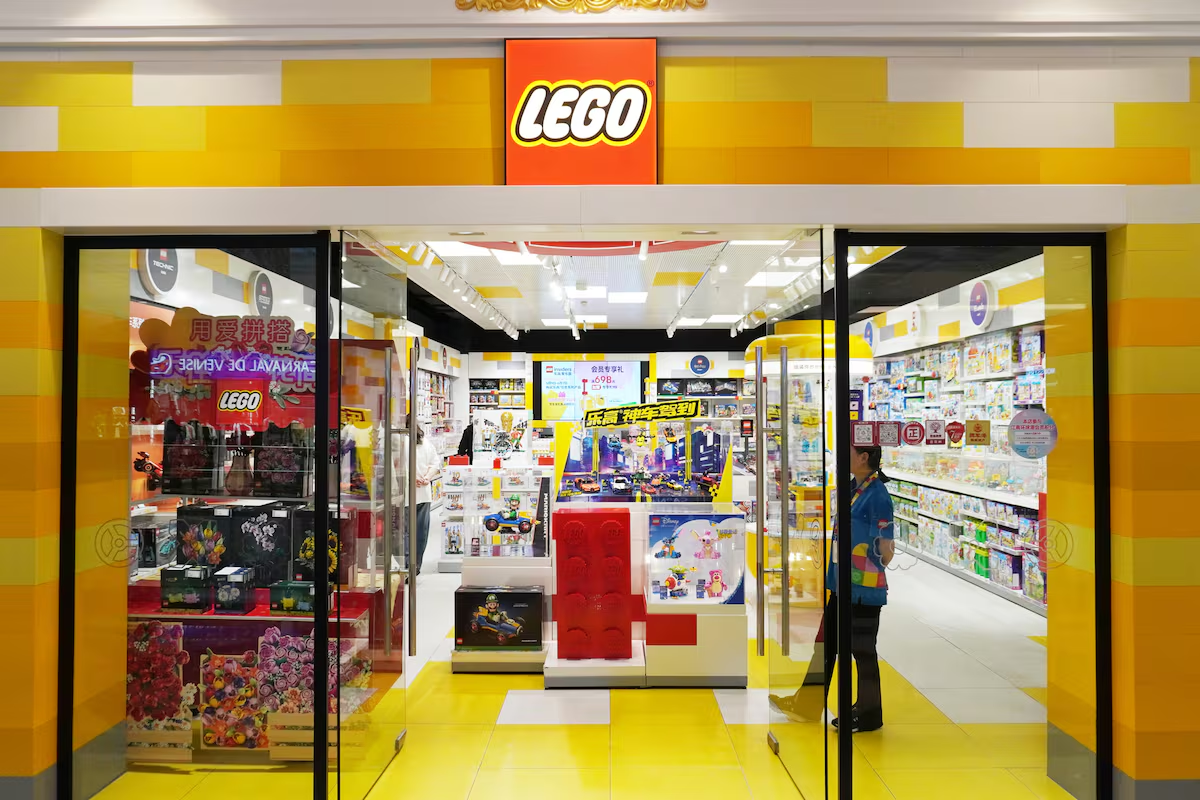
Industrial automation and sustainable production reshape European manufacturing.
ESTARREJA, PORTUGAL
Danish toy manufacturer LEGO has announced plans to invest approximately €1 billion in a new manufacturing facility in Estarreja, Portugal, creating more than 1,000 jobs and reinforcing its European production network. Unveiled on November 23, 2026, the project represents one of the company’s most significant industrial expansion commitments and reflects growing demand for LEGO products across Europe, the Middle East and Africa. The investment will be distributed over several years, with construction expected to begin during the first half of 2027 and commercial production scheduled for 2030.
The new facility will occupy approximately 115,000 square meters on a 60-hectare industrial site, combining manufacturing, processing, packaging and warehousing operations. Once completed, it will become LEGO’s eighth factory worldwide and its fourth in Europe, joining existing production facilities in Denmark, Hungary and the Czech Republic. The company intends to design the complex with sufficient flexibility to accommodate future expansion as international demand evolves.
LEGO chief executive Niels B. Christiansen described the investment as part of a long-term strategy to strengthen the company’s international manufacturing capabilities. Rather than concentrating production in a limited number of locations, the Danish group has increasingly sought to establish factories closer to major consumer markets. This approach can improve delivery responsiveness, reduce transportation requirements and limit exposure to disruptions affecting international supply chains.
Portugal emerged as the preferred destination because of its industrial workforce, transportation infrastructure, geographical position and sustainability commitments. Chief operating officer Carsten Rasmussen emphasized that the country offers favorable conditions for developing advanced manufacturing capabilities. Portuguese Prime Minister Luís Montenegro participated in the investment announcement, expressing his government’s intention to facilitate land availability and support the project’s development.
A distinctive characteristic of the new factory will be its technological architecture. According to LEGO, Estarreja is expected to become the company’s most automated and technologically advanced manufacturing operation, incorporating interconnected production systems designed to improve productivity and operational flexibility. Advanced manufacturing processes will support the molding and processing of plastic bricks, followed by automated packaging and distribution activities.
The relationship between automation and employment is particularly significant. Although the company expects to create more than 1,000 positions once the plant becomes fully operational, these jobs will increasingly involve specialized technical competencies rather than exclusively conventional production activities. Industrial maintenance, automation engineering, quality management, logistics and digital manufacturing systems are likely to become important elements of the facility’s workforce requirements, reflecting the broader transformation of advanced manufacturing.
Environmental considerations are also central to the project. LEGO aims to meet 100% of the factory’s annual energy requirements through renewable sources, with approximately 80% expected to come from on-site infrastructure, including solar panels and battery energy storage systems. The remaining energy would need to be sourced through additional renewable supply arrangements. These objectives remain planned operational targets rather than environmental results already achieved.
The company also intends to incorporate rainwater collection, treatment and reuse systems while establishing habitats designed to support local biodiversity. Its construction strategy targets LEED Platinum certification, one of the highest internationally recognized standards for sustainable buildings. Achieving that designation will depend on the facility satisfying the applicable requirements after construction and assessment.
The Portuguese investment arrives during a period of exceptional commercial growth for LEGO. Consumer sales increased 22% during the first half of 2026, while revenue rose 21% to 41.9 billion Danish kroner, approximately €5.6 billion. Operating profit increased 22% to 10.9 billion kroner, equivalent to roughly €1.5 billion. These figures indicate that manufacturing expansion is being supported by strong commercial performance rather than merely speculative expectations about future demand.
The company’s growth strategy also reflects changes in its customer base. Beyond its traditional market of children and families, LEGO has strengthened its appeal among adult collectors through complex construction sets, licensed entertainment properties and collaborations involving international brands. These developments have expanded product diversity and increased the operational demands associated with launching new collections.
Portugal forms part of a wider manufacturing investment program. LEGO opened a new factory in Vietnam in April 2025 and expects to begin operations at its Virginia facility and associated distribution infrastructure in the United States during 2027. The company has also expanded its industrial capacity in Hungary and China, while announcing an investment exceeding $400 million to strengthen its manufacturing operations in Monterrey, Mexico.
These investments demonstrate an increasingly regional approach to global supply-chain management. Producing closer to customers can reduce transit distances, improve inventory availability and provide additional flexibility during periods of geopolitical instability or transportation disruption. Nevertheless, regional manufacturing does not eliminate dependence on international suppliers, energy markets or the availability of specialized industrial components.
For Portugal, the project represents an opportunity to strengthen its position within European manufacturing networks while attracting skilled employment and associated industrial activity. The potential benefits could extend to logistics providers, engineering firms, maintenance contractors and educational institutions responsible for preparing technical professionals. However, the eventual economic impact will depend on actual construction progress, recruitment, supplier participation and the operational scale achieved after 2030.
The announcement also illustrates how competitiveness in contemporary manufacturing increasingly depends on integrating automation, human expertise and environmental management. Advanced factories are no longer defined exclusively by production volume; their performance also reflects energy efficiency, supply-chain resilience, workforce capabilities and the capacity to respond quickly to changing consumer demand.
LEGO’s decision to invest approximately €1 billion in Portugal therefore represents more than the construction of another toy factory. It signals a long-term industrial commitment shaped by technological modernization, regional production strategies and increasingly demanding sustainability expectations. The decisive test will come when the facility begins operating and its promised investment, employment and environmental ambitions can be evaluated against measurable results.
Where Innovation Meets Responsibility.