

 Phoenix 24
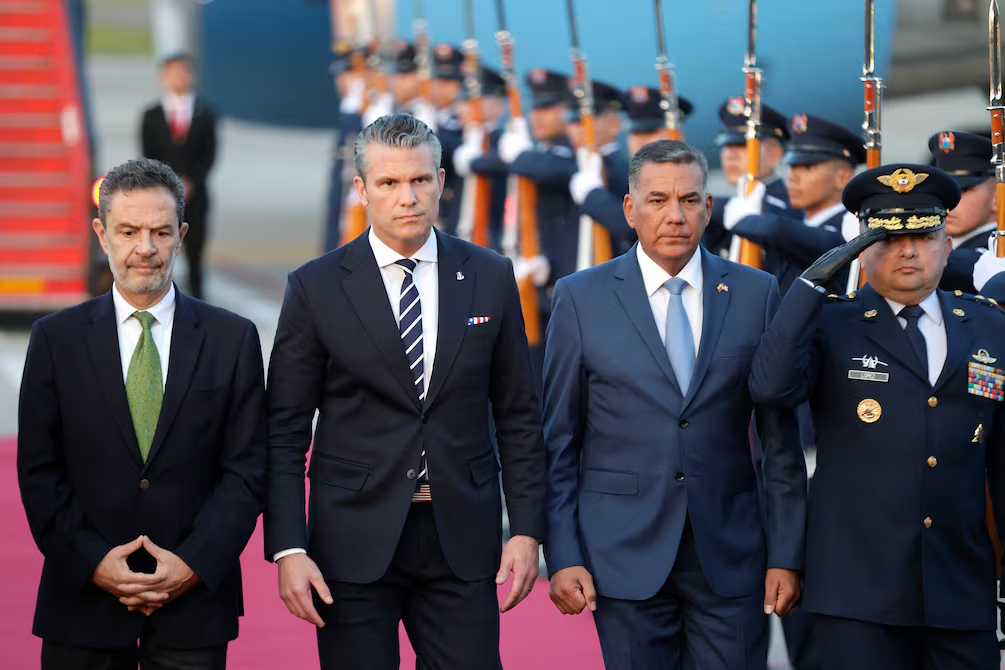
Regional security cooperation enters a more militarized phase.
Quito, Ecuador
US Defense Secretary Pete Hegseth has met with Ecuadorian President Daniel Noboa in Quito, reinforcing Washington’s campaign against transnational drug trafficking and expanding military cooperation across Latin America. The November 19 meeting, held at the Carondelet Presidential Palace, marked the third stop of a regional diplomatic tour that included Venezuela and Colombia. The discussions focused on organized crime, border security and coordinated operations against criminal networks operating along the eastern Pacific corridor.
Hegseth reaffirmed the Trump administration’s support for Ecuador’s security strategy, describing the country as an important partner in efforts to confront organizations Washington classifies as narcoterrorist groups. The two governments examined opportunities to strengthen operational cooperation, improve border protection and disrupt illicit activities affecting national and regional security. Illegal mining also emerged as a priority, reflecting the growing convergence of organized criminal activities beyond conventional drug trafficking.
The visit builds on a bilateral relationship that has become increasingly focused on defense and security under President Noboa. Ecuador has intensified its campaign against organized crime, deploying military personnel in response to violence associated with criminal organizations and expanding cooperation with international partners. Washington regards the country as strategically important because of its Pacific coastline, maritime commercial infrastructure and proximity to regional trafficking routes.
Hegseth highlighted Ecuador’s participation in the Americas Counter Cartel Coalition, known as A3C, an initiative established under President Donald Trump’s regional security agenda. Ecuador is among the coalition’s founding members, and American officials have praised its involvement in maritime interdiction and coordinated operations targeting criminal networks. The framework reflects Washington’s intention to move beyond isolated bilateral agreements toward a more integrated regional security architecture.

The broader diplomatic tour illustrates that strategy. Before arriving in Quito, Hegseth visited Venezuela, where American authorities announced expanded military cooperation with the government of interim President Delcy Rodríguez. He subsequently traveled to Colombia, where officials reaffirmed their commitment to coordinated counter-narcotics operations and announced that Medellín would host a meeting of the regional coalition in 2027.
The encounters demonstrate how security cooperation has become an increasingly influential component of Washington’s relations with Latin American governments. Drug trafficking networks operate across national borders, connecting production areas, transportation corridors, financial systems and international consumer markets. Their transnational structure creates substantial challenges for individual governments attempting to dismantle criminal organizations through domestic enforcement alone.
For Ecuador, the operational benefits of cooperation may include enhanced maritime surveillance, intelligence exchange, specialized training and access to equipment designed to strengthen border enforcement. Earlier in November, Ecuadorian authorities received another US-donated coast guard vessel, while the country’s Attorney General’s Office and the FBI signed an agreement to strengthen cooperation against transnational crime, money laundering and corruption.
Nevertheless, the increasing militarization of counter-narcotics policy has generated serious legal and humanitarian concerns. American military strikes against vessels suspected of involvement in drug trafficking across Caribbean and Pacific waters have prompted questions about the evidentiary standards used to identify targets, the proportionality of military force and the legal protections available to individuals accused of criminal activities.
Those concerns have acquired particular relevance in Ecuador. A group of Ecuadorian fishermen recently filed a lawsuit against the United States government, alleging that American drones attacked their fishing vessel in the Pacific Ocean in March, causing injuries and destroying the boat. The plaintiffs deny involvement in drug trafficking and seek legal accountability for the incident. Their allegations remain subject to judicial examination and should not be confused with established findings of responsibility.
The case exposes a fundamental tension within regional security cooperation. Governments possess legitimate responsibilities to combat organized crime and protect their populations, but enforcement operations must also respect applicable domestic and international law. The effectiveness of military cooperation cannot be evaluated exclusively through interdictions, equipment transfers or the number of operations conducted.
The geopolitical implications are equally significant. A stronger American security presence may enhance coordination among partner governments, but it can also intensify debates about national sovereignty, operational transparency and the extent to which foreign military involvement should influence domestic security policy. These considerations become especially sensitive when participating countries face complex political environments and persistent concerns about institutional accountability.
For the Noboa administration, the challenge involves converting international assistance into measurable improvements in public security. Disrupting trafficking organizations requires sustained institutional capacity, including effective policing, credible judicial processes, financial investigations and mechanisms capable of reducing corruption. Military capabilities can support those objectives, but cannot independently address the economic and institutional conditions that enable criminal networks to operate.
Hegseth’s visit therefore represents more than another diplomatic endorsement of Ecuador’s security policies. It illustrates Washington’s determination to consolidate a regional framework in which military cooperation occupies a central position in confronting transnational organized crime. Whether the strategy produces lasting improvements will depend on operational results, respect for legal safeguards and the capacity of participating governments to translate enforcement initiatives into sustainable institutional stability.
Beyond the Headlines, Accountability Matters.