

 Phoenix 24
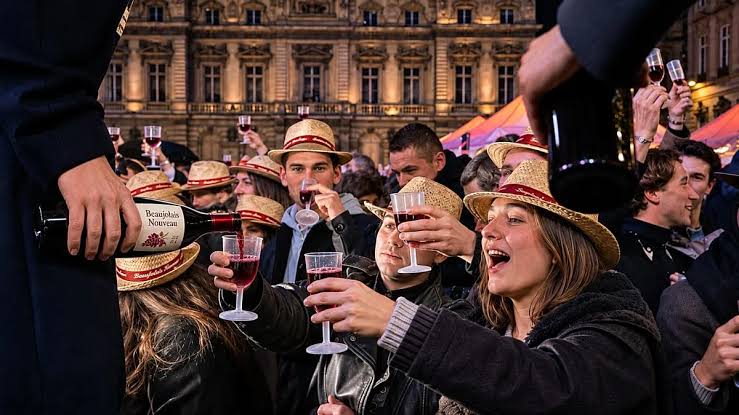
A beloved French tradition faces an uncertain future.
Paris, France
Parisian restaurants and wine enthusiasts welcomed the arrival of Beaujolais Nouveau 2026 on Thursday, November 19, celebrating a fresh, fruit-forward vintage while French producers confronted declining sales and increasingly unpredictable climatic conditions. The annual release, traditionally held on the third Thursday of November, brought early-morning gatherings to the French capital, where the first glasses of the young red wine were served alongside traditional breakfasts. Behind the festive atmosphere, however, the occasion revealed mounting economic pressure on one of France’s most recognizable wine traditions.
At Le Pied de Cochon, a historic Parisian restaurant, guests gathered early to participate in a celebration that has become part of the country’s gastronomic identity. Joanna Piccio, the restaurant’s communications manager, described the event as an opportunity for people who appreciate food and wine to share an experience that extends beyond ordinary dining. The gathering reflected the social character of Beaujolais Nouveau, a wine whose international recognition has developed as much through the ritual of its annual arrival as through its distinctive qualities.
The 2026 vintage has attracted favorable assessments from producers who emphasize its freshness, approachable character and expressive fruit aromas. Gilles Gelin, a winegrower at Domaine des Nugues, described the growing season as exceptionally sunny, producing wines characterized by roundness, softness and an inviting texture. These qualities are especially relevant to Beaujolais Nouveau, which is traditionally enjoyed shortly after fermentation rather than intended for prolonged aging.
Produced primarily from the Gamay grape in the Beaujolais region north of Lyon, the wine is associated with vibrant fruit flavors, relatively light tannins and an accessible drinking style. Its traditional production often involves a short period of semi-carbonic maceration, a technique that helps preserve fresh aromas and supports the youthful character of the finished wine. Unlike more structured reds designed to develop over several years, Beaujolais Nouveau celebrates the immediacy of the harvest and the distinctive expression of a particular growing season.
Yet the commercial environment surrounding the wine has changed considerably. According to the regional wine organization Inter Beaujolais, approximately 13.8 million bottles were sold worldwide in 2025, including nine million in France and 4.9 million in international markets. A decade earlier, global sales stood at approximately 25 million bottles, illustrating a substantial contraction in demand despite the product’s continuing cultural recognition.
Japan and the United States remain among the most important foreign markets, demonstrating the international appeal of a celebration rooted in French regional identity. However, changing consumer preferences and broader weakness in wine consumption have complicated producers’ efforts to preserve sales volumes. Industry representatives increasingly view the wine’s lighter style and approachable profile as potential advantages in reaching consumers whose preferences are shifting.
Climatic conditions introduce another source of uncertainty. Although abundant sunshine contributed to the favorable sensory qualities of the 2026 vintage, periods of intense heat also affected grape development and harvest volumes. Some growers reported production declines exceeding 60% in individual vineyard plots, particularly where younger vines proved more vulnerable to extreme temperatures. These localized losses do not represent an equivalent decline across the entire Beaujolais region, but they illustrate the challenges facing producers as climatic variability becomes more pronounced.
The combination of lower sales and uncertain agricultural yields creates difficult economic conditions for winegrowing businesses. Smaller producers must manage cultivation expenses, labor requirements and distribution costs while adapting to market demand that no longer guarantees the commercial momentum once associated with the annual release. Improvements in wine quality alone may not compensate for structural changes in consumption or sustained pressure on production volumes.
The sector is responding by emphasizing Beaujolais Nouveau’s distinctive identity as a fresh, accessible wine connected to local craftsmanship and communal celebration. Inter Beaujolais has supported hundreds of promotional events involving wine merchants, restaurants and producers across France and international markets. Such initiatives seek to preserve the cultural visibility of the annual release while encouraging consumers to rediscover the wider diversity of Beaujolais wines.
Beyond the economic considerations, the celebration reflects an enduring relationship between gastronomy, regional production and collective identity. The annual arrival of Beaujolais Nouveau brings together growers, distributors, restaurants and consumers through a shared tradition that has survived changing commercial conditions. Its significance cannot be measured exclusively by bottles sold, although those figures remain critical to the livelihoods of the people responsible for producing it.
The 2026 vintage offers French winemakers an opportunity to reconnect tradition with evolving consumer expectations. Whether its freshness and favorable early assessments translate into stronger commercial performance remains uncertain. What the celebrations in Paris demonstrate is that Beaujolais Nouveau continues to occupy a distinctive place in French cultural life, even as the industry must adapt to an increasingly demanding economic and environmental landscape.
Behind Every Fact, a Deeper Story.