

 Phoenix 24
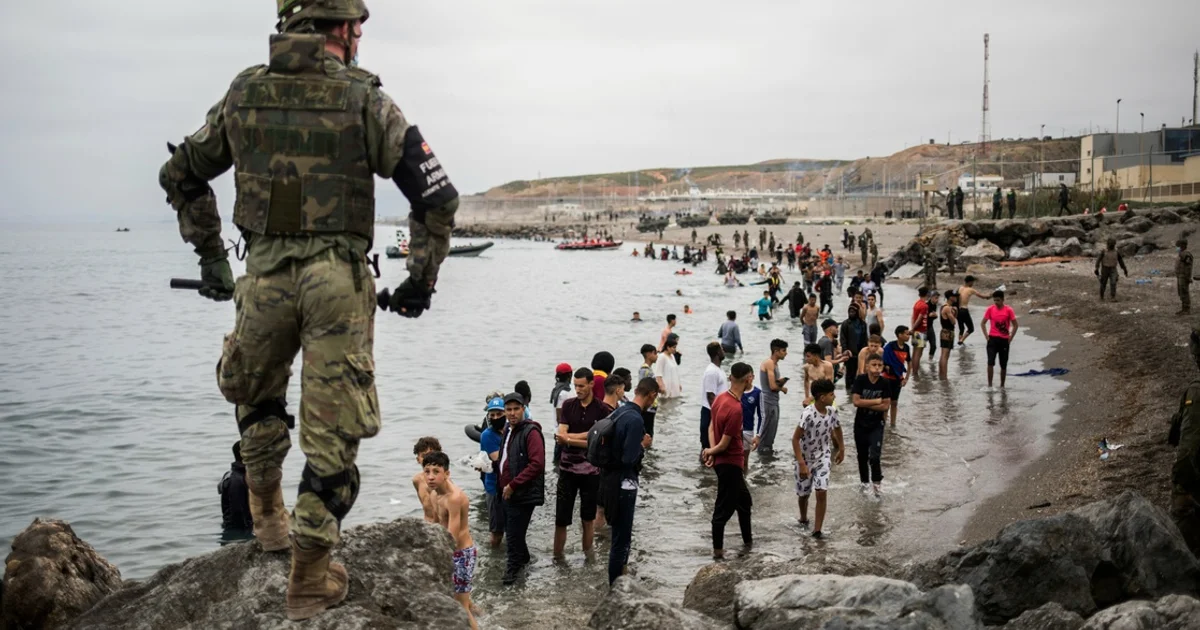
Rising arrivals expose growing pressure on island communities.
MADRID
Spain’s government is facing mounting political pressure over a sharp increase in migrant arrivals to the Canary Islands, where overwhelmed reception facilities and emergency services have prompted military-assisted transfers to the mainland. The crisis has intensified disagreements between Prime Minister Pedro Sánchez’s administration and the opposition People’s Party ahead of an emergency interministerial meeting in Madrid.
Regional government figures show that 6,665 migrants arrived in the archipelago aboard 66 boats during the first nine days of November, with 48 vessels reaching the waters surrounding El Hierro. The sudden increase has placed extraordinary pressure on the small island’s capacity to provide temporary accommodation, healthcare and emergency assistance.
Local authorities declared a social emergency after more than 8,000 people arrived over five weeks. Rescue teams have continued responding to vessels crossing the Atlantic, while officials have warned that available personnel and infrastructure are struggling to accommodate the volume of arrivals.
To relieve the immediate pressure, Spain deployed two Airbus A330 military aircraft to transfer more than 300 migrants to Madrid. The operation supplements existing transfers using ferries and commercial flights, allowing authorities to redistribute some arrivals after completing initial identification procedures.
The decision has become a political flashpoint. People’s Party leader Alberto Núñez Feijóo criticized the government for relying on military transport after months of requests for assistance from the islands. He argued that Spain should prioritize preventing irregular arrivals rather than distributing migrants throughout the country.
Territorial Policy Minister Ángel Víctor Torres rejected that position, maintaining that responsibility for receiving migrants should be shared across Spain and Europe. He warned that refusing transfers would effectively concentrate thousands of people in the Canary Islands without adequate alternatives.
The dispute reflects competing approaches to border management and humanitarian responsibility. While the opposition emphasizes stronger migration controls, the central government argues that emergency redistribution is necessary to prevent the collapse of local reception services.
Canary Islands President Fernando Clavijo has sought to move the discussion toward operational commitments. His administration is requesting an extraordinary contingency plan, additional financial resources, stronger maritime rescue capabilities and expanded medical and police support.
The regional proposals also include greater European involvement through Frontex, more sustained diplomatic engagement with countries of origin and permanent coordination between national and regional authorities.
Clavijo has warned that the Canary Islands could pursue legal action if Madrid fails to deliver concrete measures. His position reflects growing frustration over the gap between the responsibilities assigned to local institutions and the resources available to fulfill them.
The humanitarian dimension remains central. People undertaking the Atlantic crossing face dangerous maritime conditions, while rescue workers and receiving communities confront mounting logistical demands.
The emergency meeting scheduled at La Moncloa for November 10 will test whether political differences can be translated into coordinated action. As of November 9, the proposed measures had not yet produced a confirmed agreement.
For Spain, the challenge extends beyond an immediate increase in arrivals. It concerns how national institutions, regional governments and European partners distribute responsibilities when migration pressures become concentrated in geographically vulnerable territories.
The effectiveness of the response will ultimately depend on measurable improvements in rescue capacity, reception conditions and institutional coordination rather than political declarations alone.
Beyond the Headlines, Accountability Matters.