

 Phoenix 24
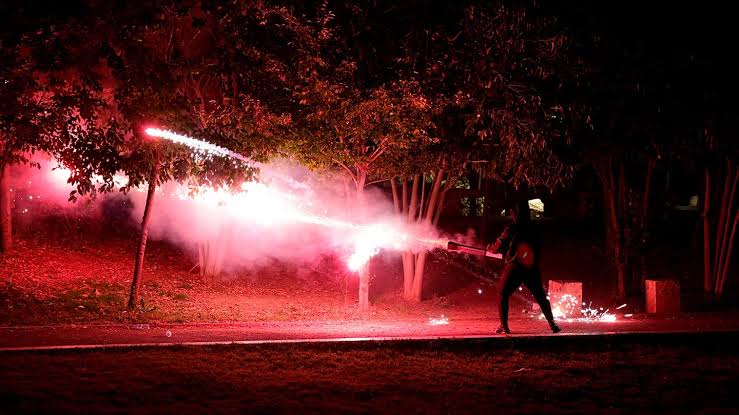
The cost of celebration often falls on bystanders.
AMSTERDAM
Thousands of people across Europe suffer fireworks-related injuries every year, prompting medical specialists to demand stronger safety regulations and more effective public education. A new commentary published in The BMJ argues that the dangers associated with consumer fireworks remain underestimated, particularly among children, young adults and people who are injured without directly handling explosive devices.
The warning comes from researchers affiliated with the University of California, Los Angeles, who identify severe burns, traumatic brain injuries, eye damage, amputations and permanent disabilities among the consequences of fireworks accidents. Their recommendations reflect a public health assessment rather than the findings of a new clinical trial.
Recent figures from the Netherlands illustrate the scale of the problem. According to the national injury prevention organization VeiligheidNL, approximately 1,239 people required emergency medical attention during the 2025–2026 New Year celebrations, an increase of 7% over the previous year.
More significantly, 54% of those injured were younger than 20, while approximately 48% were bystanders. The figures challenge the assumption that fireworks primarily endanger individuals who deliberately ignite them.
Italy recorded another 283 injuries during its New Year celebrations, including 54 cases requiring hospitalization. These national statistics provide important evidence, although differences in reporting systems make comprehensive comparisons across Europe difficult.
The economic dimension complicates the debate. Eurostat reported that the European Union imported 120,000 tonnes of fireworks from non-EU countries in 2024, valued at €406.7 million. Import volumes increased by 9.5%, while their value rose by 21.5% compared with the previous year.
The Netherlands and Germany accounted for the largest shares of those imports, demonstrating the commercial importance of an industry increasingly scrutinized for its health and environmental consequences.
European legislation already establishes safety classifications for pyrotechnic products under Directive 2013/29/EU. The framework defines minimum age requirements and restricts the most hazardous fireworks to qualified professionals, while allowing member states to introduce additional national limitations.
However, differences between national regulations create enforcement challenges, particularly when consumers can obtain products across borders or through unauthorized distribution channels.
The medical specialists recommend expanding organized professional displays, introducing graphic injury warnings on packaging and developing educational programs that communicate the consequences of unsafe fireworks use.
Their concerns also extend beyond immediate physical injuries. Fireworks generate noise, airborne pollutants and potentially hazardous residues, creating additional considerations for public health and environmental authorities.
For governments, the central challenge involves balancing longstanding cultural traditions and commercial interests with the responsibility to prevent avoidable injuries.
The evidence also raises a question of public accountability. If nearly half of recorded victims in one of Europe’s most systematically monitored markets were spectators, prevention cannot depend exclusively on educating those who purchase fireworks.
Stronger surveillance, consistent enforcement and reliable injury reporting could help authorities evaluate which interventions offer measurable protection without assuming that any single regulatory approach will eliminate all risks.
The debate ultimately concerns more than the future of fireworks. It reflects how societies assign responsibility for activities whose benefits are widely enjoyed but whose consequences can fall disproportionately on people who never chose to participate.
Beyond the Headlines, Accountability Matters.