

 Phoenix 24
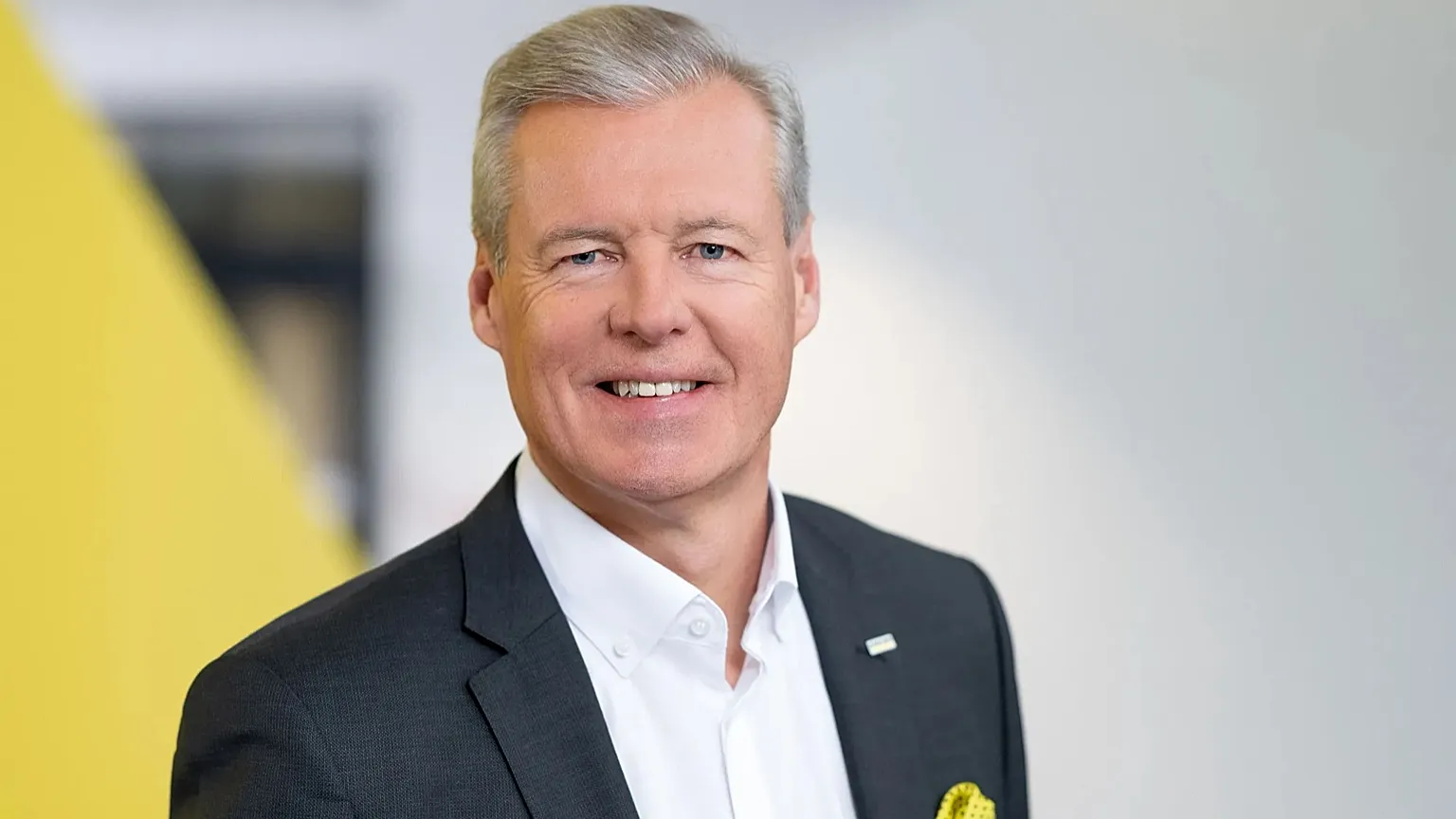
BERLIN, GERMANY — November 2, 2026. Europe faces a convergence of economic and geopolitical pressures that could accelerate industrial decline unless governments undertake significant structural reforms, according to Hartmut Jenner, Chief Executive Officer of German manufacturing group Kärcher. In an opinion article published by Euronews, the executive warned that rising operating costs, excessive bureaucracy, American trade uncertainty and increasingly sophisticated Chinese competition are undermining Europe’s industrial competitiveness. His assessment reflects growing concerns about Germany’s manufacturing sector and the ability of European companies to sustain investment, technological innovation and employment within an increasingly contested global economy.
Jenner, who has led Kärcher since 2001, argues that Europe’s traditional industrial strengths are being challenged simultaneously from several directions. He points to Washington’s unpredictable tariff policies, which complicate international trade planning, and China’s rapid development as a technological manufacturing competitor. In his assessment, Chinese industrial subsidies and state-supported production create competitive imbalances that privately owned European manufacturers struggle to overcome. These claims reflect his interpretation of international trade conditions and highlight disagreements over subsidies, market access and the appropriate role of government in supporting strategic industries.
The warning carries particular weight because Kärcher operates internationally and depends heavily on export markets. Founded in 1935 and headquartered in Winnenden, Baden-Württemberg, the family-owned company reported €3.483 billion in revenue during 2025, employing approximately 17,000 people across operations spanning 87 countries. International markets accounted for 86% of annual sales, illustrating the company’s exposure to changes in trade policy, exchange rates and foreign competition. Its portfolio includes more than 3,000 cleaning and maintenance products, while over 1,000 employees worldwide work in research and development, particularly in robotics, battery technologies and digitalization.
Despite these capabilities, Jenner believes that Germany is approaching a critical industrial turning point. He cites job losses, declining manufacturing output and discussions concerning factory closures or production relocation as evidence that industrial weakening is already affecting major economic sectors. Germany’s automotive and machinery industries face particularly demanding conditions because of high energy costs, labor expenses and global competition. However, deindustrialization should not be treated as an established economy-wide outcome based solely on individual factory closures. Germany’s official statistics show a mixed picture, including a modest increase in industrial production during August 2026 alongside continuing weakness in orders and energy-intensive industries.
The country’s economic outlook illustrates that tension. On October 8, the German government raised its 2026 growth forecast to 1.3%, citing stronger exports and public investment, particularly in defense and infrastructure. Jenner considers this improvement insufficient to demonstrate a durable private-sector recovery, arguing that growth supported by public borrowing and government procurement cannot replace sustained industrial investment. His concern is that temporary economic expansion may conceal unresolved structural weaknesses affecting productivity, business formation and the attractiveness of Germany as a manufacturing location.
Administrative reform occupies a central position in Jenner’s recommendations. He argues that complex reporting obligations, regulatory procedures and high non-wage labor costs consume resources that companies could otherwise allocate to innovation, equipment and employment. His proposals include simplifying business administration, accelerating regulatory decisions and using artificial intelligence to improve public-sector efficiency. He also advocates greater labor-market flexibility and incentives for additional working hours as Germany confronts demographic aging and a potentially shrinking workforce. These measures, however, involve policy trade-offs concerning labor protections, public accountability and social welfare, making their effectiveness dependent on careful implementation rather than deregulation alone.
The industrial debate extends beyond Germany because European manufacturing networks are deeply interconnected. Suppliers of machinery, chemicals, automotive components and advanced materials depend on cross-border production systems that link multiple European economies. Persistent cost disadvantages in major manufacturing centers can influence investment decisions throughout those networks, potentially affecting employment, technological capabilities and regional economic development. At the same time, increasing public investment in defense, clean technologies and digital infrastructure could create new opportunities, provided that industrial policies successfully encourage productivity and commercially sustainable production.
Jenner consequently calls for a more assertive European trade policy capable of responding to practices considered inconsistent with fair competition. His position combines support for open international commerce with stronger enforcement of trade rules, particularly where subsidies or other government measures distort market conditions. The strategic challenge for the European Union is maintaining access to global markets while reducing excessive dependencies and ensuring that domestic manufacturers can compete. An effective response must also account for the potential consequences of retaliatory tariffs, higher consumer prices and disruption to established supply chains.
The broader significance of Jenner’s warning lies in the relationship between economic competitiveness and Europe’s technological autonomy. Industrial strength depends not simply on the availability of scientific knowledge, but also on the capacity to transform research into commercially viable products, efficient production systems and sustainable employment. Kärcher’s investment in robotics, battery technology and digital operations illustrates the importance of that connection, yet innovation alone may not offset unfavorable operating conditions. Europe’s long-term competitiveness will therefore depend on coordinating research, energy policy, workforce development, infrastructure and industrial investment within a coherent economic strategy.
The warning does not establish that Europe’s industrial decline is inevitable, nor does it demonstrate that deregulation would independently reverse every manufacturing challenge. It does, however, identify an important policy dilemma: governments must sustain environmental, labor and social standards while ensuring that productive investment remains economically attractive. As American trade policies evolve and China expands its technological capabilities, European policymakers face increasing pressure to strengthen their industrial foundations without abandoning the principles underpinning their economic and social institutions.
For Jenner, the decisive issue is whether European governments can translate recognition of these challenges into effective structural change. The future of German and European manufacturing will depend on more than short-term growth forecasts or isolated subsidies; it will require sustained improvements in productivity, investment conditions and the ability to commercialize technological innovation. The central question is whether Europe can preserve its industrial capabilities while adapting to a global economy in which production capacity, technological sophistication and geopolitical influence are becoming increasingly interconnected.
Phoenix24: Beyond the economy, the strategic consequences. / Más allá de la economía, las consecuencias estratégicas.