

 Phoenix 24
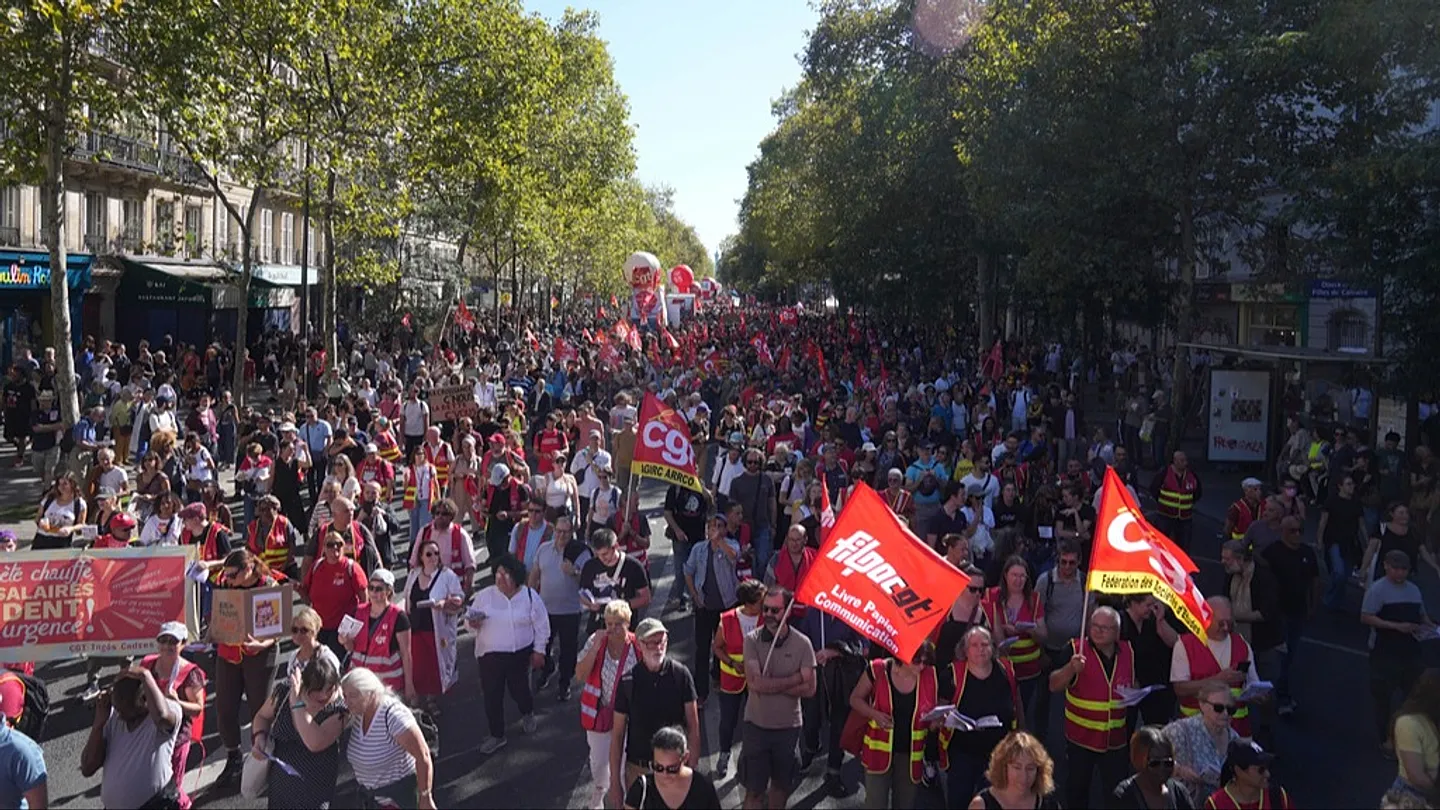
Labor leaders demand economic concessions as nationwide tensions continue.
PARIS
France’s leading labor unions have called for nationwide demonstrations and strike action on November 5 after negotiations with Prime Minister Sébastien Lecornu failed to produce the commitments they had sought. The announcement adds pressure on the government as it confronts rising living costs, demands for greater education funding and the aftermath of violent disturbances in several French cities.
Representatives of major unions met Lecornu at his official residence, Matignon, on October 21 for approximately two and a half hours. Although the discussions addressed workers’ concerns, union leaders emerged dissatisfied with the government’s response.
Sophie Binet, secretary-general of the General Confederation of Labour (CGT), said the prime minister had presented no concrete measures addressing their principal demands. She urged workers to intensify mobilization and make strike action a central instrument of the November protest.
The proposed mobilization involves employees from both the public and private sectors. Its actual scale and potential effects on transportation, education and other services will depend on participation and subsequent announcements.
Marylise Léon, leader of the French Democratic Confederation of Labour (CFDT), also called for substantive responses to workers’ economic concerns. The organization has emphasized the importance of dialogue while pressing the government to address household purchasing power.
Not every aspect of the meeting ended without movement. Cyril Chabanier, president of the French Confederation of Christian Workers (CFTC), indicated that the government had opened discussions about increasing the minimum wage.
Lecornu reportedly requested rapid progress on that question, although no final agreement or specific increase was announced.
The labor dispute coincides with continued mobilization by secondary school and university students. Education groups have demanded improved school infrastructure, replacements for absent teachers, additional resources and the elimination of the Parcoursup university admissions platform.
Union representatives criticized the absence of student organizations from the Matignon meeting. Education Minister Édouard Geffray is expected to meet student representatives separately and consider initial measures.
The political environment has become increasingly tense since demonstrations on October 17 were followed by riots and widespread looting. French authorities have reported approximately 2,500 people taken into police custody in connection with the disturbances.
Judicial proceedings are continuing, while questions remain about the circumstances of the violence and the effectiveness of police operations.
President Emmanuel Macron, visiting the Middle East, called for firm action against those responsible for violent incidents. He also ordered a review involving intelligence officials following criticism of the security response.
Additional curfews have been imposed in selected areas of Paris and Lyon. Those restrictions form part of the government’s public-order strategy, separate from its negotiations over wages and social spending.
The CGT also intends to participate in demonstrations organized for October 24 by groups associated with the Yellow Vest movement.
For the government, the central challenge is addressing economic grievances while maintaining public security and negotiating within existing fiscal constraints.
The November 5 mobilization is scheduled, but its consequences remain uncertain. Union participation, government concessions and the conduct of demonstrators will influence how the confrontation develops.
The failed meeting has not ended negotiations, but it has reinforced the determination of labor organizations to maintain pressure through collective action.
Beyond the Headlines, Accountability Matters.