

 Phoenix 24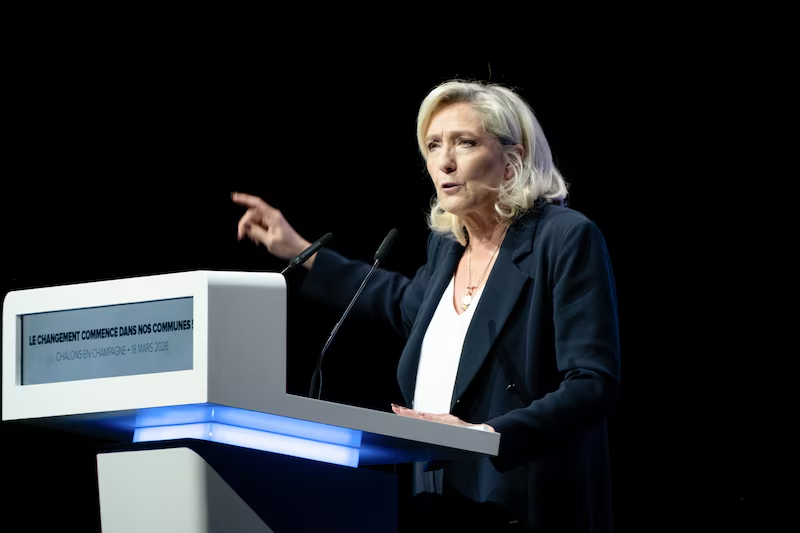
Political divisions deepen amid nationwide unrest over living costs.
PARIS
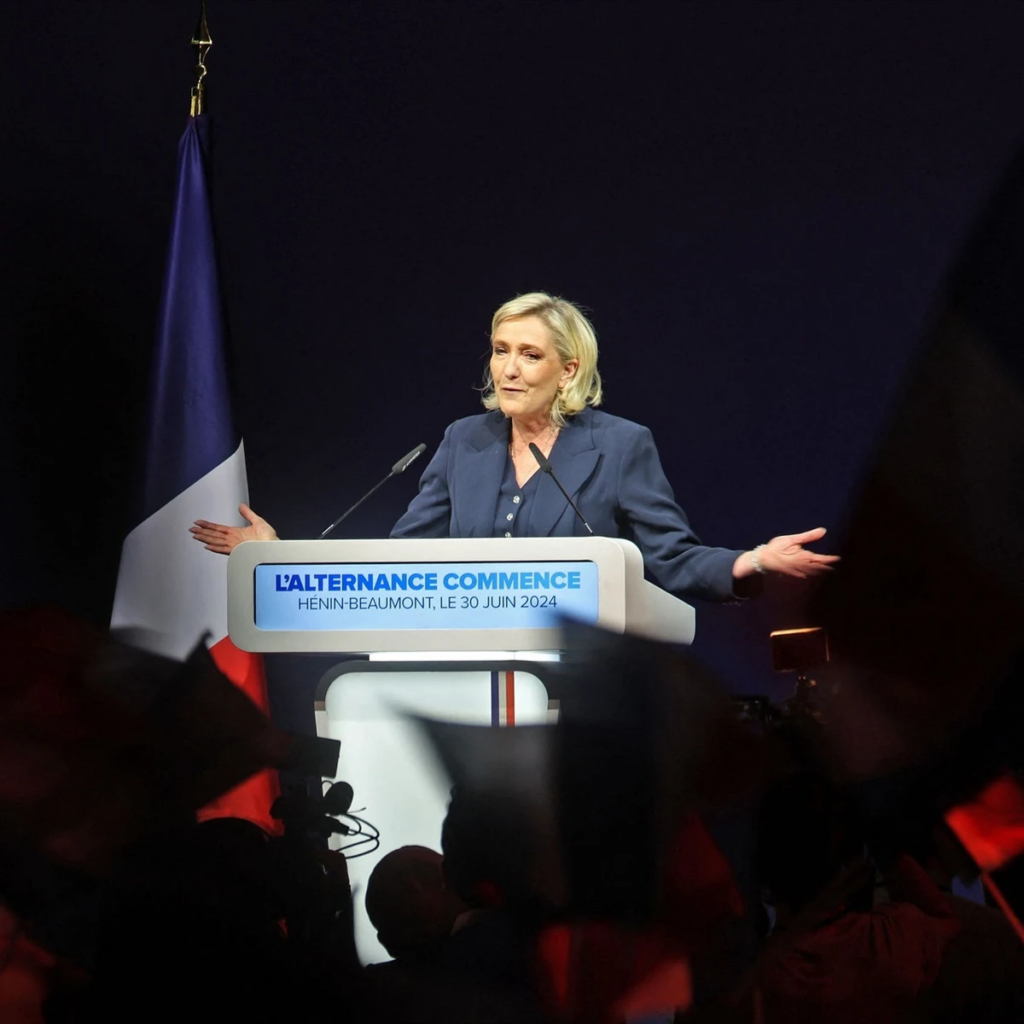
Marine Le Pen has accused France’s radical left of exploiting nationwide protests over rising living costs, arguing that violent demonstrators are undermining legitimate social demands. Her intervention followed widespread clashes between police and protesters on Saturday, as France experienced one of its most turbulent days of public mobilization in recent years.
The National Rally leader directed her criticism toward supporters of Jean-Luc Mélenchon and his France Unbowed movement, alleging that political rhetoric from the radical left had contributed to an atmosphere in which violence was increasingly tolerated.
Le Pen argued that the demands of workers, students and families struggling with higher prices had been overshadowed by attacks on police officers, vandalism and destruction of public property. She presented the disturbances as evidence of a wider political confrontation over public order and government accountability.
Her accusations remain political claims rather than independently established findings about responsibility for the violence.
Jordan Bardella, president of National Rally, reinforced that position by condemning groups he accused of exploiting the demonstrations. He argued that violent incidents weakened public support for demands concerning wages, purchasing power and fuel taxation.
Mélenchon offered a contrasting interpretation. The France Unbowed leader criticized television coverage that concentrated on confrontations and property damage, emphasizing that many participants had demonstrated peacefully. His response reflected disagreements over how the scale and character of the protests should be represented.
The demonstrations brought together students, trade unions and participants associated with the Yellow Vest movement. Their grievances included rising household expenses, inadequate educational resources and concerns about deteriorating public services.
In Paris, confrontations intensified around Place de la République, where police deployed crowd-control measures after clashes involving groups of demonstrators. Similar disturbances were reported in Marseille, Lyon and other French cities.
Reports from Reuters and Associated Press indicated that at least 272 people had been arrested nationwide, although figures changed throughout the day as police operations continued.
The unrest included damaged vehicles, fires and attacks on public buildings. In Marseille, demonstrators entered municipal premises, while disturbances in Lyon caused damage to a tourism office.
These incidents occurred alongside larger gatherings involving participants who did not engage in violence. Distinguishing between peaceful demonstrators and individuals responsible for criminal acts remains essential when assessing the authorities’ response.
The controversy has also renewed scrutiny of police tactics. Civil liberties advocates have raised concerns about the proportionality of certain crowd-control measures following injuries reported during earlier student demonstrations.
For President Emmanuel Macron’s government, the immediate challenge extends beyond restoring public order. Rising living costs and pressure on public services have brought together social groups with different political backgrounds and economic concerns.
The approaching 2027 presidential election adds another dimension to the confrontation, as political parties seek to interpret the unrest through competing arguments about social policy, security and democratic representation.
Le Pen’s intervention illustrates how public disorder can become central to political competition without resolving the grievances that initially brought citizens into the streets.
France now faces two overlapping debates: how to protect peaceful assembly while responding to violence, and how to address the economic frustrations sustaining nationwide mobilization.
The outcome will depend on institutional responses and the development of the protests, rather than on any single political interpretation of the disturbances.
Beyond the Headlines, Accountability Matters.