

 Phoenix 24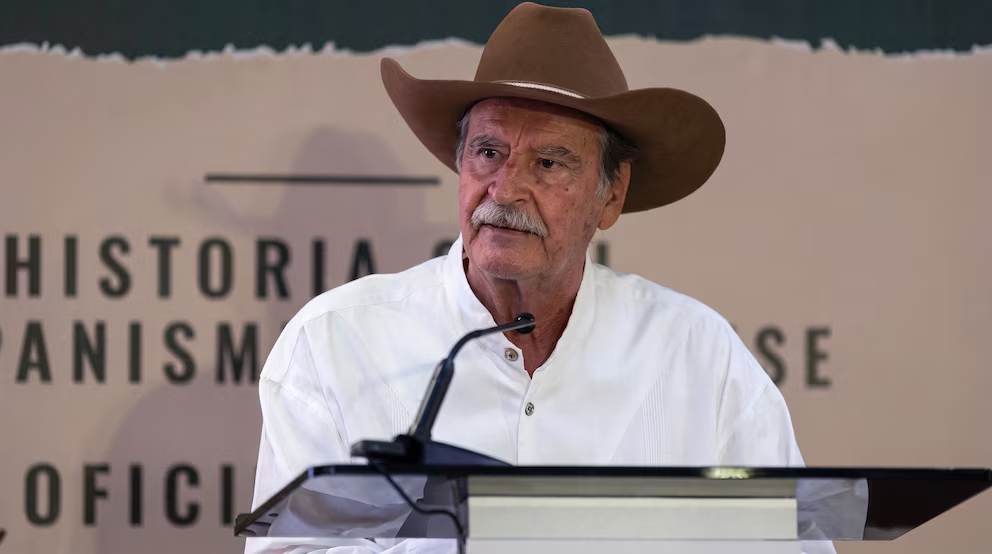
The former Mexican president’s remarks add a new political layer to allegations already surrounding the former Sinaloa governor.
Culiacán, Mexico
Former Mexican president Vicente Fox has called for Rubén Rocha Moya, the governor of Sinaloa currently on leave, to be imprisoned in the United States, placing him rhetorically alongside high-profile figures linked to organized crime.
Speaking during a visit to Culiacán, Fox argued that Rocha Moya should be sent to a federal prison in Brooklyn and mentioned Ismael “El Mayo” Zambada, Rafael Caro Quintero and other figures associated with major criminal cases. He also included Nicolás Maduro in his remarks, broadening the political tone of the intervention beyond Sinaloa itself.
Fox’s comments came during an event connected to the presentation of the book Los locos de la democracia, where he also criticized President Claudia Sheinbaum and called on opposition forces to organize ahead of Mexico’s 2027 political cycle.
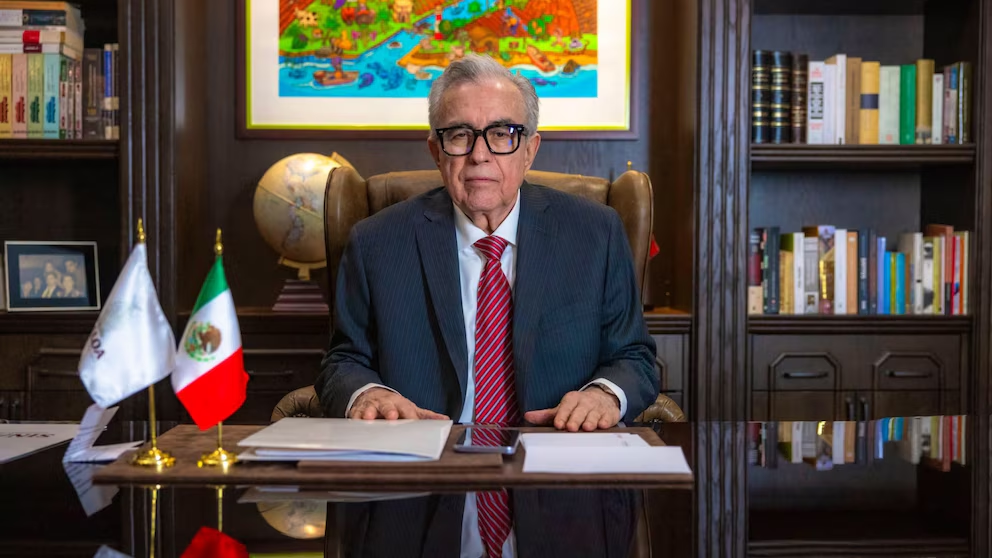
The remarks are especially sensitive because Rocha Moya’s name has already appeared in legal and political controversy in the United States. Reports published earlier this year referred to a federal accusation in New York involving alleged drug-trafficking and weapons-related activity, although any such allegations remain subject to judicial process and do not constitute a conviction.
Fox did not present a new arrest warrant, extradition request or judicial ruling during his speech. His demand was therefore political rather than a description of a new legal development. That distinction matters because public accusations against elected officials can quickly move ahead of the evidence formally established in court.
The former president also accused the federal government of protecting politicians he associates with organized crime. The Sheinbaum administration has rejected politically motivated interpretations of ongoing federal investigations and has maintained that criminal cases should be handled through legal institutions rather than partisan confrontation.
The episode adds another layer to the already volatile political environment in Sinaloa, where violence, organized crime and questions about institutional integrity have placed unusual pressure on both state and federal authorities.
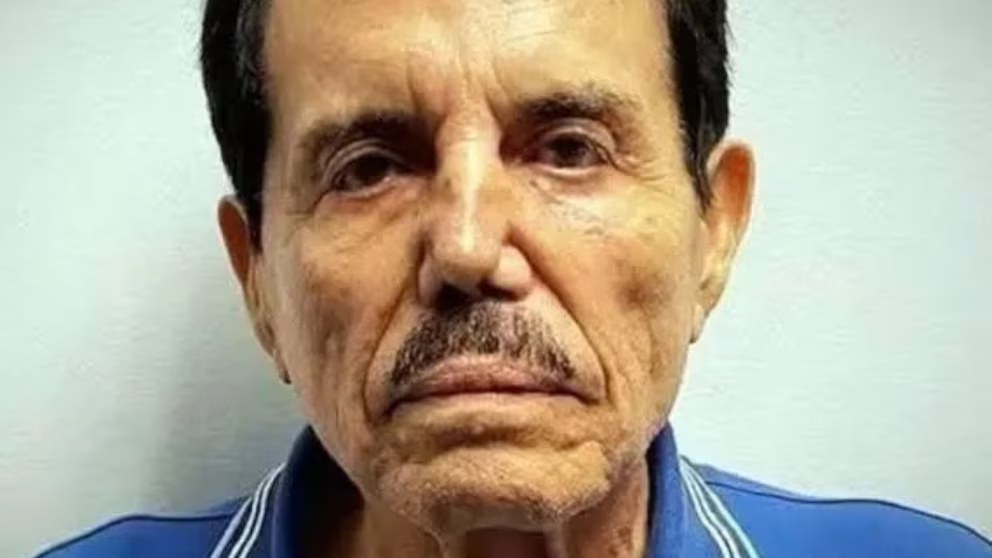
Rocha Moya’s legal status and any proceedings in the United States will ultimately depend on prosecutors, courts and evidentiary standards rather than political declarations. Fox’s intervention nevertheless ensures that the issue will remain part of Mexico’s national political debate.
In cases where organized crime and public office intersect, the central test is not the intensity of the accusation, but whether institutions can establish responsibility through evidence and due process.