

 Phoenix 24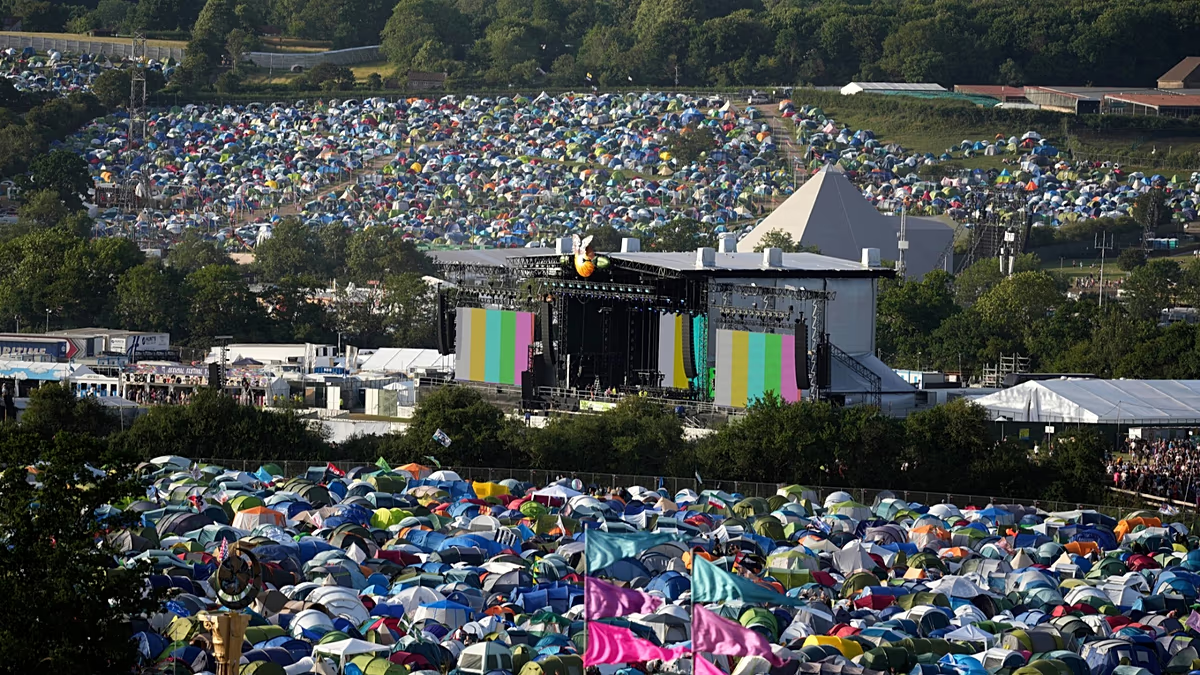
Demand survives uncertainty, rising prices and unanswered questions.
Pilton, England
Glastonbury Festival has sold out its general admission tickets for 2027 in just 42 minutes, despite organizers having announced none of the artists who will perform. The festival returns to Worthy Farm from June 23 to June 27 after its traditional fallow year, confirming that its cultural pull remains powerful enough to drive extraordinary demand before fans know who will take the stage. Tickets went on sale Sunday morning and the available allocation was exhausted shortly afterward. The speed of the sellout again demonstrates that Glastonbury increasingly functions as a destination and cultural experience rather than simply a collection of concerts.
That demand has persisted even as admission becomes substantially more expensive. General tickets for 2027 cost £408 including the booking fee, taking the festival above the £400 threshold for the first time and representing another increase from the 2025 edition. Buyers secured their places with a £100 deposit, with the remaining balance due in April 2027. The pricing has generated criticism among some longtime fans who argue that one of Britain’s most symbolic music events is becoming increasingly difficult to access.
Yet the absence of a lineup appears to have done little to weaken enthusiasm. No performer has been officially announced, although speculation already surrounds artists including Taylor Swift, Rihanna, Sam Fender and Little Simz, alongside possible appearances by The Rolling Stones, Radiohead and Fontaines D.C. Festival organizer Emily Eavis has said the headline acts are already secured, while effectively ruling out Madonna and Oasis amid earlier speculation. The full program is expected to emerge gradually over the coming months.
For fans who missed the initial sale, another opportunity is expected during the official resale period in spring 2027, when cancelled tickets and places linked to unpaid balances become available again. That secondary window is traditionally one of the final chances to enter Worthy Farm without relying on unofficial channels. Glastonbury’s latest sellout suggests that scarcity itself has become part of the festival’s economic and cultural architecture. In an entertainment market increasingly shaped by premium pricing, digital queues and global competition for experiences, 42 minutes was enough to show that Glastonbury’s brand remains larger than its still unknown lineup.
Beyond the news, the pattern. / Más allá de la noticia, el patrón.