

 Phoenix 24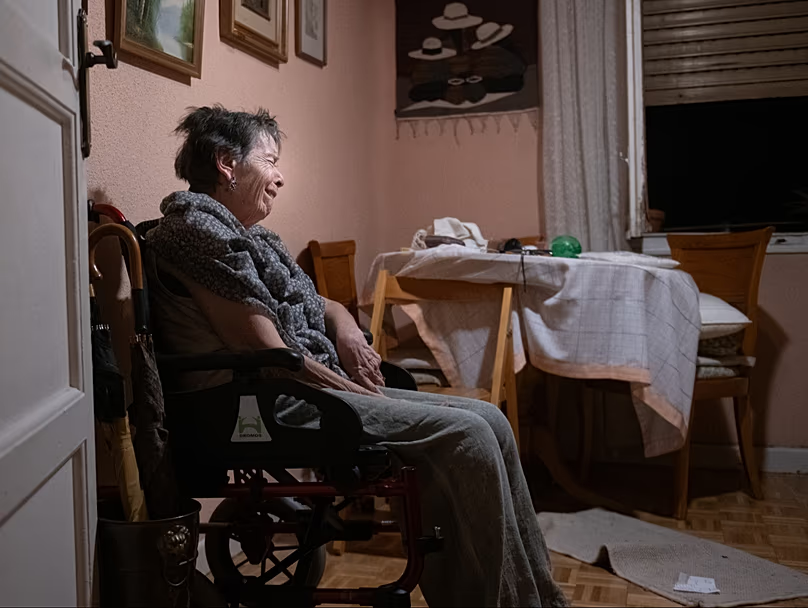
One personal case has exposed a much larger structural problem.
Madrid
The eviction of 87 year old María del Carmen Abascal, known as Maricarmen, has become a powerful symbol of Spain’s housing crisis and triggered demonstrations demanding stronger tenant protections. She had lived in the same Madrid apartment for around 70 years before being forced to leave following a change in ownership. According to the Madrid Tenants’ Union, the new landlord initially proposed increasing her monthly rent from around €500 to €2,650 before later reducing the demand to €1,650. Her case has transformed an individual dispute into a national conversation about who can continue living in Spain’s increasingly expensive cities.
Housing costs have been rising faster than many household incomes. Purchase prices are growing at double digit rates in some areas, rents remain under sustained pressure and housing supply has struggled to match demand in the most attractive urban markets. The situation is particularly difficult for younger workers, lower income households and longtime tenants whose neighborhoods have experienced rapid appreciation. Tourism, limited construction, demographic concentration and investment demand are all part of a complex market in which no single factor explains the crisis.
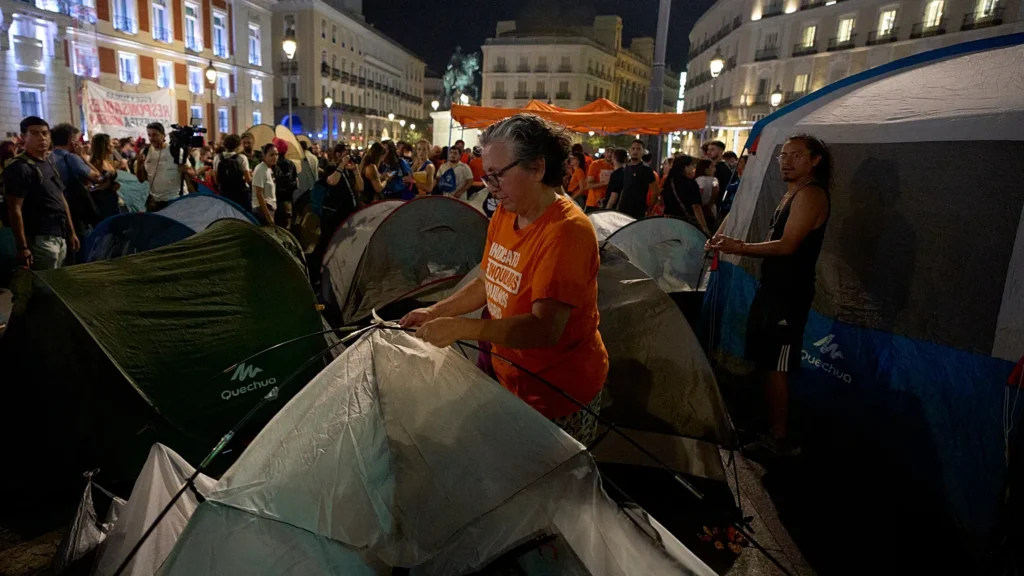
The political consequences are now visible in Madrid’s Puerta del Sol. Hundreds of protesters have established an encampment after demonstrations organized by tenant groups, demanding rent controls, stronger protections against eviction and alternatives for vulnerable residents who lose their homes. The slogan “Ni una Maricarmen más” has turned her case into a broader demand for structural intervention. Protesters have indicated that mobilizations could continue if new government measures fail to meet their expectations.
Prime Minister Pedro Sánchez has promised to present a housing decree to the Council of Ministers on September 29, but negotiations remain difficult. Government partners and opposition parties disagree over how far the state should intervene in rental markets, property ownership and eviction procedures. Regional authorities in Madrid have also challenged parts of the national government’s approach, reflecting a wider institutional dispute over responsibility for housing policy.
Spain’s problem extends far beyond one eviction. Housing has become a point where wages, demographic change, investment, tourism and social policy collide. Measures protecting tenants can address immediate vulnerability, while expanding supply requires longer term planning, construction and regulatory coordination.
Maricarmen’s case matters because it has given a human face to statistics already showing severe pressure across the housing market. The challenge for Spain is whether political urgency generated by one highly visible eviction can produce policies capable of addressing the structural forces affecting millions of households.
Facts that do not bend.