

 Phoenix 24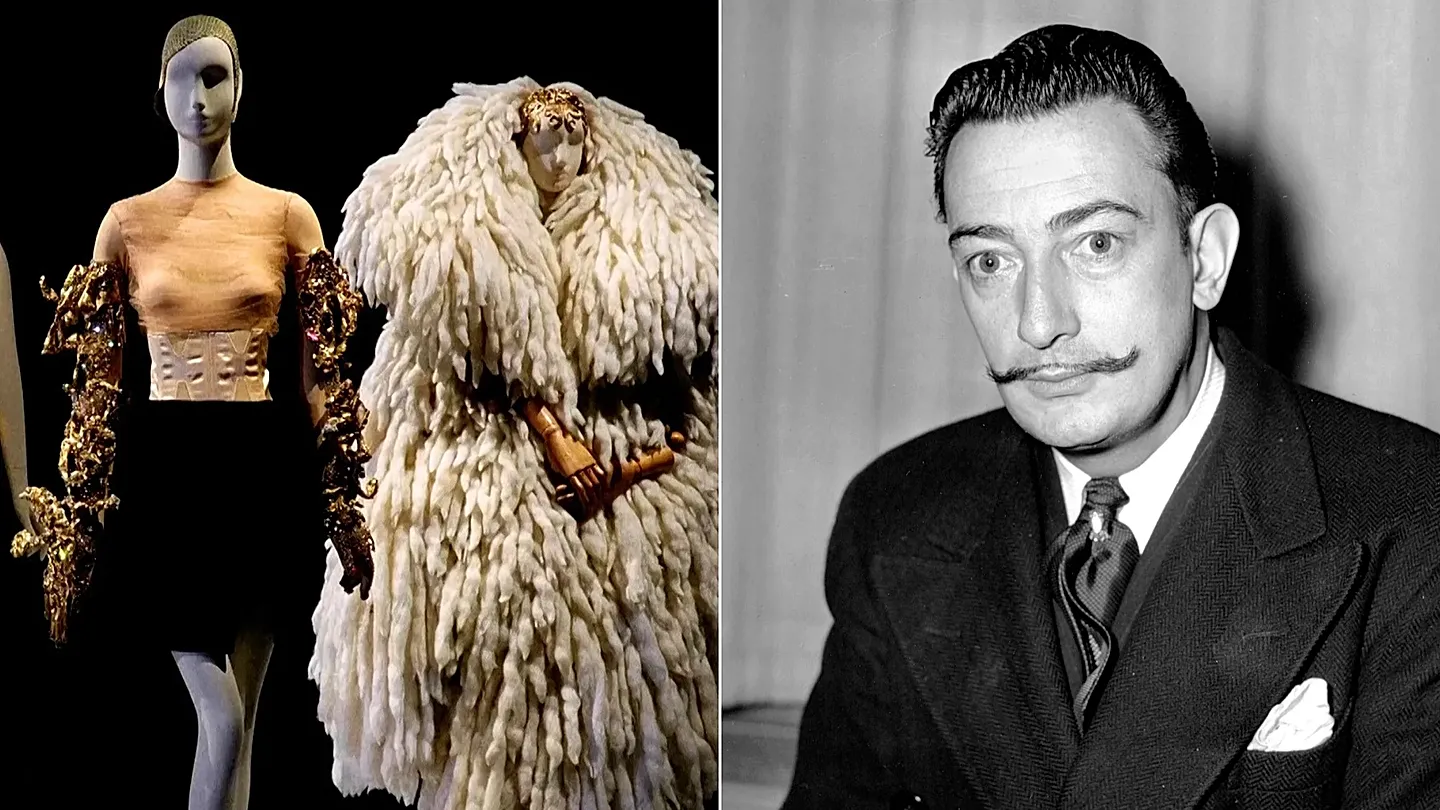
The boundary between canvas and clothing was never fixed.
Milan
A major exhibition at Milan’s Palazzo Reale is examining the enduring relationship between Salvador Dalí and fashion, bringing together more than 200 artworks, garments, photographs and archival objects. Rather than treating fashion as a secondary chapter in the Spanish artist’s career, the exhibition argues that clothing, transformation and the human body were embedded throughout his creative universe. Dalí influenced fashion, but fashion also entered his paintings and surrealist objects. The result is a dialogue that continues almost four decades after his death.
The relationship became especially visible during the 1930s through Dalí’s collaboration with Elsa Schiaparelli. One of their most recognizable creations was the shoe hat, inspired by an image of Dalí wearing a woman’s shoe on his head. He developed the idea and Schiaparelli transformed it into a surrealist fashion object. Their collaboration demonstrated how an artistic provocation could migrate directly from image to garment without losing its disruptive character.
The Milan exhibition expands that history beyond one partnership. Curators Judith Clark and Laura Bartolomé explore Dalí’s fascination with mannequins, clothing, disguise and the body, placing historical material beside contemporary fashion. Recent creations by Daniel Roseberry for Schiaparelli and by Maria Grazia Chiuri and Jonathan Anderson for Dior show how designers continue to reinterpret visual ideas associated with Dalí. Surrealism, in this context, remains a living vocabulary rather than a closed twentieth century movement.
The exhibition avoids a strictly chronological path. Instead, artworks and garments are positioned in dialogue, allowing visitors to observe how visual motifs move between painting, sculpture and fashion design. That structure reinforces one of the exhibition’s central ideas: Dalí did not simply provide images for designers to borrow. He treated transformation itself as an artistic principle, something fashion performs continuously through the body.
Milan provides an especially appropriate setting for that argument. As one of the world’s principal fashion capitals, the city places Dalí’s work inside an industry that still depends on spectacle, reinvention and the ability to challenge visual expectations. The exhibition therefore connects historical surrealism with contemporary creative practice rather than presenting it only as cultural memory.
Dalí and Fashion will remain at Palazzo Reale until January 31, 2027. What it ultimately reveals is that Dalí’s influence did not stop at the museum wall. Fashion became another surface on which surrealism could continue moving.
La narrativa también es poder. / Narrative is power too.