

 Phoenix 24
Partial access returns, but restrictions on independent journalism persist.
Caracas, Venezuela.
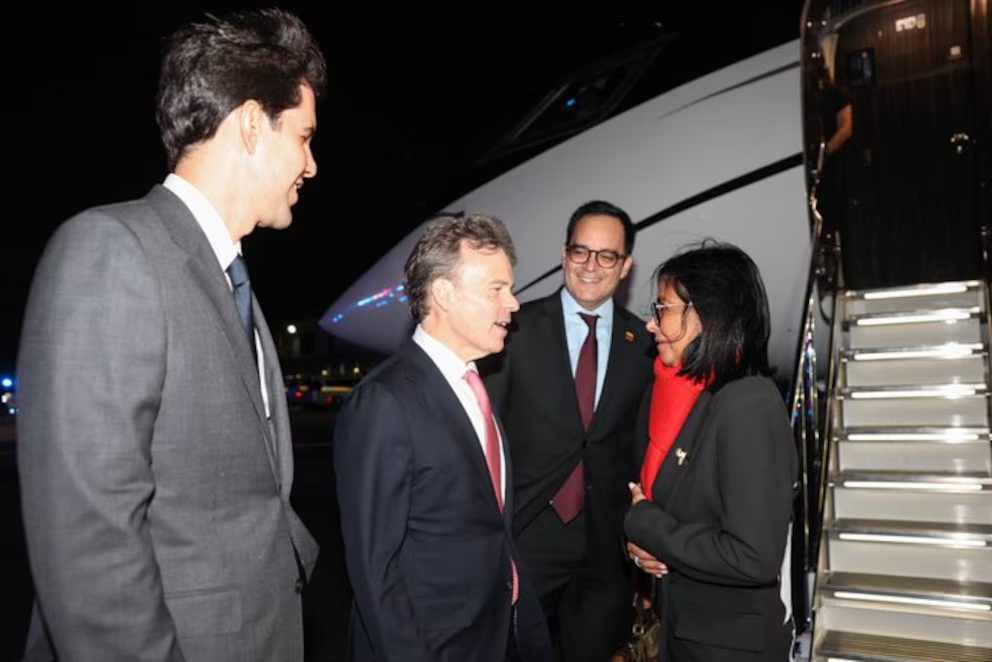
The United Nations has urged Venezuela to end restrictions on freedom of expression and access to information, warning that the government’s recent decision to unblock several news websites remains insufficient. In a statement issued on September 21, the Office of the UN High Commissioner for Human Rights welcomed the partial reopening while calling for further measures to restore access to media outlets that remain restricted. The appeal comes as interim President Delcy Rodríguez visits the United States for the United Nations General Assembly.

The announcement follows a decision by Venezuela’s telecommunications regulator, Conatel, to lift restrictions on selected national and international news websites. Beginning September 17, several outlets, including Efecto Cocuyo, El Pitazo and Runrunes, became accessible again through internet providers that had previously blocked them. The measure formed part of a broader political dialogue intended to address restrictions on public participation and information.
However, independent monitoring indicates that the reopening remains incomplete. Venezuelan freedom-of-expression organization Espacio Público examined 82 active websites and found that only 20 were fully accessible. Fifty remained systematically blocked, while another 12 showed signs of probable blocking. The findings indicate that approximately three-quarters of the websites assessed continued to experience access restrictions.
The situation varies considerably among news organizations. Monitoring conducted between September 17 and 19 found that some outlets had regained access while others continued experiencing substantial interference. Infobae, which reports that it has been blocked in Venezuela since October 2014, registered access anomalies affecting approximately 99% of the connections examined. Other affected platforms included TalCual, Armando.Info and organizations that monitor digital restrictions.
These differences matter because an official announcement does not necessarily produce uniform results across telecommunications providers. Website access may vary according to the network, the technical method used to impose restrictions and subsequent changes in enforcement. Independent measurements are therefore necessary to establish whether restrictions have actually been lifted.
The UN’s intervention also follows findings from its international fact-finding mission, which reported that Venezuela’s institutions and mechanisms associated with past human rights abuses remain largely intact despite political changes earlier this year. The mission acknowledged certain measures, including prisoner releases, while cautioning that institutional reforms remain limited and potentially reversible. Its assessment provides a broader context for concerns about the durability of changes affecting civil liberties.
Restoring access to news websites represents one component of press freedom. Journalists also require protection from intimidation, the ability to investigate public institutions and conditions that allow independent reporting without fear of retaliation.
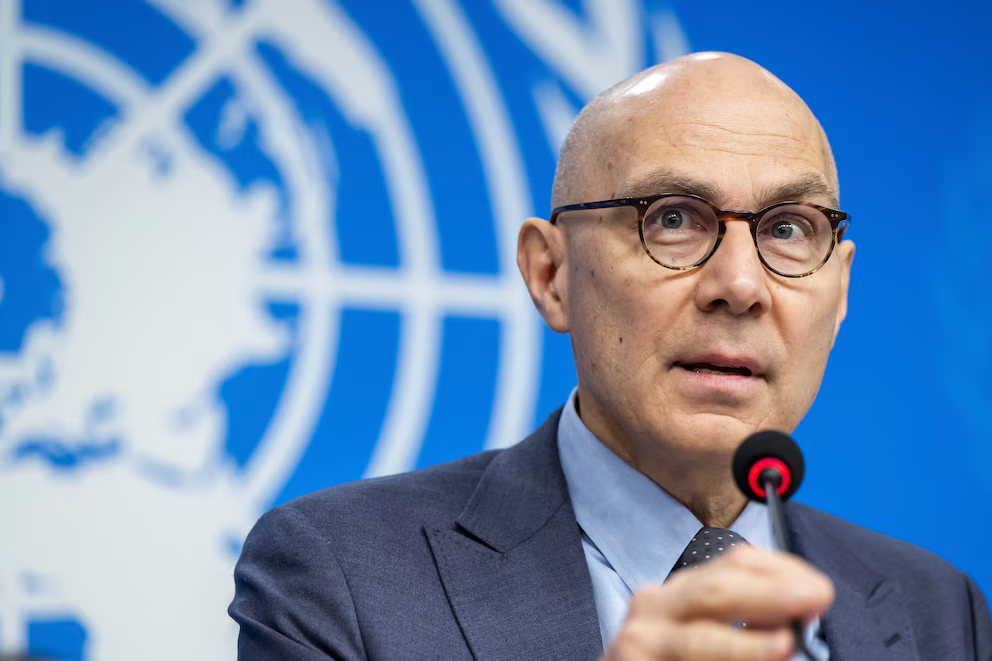
The immediate question is whether the government will extend the recent reopening to all restricted outlets and establish safeguards against renewed censorship. The UN has welcomed the initial measure, but its central demand remains unchanged: freedom of expression must be protected beyond a limited restoration of digital access.
Phoenix24: periodismo sin fronteras. / Phoenix24: journalism without borders.