

 Phoenix 24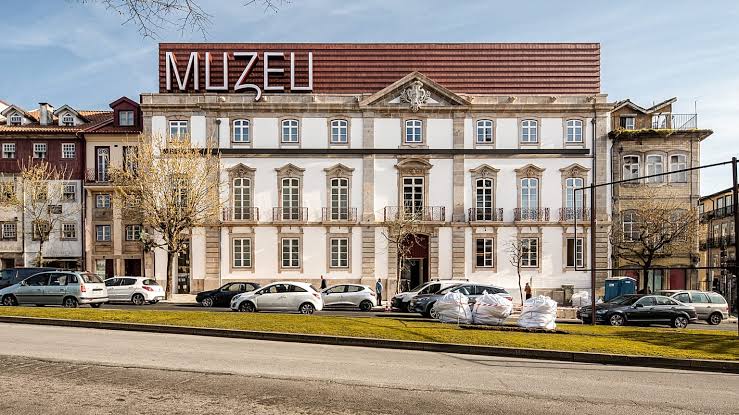
A provocative museum transforms artistic expression into collective reflection.
Braga, Portugal.
A new contemporary art museum in the Portuguese city of Braga is challenging visitors to reconsider their relationship with society, history and one another. MUZEU, which opened in April 2026, brings together more than 100 works by 84 artists in a space conceived not simply for displaying art, but for encouraging critical thought. Its guiding philosophy draws inspiration from a slogan associated with the French protests of May 1968: “Be realistic, demand the impossible.”
The museum was founded by José Teixeira, chief executive of Portuguese industrial company dstgroup and a collector with four decades of experience. Speaking to Euronews Culture, Teixeira described the revolutionary spirit of 1968 as an attempt to overcome the social and moral restrictions of its time. He believes contemporary society faces a different challenge: reconsidering individualism and creating room for compassion, understanding and community.
That ambition is reflected in the institution’s scale and international character. MUZEU occupies five floors and approximately 3,000 square meters of exhibition space, presenting works by 45 Portuguese and 39 international artists from 16 countries. Its collection includes pieces by Pablo Picasso, Alex Katz, Candida Höfer, Nan Goldin and Eduardo Batarda. A dedicated gallery houses work by Anselm Kiefer, while photography occupies a prominent place throughout the museum.
For Teixeira, collecting art is connected to a broader philosophy of work and education. His company’s campus in Braga contains large-scale artworks, libraries and recreational facilities available to employees. He invokes the example of philosopher Simone Weil, who undertook factory work to understand industrial labor through direct experience. The underlying proposition is that literature, art and reflection can enrich how people understand their everyday circumstances.
One of MUZEU’s most striking exhibitions examines the relationship between violence and vulnerability. Handle with Care, by Lebanese-Canadian artist Elias Nafaa, presents 300 handcrafted glass replicas of weapons used in contemporary conflicts. Their fragile material reverses the conventional symbolism of military power, inviting visitors to examine instruments of destruction as vulnerable objects.
The installation encountered an unexpected obstacle before its presentation. According to Nafaa, the artwork remained in custody for more than two weeks, only being released shortly before the exhibition opened. He highlighted the contradiction between the difficulties encountered by artistic representations of weapons and the international circulation of actual armaments.
The installation forms part of MUZEU’s inaugural program, Abrir Abril, and is scheduled to remain on display until October 31. Its presence illustrates the museum’s intention to connect aesthetic experience with contemporary questions without dictating a single interpretation.
MUZEU proposes a different understanding of cultural infrastructure. Beyond preserving artistic objects, the institution seeks to create conditions for visitors to question assumptions, encounter unfamiliar perspectives and reconsider their place within a community.
Its central invitation is not to accept an impossible future as inevitable, but to examine why certain possibilities appear impossible in the first place.
La verdad es estructura, no ruido. / Truth is structure, not noise.