

 Phoenix 24
An unidentified aerial intrusion exposes critical aviation vulnerabilities.
Luxembourg City, Luxembourg.
Luxembourg Airport resumed operations early on September 19 after unauthorized drones forced authorities to suspend flights and close the surrounding airspace the previous evening. The disruption affected one of the country’s most important transportation facilities, diverting 19 flights to alternative airports and leaving airlines facing significant scheduling difficulties. Airport officials confirmed that unidentified unmanned aircraft had been observed near the airfield and subsequently directly above it. The incident has prompted a government investigation into the origin of the drones and the adequacy of existing aviation security measures.
The suspension began on Friday evening after aviation authorities detected the unauthorized activity around Findel Airport. Airspace was immediately closed as a precaution to protect passengers, flight crews, airport personnel and aircraft. Following two security inspections that ruled out an immediate threat, operations resumed at approximately 1:20 a.m. on Saturday. Airport management warned that delays and operational disruptions could continue as airlines worked to restore their regular schedules.
Luxair, Luxembourg’s national airline, experienced particularly significant disruption. Seventeen of its aircraft were airborne when air traffic controllers reported the drone activity, forcing diversions to airports including Brussels, Frankfurt, Cologne, Paris, Basel and Strasbourg. Some aircraft were subsequently able to return, while others remained at their diversion airports until Saturday morning. The incident also affected other airlines, demonstrating how a temporary airspace closure can generate operational consequences across interconnected European aviation networks.
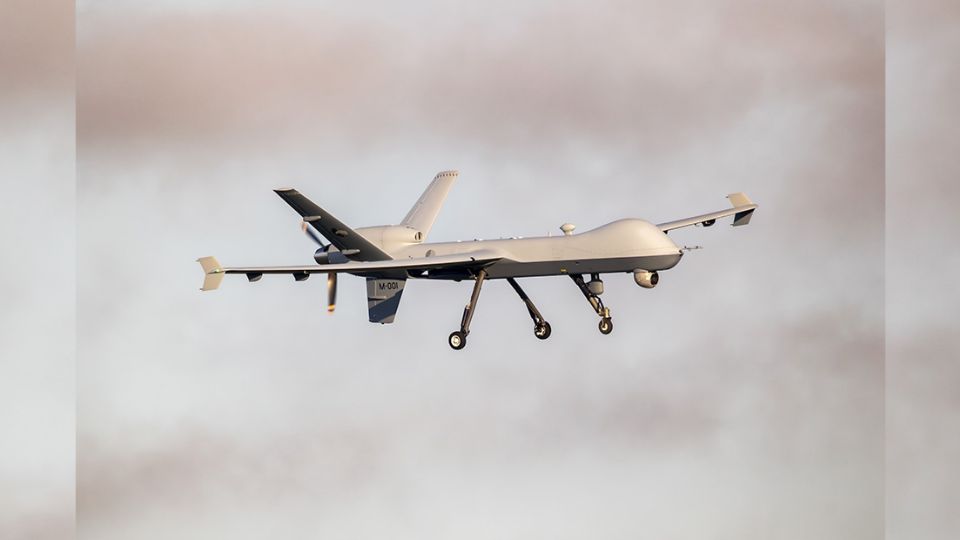
The Luxembourg government has initiated a coordinated security response. Prime Minister Luc Frieden convened Defence and Mobility Minister Yuriko Backes, Interior Minister Léon Gloden and representatives of the relevant authorities to evaluate the situation. An interministerial drone assessment unit is examining the available evidence and coordinating with neighboring countries to establish the circumstances surrounding the sightings. Authorities have not identified the operators, confirmed the drones’ origin or established whether the activity was deliberately intended to disrupt airport operations.
The uncertainty is particularly relevant given the strategic importance of Luxembourg’s aviation infrastructure. Findel Airport serves as the principal hub for Luxair and cargo operator Cargolux, connecting passenger transportation with international freight operations. Unauthorized drones represent a direct safety concern because their proximity to aircraft can create collision risks and interfere with normal airport procedures. Even without a confirmed hostile intention, an unidentified aerial intrusion can require extensive precautionary measures.
The incident also highlights the growing complexity of protecting civilian infrastructure from relatively accessible unmanned technologies. Detection, identification and intervention require coordination between aviation authorities, police, military institutions and air traffic services. Establishing responsibility is a separate investigative challenge, particularly when the aircraft have not been recovered or their operators identified. Luxembourg’s government has emphasized that the available evidence does not support definitive conclusions about the incident.
Flight operations have resumed, but the investigation remains open. The immediate disruption has ended without a confirmed aviation accident, while the authorities continue examining the security implications and potential measures to prevent similar incidents.
The broader challenge concerns the ability of European aviation systems to maintain operational continuity when unidentified aircraft enter restricted airspace.
Phoenix24: inteligencia para audiencias libres. / Phoenix24: intelligence for free audiences.