

 Phoenix 24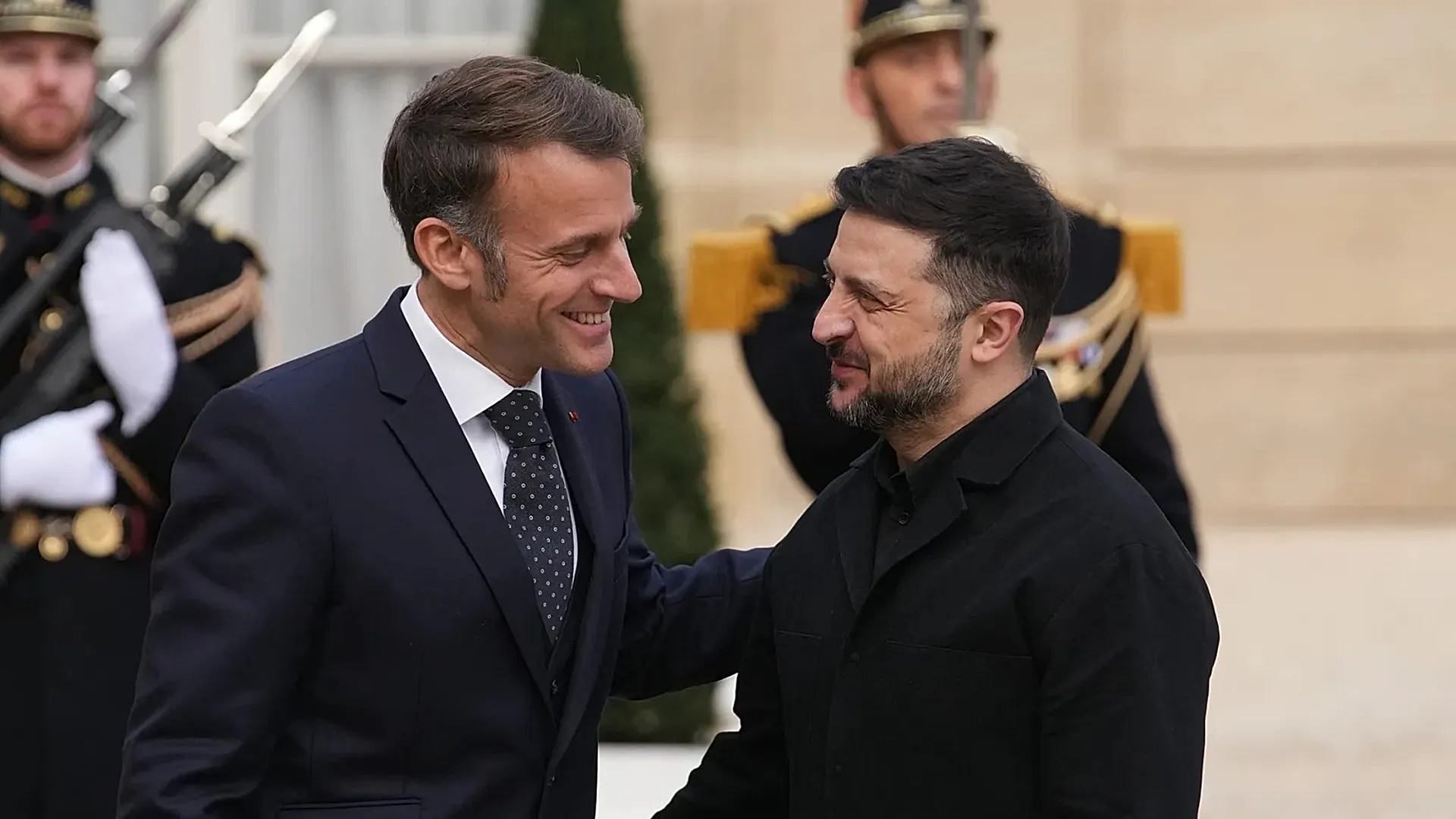
The meeting at the Élysée revealed a simple truth that had been avoided for months: Europe cannot negotiate a future it is unwilling to shape.
Paris, December 2025
The conversation between Volodymyr Zelensky and Emmanuel Macron unfolded as far more than a diplomatic courtesy call. It became an examination of Europe’s strategic identity at a moment when the continent is being pressured to define what “peace” in Ukraine actually means. For both leaders, the core message was unmistakable. No deal over Ukraine can be drafted without Kyiv, and no lasting settlement can rely solely on the political rhythms of Washington or the coercive tactics of Moscow. The meeting thus served as a reminder that the European project is being tested not by declarations of unity, but by the decisions it chooses to defend.
Macron stressed that any framework emerging from recent discussions in the United States must avoid pushing Ukraine into concessions that undermine its sovereignty. Zelensky echoed that sentiment, warning that a peace imposed through fatigue or geopolitical calculation risks becoming an incentive for further aggression. Their joint position is grounded in assessments shared by several European capitals and informed by independent research centers such as the International Crisis Group, which have noted that premature compromises historically deepen instability rather than resolve it.
The political environment surrounding these discussions is complex. The United States faces internal pressures that cast uncertainty over long-term military and financial commitments. Analysts at the Atlantic Council have pointed out that this changing posture amplifies Europe’s need to act as a strategic pillar rather than a reactive auxiliary. For Zelensky, the issue is existential. For Macron, it is a question of whether Europe can function as a coherent actor at all. Their meeting therefore signaled a shift toward diplomatic assertiveness aimed at ensuring that Ukraine’s interests do not become collateral to competing global priorities.
Key European partners have shown support for this line. Berlin, Warsaw and London expressed alignment with the principle that negotiations require credible security guarantees, a position supported by defence experts at SIPRI who warn that fragile settlements collapse when aggressors perceive hesitation among guarantors. France has been exploring the idea of a multinational European security mission to monitor any ceasefire. Although still debated, the proposal gained new traction in Paris as a way to prevent Russia from interpreting diplomatic pauses as strategic victories.
Yet internal disagreements persist. Belgium and several smaller states have hesitated to endorse the full package of mechanisms proposed by the European Commission, especially those involving the use of frozen Russian assets to support Ukraine’s reconstruction. Their concerns range from legal exposure to fears of retaliatory financial measures. Institutions such as the European Central Bank have informally noted the need for legal harmonization to avoid uneven risk across member states. That tension illustrates a deeper fracture inside the Union: the divide between states willing to absorb strategic costs and those prioritizing strict financial caution.
Macron’s position, reinforced during his conversation with Zelensky, is that European hesitation now would erode both credibility and leverage. Russia continues bombardments across Ukrainian cities, and intelligence assessments referenced by NATO StratCom indicate that Moscow interprets political ambivalence in the West as a window for military escalation. For Kyiv, such signals matter. They influence morale, resource planning and internal expectations about the possibility of territorial concessions.
The Élysée talks brought these strands together. Both leaders argued that Europe’s weight in the negotiation process will be measured not only by financial commitments, but by the clarity of its strategic intent. In the absence of sustained American reliability, Europe risks being reduced to observer status, reliant on outcomes shaped elsewhere. Macron insisted that this is unacceptable for a continent that claims leadership in global governance. Zelensky agreed, emphasizing that the legitimacy of any peace agreement depends heavily on whether the guarantors themselves project coherence.
Outside the diplomatic chambers, public opinion across Europe remains divided. Citizens in frontline states display strong support for Ukrainian resistance, while populations farther west express fatigue with prolonged instability. Social research firms across the continent report fluctuating confidence in Europe’s preparedness for long-term security commitments. These dynamics shape the political environment Macron and Zelensky must navigate, especially as governments weigh domestic constraints against international responsibilities.
As the meeting concluded, both leaders returned to their respective capitals facing the same paradox. Europe wants influence without fragmentation and peace without surrender. To achieve either, it must articulate a vision that matches the gravity of the moment. Paris became the stage where this challenge was laid bare. Whether Europe can translate declarations into strategy will determine not only Ukraine’s future, but the credibility of the continent as a geopolitical actor capable of defending its principles beyond rhetoric.
Phoenix24: clarity in the grey zone. / Phoenix24: claridad en la zona gris.