

 Phoenix 24
When artificial creation steps into the spotlight, the art of performance itself begins to question what it means to be human.
Hollywood, September 2025.
Tilly Norwood is not a person in the traditional sense. She does not breathe, age, or learn from lived experience, yet she now stands at the center of one of the most heated debates in the film industry. Entirely generated by artificial intelligence, Norwood was conceived by the creative studio Particle6 as a fully synthetic performer, designed to audition for roles, deliver dialogue, and build a public persona just like any other rising star. Her first appearance, in a short production titled AI Commissioner, marked the beginning of a cultural confrontation that Hollywood had long anticipated but never fully prepared for.
The initial reveal of Tilly was more than a technological showcase. It was a provocation. Projected onto screens during a film summit in Zurich, she appeared with a fabricated biography, a highlight reel and rumors of agency interest in signing her to representation deals. The move ignited immediate controversy across the entertainment world, where the actors’ guild and prominent industry figures condemned the concept of an artificial actress built from data rather than experience.
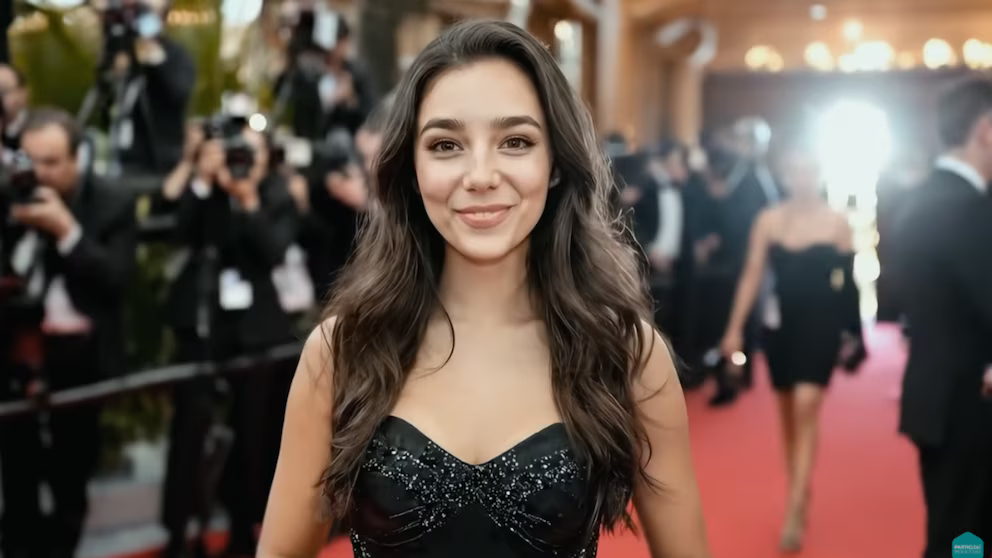
The Screen Actors Guild declared that creativity must remain human-centered and argued that Norwood’s very existence undermines the labor, artistry and emotional authenticity of real performers. Their concern was not merely philosophical. The AI model was trained on vast datasets of human performances such as gestures, vocal inflections and expressions, many of which were likely sourced without permission or compensation. Critics contend that this practice amounts to a form of intellectual appropriation, exploiting decades of collective human creativity to construct a product designed to replace it.
Some actors have spoken out more personally. Emily Blunt described the rise of synthetic performers as deeply unsettling, and other Hollywood veterans echoed fears about a future in which algorithms could undercut both wages and opportunities. Their warnings are not unfounded. According to estimates shared by the creators, AI actors like Norwood could reduce production costs by up to 90 percent, dramatically shifting studio budgets away from salaries, residuals and benefits toward licensing and algorithmic infrastructure.

The economic implications, however, are only part of the story. On a technical level, Norwood demonstrates both the potential and the limitations of synthetic acting. Her facial animations are remarkably lifelike, yet subtle imperfections remain. Micro-expressions appear slightly out of sync, vocal delivery occasionally lacks depth, and emotional transitions sometimes feel mechanically abrupt. These uncanny details reveal the gap between simulation and lived performance, a gap that may narrow but is unlikely to vanish entirely.
Supporters of the project, including its creator Eline Van der Velden, argue that AI performers should be viewed as a new category of art rather than a threat to existing talent. They compare the technology to the evolution of animation or puppetry, tools that once seemed disruptive but eventually expanded the language of storytelling. In their view, Norwood is not a replacement but an addition, a way to explore narratives and aesthetics that human actors alone might not achieve.
Yet fundamental questions remain unanswered. Can audiences truly empathize with a character that has no inner life? Does art lose meaning when it is generated by algorithms rather than lived experience? And how will contracts, intellectual property laws, and union protections adapt to an era in which the performer never sleeps, never ages, and never demands creative control?
These questions are no longer hypothetical. They define the debate about the future of cinema itself. In the coming years, the line between performer and program will continue to blur, forcing both creators and audiences to reconsider what authenticity means on screen. For now, Tilly Norwood stands as both a technological marvel and a philosophical challenge, a mirror reflecting Hollywood’s hopes and fears about the next chapter of storytelling.
Phoenix24: intelligence for free audiences. / Phoenix24: inteligencia para audiencias libres.