

 Phoenix 24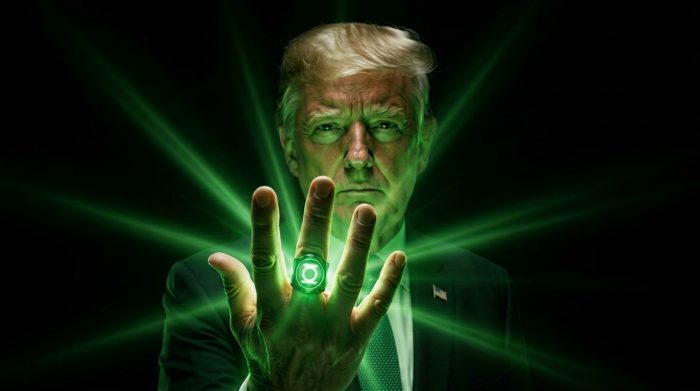
Official political messaging turns another familiar cultural symbol into presidential branding.
WASHINGTON, DC
The White House has released an artificial intelligence-generated video portraying President Donald Trump as Green Lantern, the DC Comics superhero whose power ring transforms willpower into physical objects. The video shows Trump using the ring to construct a border wall, revive American manufacturing and project military strength while invoking the character’s well-known oath.
The imagery fits a broader communication strategy in which official government accounts use memes, cinematic references and AI-generated fantasy to present political objectives as heroic action. Trump has previously appeared in synthetic images as a warrior, religious figure and territorial conqueror. Such content collapses the distinction between institutional communication, political campaigning and online entertainment.
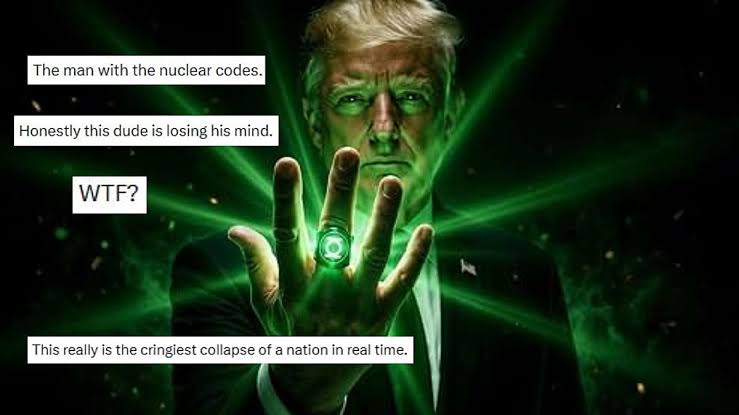
Green Lantern is an unusually contradictory choice for this message. The character belongs to an intergalactic corps rather than acting as an isolated nationalist figure. Its members are selected to protect different civilizations and are expected to exercise immense power through discipline, responsibility and cooperation. Using that mythology to celebrate border exclusion and personalized authority strips away much of the original narrative framework.
Popular culture has always supplied politics with recognizable symbols, but generative AI makes their appropriation faster, cheaper and more difficult to regulate. Characters, visual styles and fictional universes can now be reproduced without the participation of their creators or rights holders. The White House video consequently raises questions about copyright, authorization and whether government institutions should use protected entertainment properties to promote public policy.

The deeper concern is not simply that the reference may be inaccurate. When official communication repeatedly presents a political leader as a superhuman figure, complex public decisions become stories about personal power rather than laws, institutions and collective responsibility. The visual language encourages audiences to identify governance with one individual capable of resolving every conflict through force of will.
Political memes can reach citizens who ignore conventional speeches, making them effective instruments of digital communication. Yet cultural familiarity should not substitute for democratic explanation. A government may borrow the appearance of a hero, but it cannot inherit the values attached to that hero merely by generating an image.
Power becomes dangerous when spectacle replaces responsibility.