

 Phoenix 24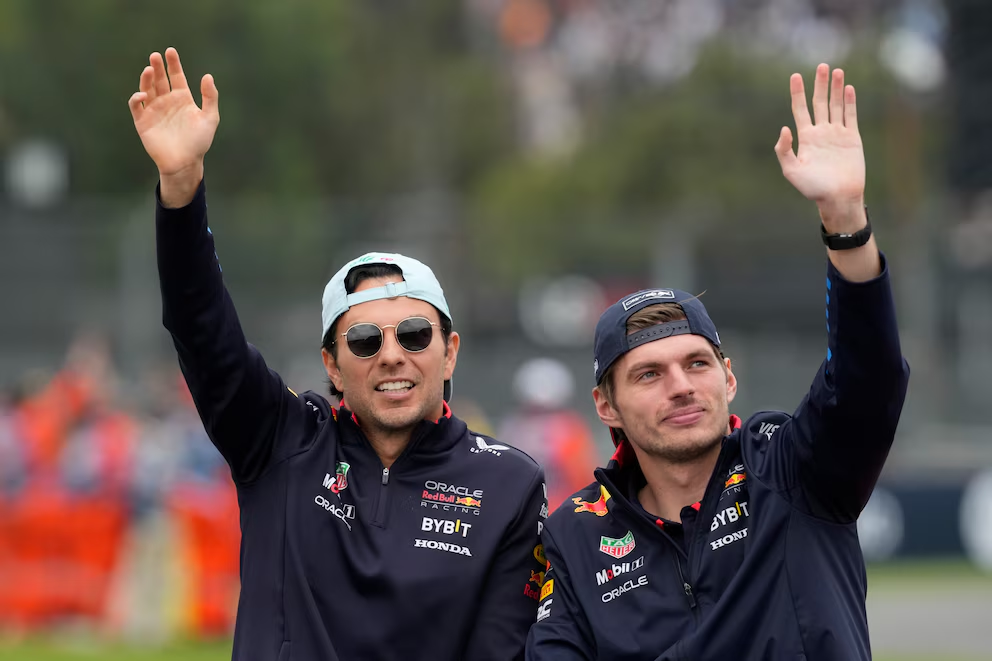
A championship car does not guarantee an easy ride—sometimes it hides a trap.
Guadalajara, October 2025.
Sergio “Sergio Pérez revealed recently what many inside the paddock had whispered for months: the Red Bull Racing F1-car was far tougher to master than its results suggested. After four seasons at Milton Keynes, Pérez said that only now are some observers grasping how steep the learning curve truly was. He pointed out that prior team-movers — such as Alex Albon and Pierre Gasly — also “struggled to unlock it,” meaning the issue was less about driver talent than about the machine itself.
The Mexican driver indicated that the car’s handling characteristics required a style distinct from the one his team-mate Max Verstappen naturally applied. Whereas Verstappen seemed less sensitive to certain balance issues, Pérez admitted he often felt at odds with the RB configuration and was unable to extract its full potential consistently. According to analysts at the Center for Strategic & International Studies in Washington, riding an elite F1 machine risks becoming a question of fitting the car rather than simply driving it.
Pérez’s comments come as Red Bull faces turbulence in its second-seat performance after his departure. From Paris to Tokyo, team observers note that his successors have yet to replicate his consistency, sparking renewed attention on whether the difficulty lay with the cockpit as much as the driver. In Tokyo several engineers shared that aerodynamic upgrades introduced mid-season 2023 amplified instability unless the driver’s technique was extremely precise. Earlier this year the Pan‑American Motorsport Institute released data showing that among top teams the rate of “driver-specific setup revisions” has grown by 18 % in two seasons, underscoring the growing complexity of modern F1 cars.
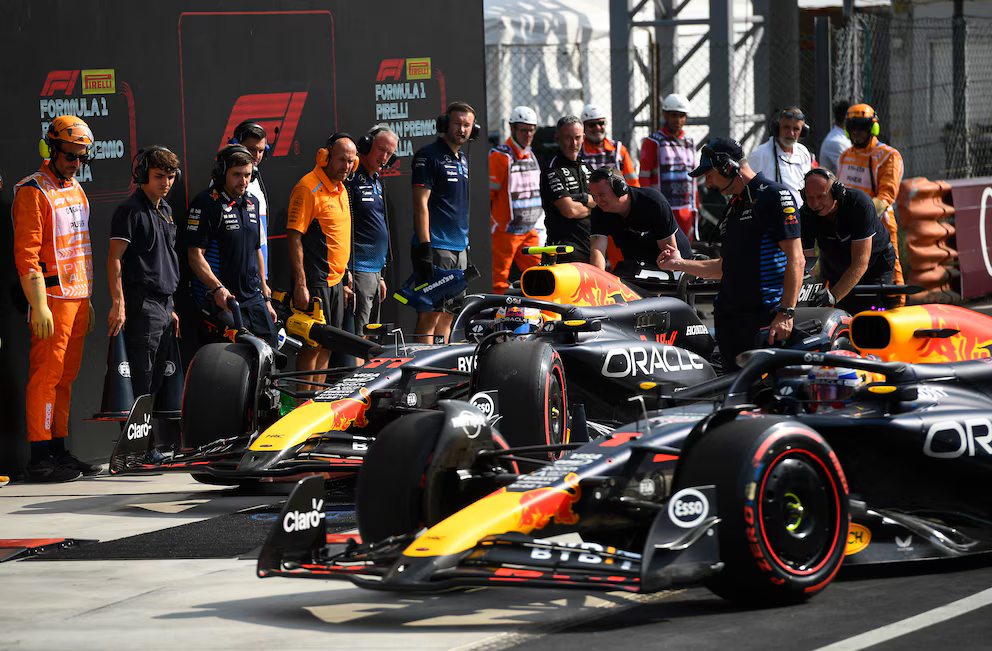
In Europe the discussion echoes across the paddocks. At the annual motorsport conference in Stuttgart there was consensus that the paradigm has shifted: driving the fastest car is no longer synonymous with being the most capable driver — it is about adaptation to the machine. The observation resonates with findings from the European Automotive Research Consortium, which noted that the variance in lap-time between teammates in top teams has narrowed, pointing to car-specific factors as major differentiators rather than raw driver skill.
From the Americas the narrative takes on cultural dimensions. Pérez, one of Mexico’s most celebrated drivers, has spoken of the mental toll that living up to the “ministro de defensa” nickname entailed. In the United States the Institute of Motorsport Studies emphasises that elite driving today demands technical intelligence beyond reflexes: reading suspension changes, tyre behaviour and aero load in real time. The Mexican’s revelation therefore provides rare insight into what his peers describe as “the brain-game of modern Formula 1”.
For Red Bull the implications lie beyond one driver. As the team transitions into new regulations for 2026 and beyond, the feedback loop between driver, car and strategist is under scrutiny. Pérez’s warning is resonant: if the best drivers must adapt to the machine, the machine must also adapt to the driver. If not, the performance ceiling will always favour one cockpit. In Milton Keynes they now face a dual challenge: maintain their champion-driven dominance while ensuring their second driver remains competitive out of the box.
In an ironic twist, Pérez concluded by wishing the team well and urged his former colleagues to pursue success. “I spent four years in that environment, and I know the car demands everything,” he said. Whether the team he left behind will finally heed the message remains to be seen. For now, the Red Bull may look like a prize, but according to one of its former occupants, driving it was a trial in disguise.
Truth is structure, not noise. / La verdad es estructura, no ruido.