

 Phoenix 24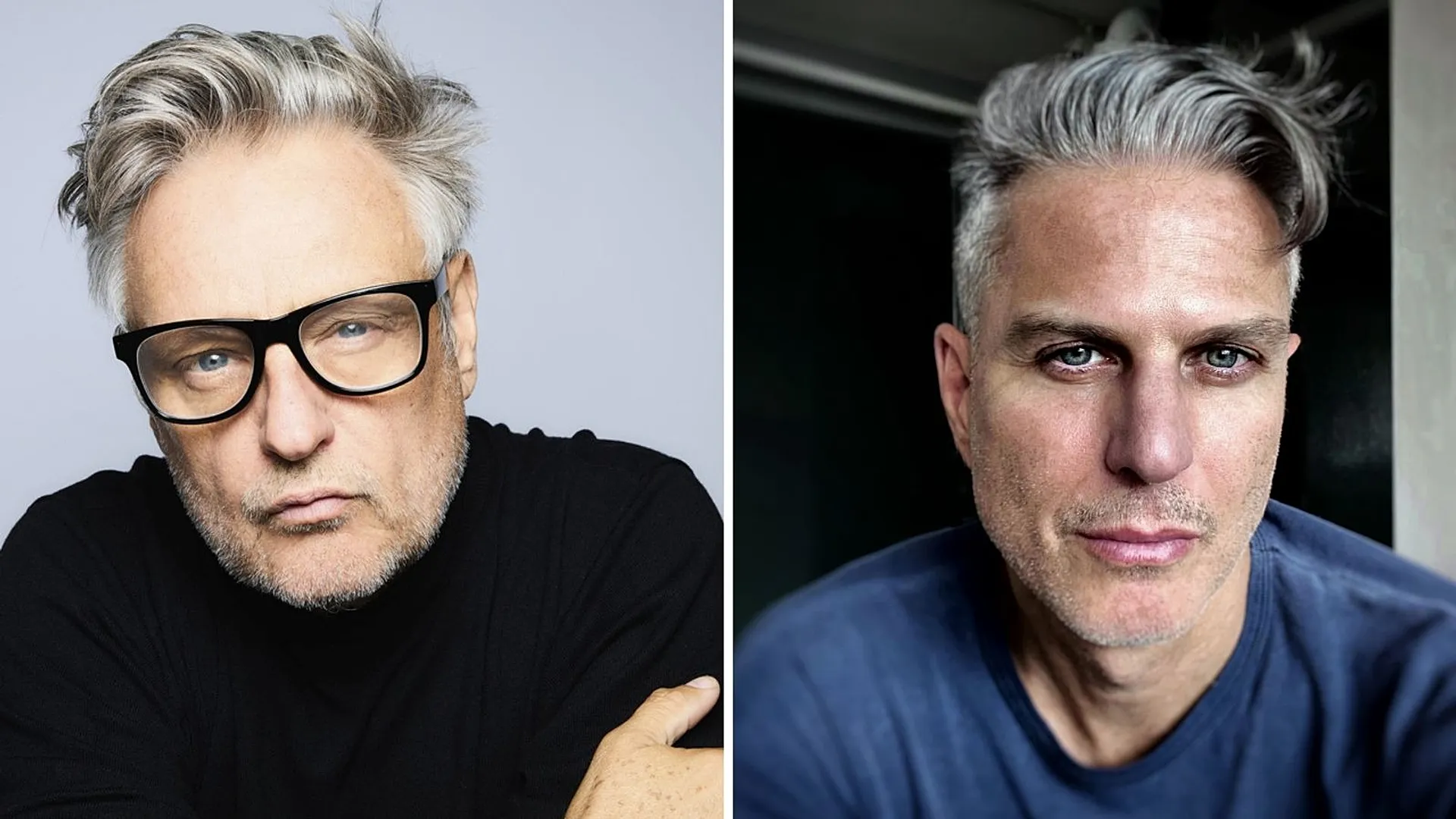
Where does the artist end and the algorithm begin? That question animates the latest dialogue between two of the contemporary art world’s most provocative voices.
London, December 2025.
Renowned portrait photographer Rankin and multidisciplinary artist Phillip Toledano convened in London to engage in a public conversation about the evolving relationship between artistic creation and artificial intelligence. Their debate, staged before an audience of creators, technologists, and cultural commentators, dissected how generative systems are reshaping notions of authorship, creativity, and the lived experience of art in an increasingly algorithmic age.
Rankin, whose work has defined much of the visual language of late twentieth- and early twenty-first-century portraiture, approached the subject with a mix of curiosity and caution. He acknowledged that tools powered by artificial intelligence have expanded the technical palette available to image makers, enabling experiments in form, style, and narrative that would have been prohibitively costly or technically infeasible only a decade ago. Yet he also voiced concern that an overreliance on automated processes risks flattening the singularity of human perspective, rendering art overly homogenous and attenuating the emotional texture that arises from a creator’s embodied experience.
Toledano, whose practice spans photography, video, and conceptual installations, articulated a complementary but distinct perspective. He suggested that intelligence, whether human or artificial, functions as part of a continuum of cultural expression rather than as a discrete binary. For him, the integration of AI into artistic workflows invites a reimagining of the artist’s role: not as sole originator but as curator of emergent relationships between data, context, and intention. In this view, generative systems become collaborators, not replacements, inviting artists to probe latent possibilities embedded within computational logics.
The discussion navigated both the promises and perils that accompany these technological shifts. On one hand, AI tools can democratize access to creative production, lowering barriers for emerging voices and enabling cross-disciplinary experimentation that defies traditional training pathways. On the other hand, both Rankin and Toledano noted the real risk of ecosystem capture, wherein a handful of proprietary platforms dictate aesthetic norms and gatekeep cultural capital. They underscored that the concentration of algorithmic power within corporate infrastructures presents its own cultural politics, shaping not only what art looks like but who gets to make it and for whom.
Ethical considerations also featured prominently in their exchange. Rankin raised questions about consent and representation when artificial intelligence is trained on vast repositories of existing images, many of which were produced without explicit permission for reuse. Toledano echoed these concerns and expanded them to interrogate the psychological and social implications of art that mimics, transforms, or recombines human likenesses without context. Both affirmed that transparency in data sourcing and clear attribution protocols are essential to preserving respect for individual creators whose work inadvertently feeds into generative models.
Audience engagement during the event reflected the complexity of the topic. Emerging artists, coders, and cultural theorists probed how value will be adjudicated in a landscape where outputs once regarded as craft are now algorithmically assisted. Some argued that technical skill has always evolved alongside new tools — from the invention of perspective in Renaissance painting to digital editing in the late twentieth century — and that today’s debates mirror historical shifts whose outcomes were never predetermined. Others voiced anxiety that the hyper-acceleration of computational techniques may outpace cultural frameworks for meaningfully integrating them.
Across Europe, North America, and Asia, institutions are already contending with these questions in their programming, acquisitions, and pedagogical strategies. Museums have curated exhibitions that juxtapose human-made works with AI-assisted creations, inviting visitors to confront the boundaries of intention and computation. Universities offer interdisciplinary curricula that blend art practice with data science and machine learning, reshaping how future generations of artists conceive of creativity itself.
Yet for both Rankin and Toledano, technical proficiency was not the ultimate criterion for meaningful artistic work. They emphasized that art’s value lies in its capacity to evoke, challenge, and expand human understanding — attributes that resist simple quantification. In this sense, artificial intelligence becomes one more layer in an ongoing cultural dialogue about expression, identity, and the limits of representation.
Their exchange concluded not with definitive answers, but with an invitation: to imagine creative futures that neither fetishize technology nor retreat from its implications. In doing so, they reaffirmed an enduring principle of artistic practice — that questions, even unresolved ones, catalyze the deepest forms of inquiry.
Phoenix24: clarity in the grey zone. / Phoenix24: claridad en la zona gris.