

 Phoenix 24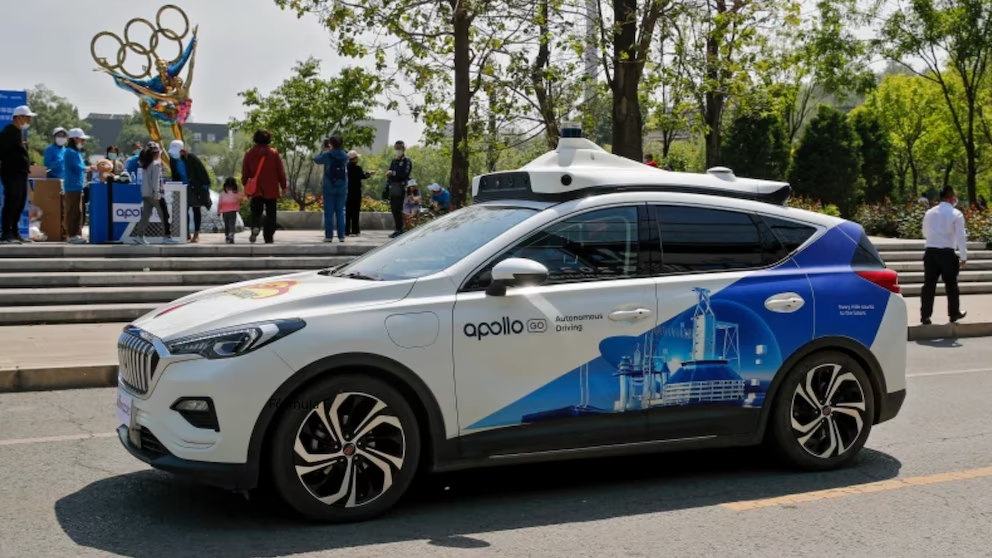
The arrival of robotaxis marks a structural shift in how cities negotiate technology, regulation, and public trust.
London, December 2025
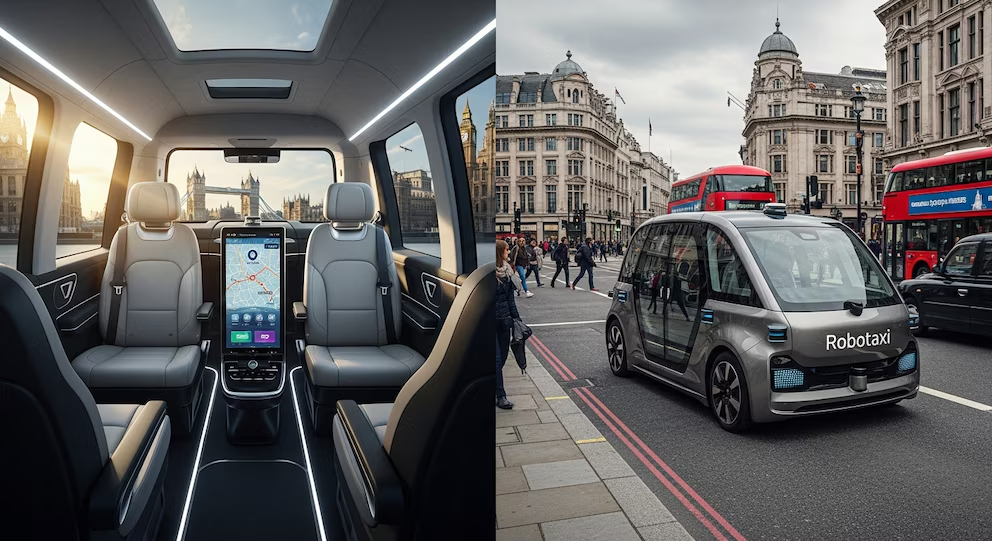
London is preparing to enter a new phase in urban mobility as ride hailing platforms Uber and Lyft move forward with plans to test autonomous robotaxis developed by the Chinese technology group Baidu. The initiative places the British capital at the center of a global experiment in driverless transportation, one that extends far beyond convenience and cost reduction and into the terrain of regulation, geopolitics, and societal acceptance of artificial intelligence in everyday life.
The project envisions pilot operations using Baidu’s autonomous vehicle platform, a system already deployed at scale in several Chinese cities. These vehicles are designed to operate without human drivers, relying on a combination of sensors, machine learning models, and real time decision systems capable of navigating dense urban environments. London, with its irregular street layout, heavy traffic, and unpredictable driving patterns, represents one of the most demanding test cases for such technology.
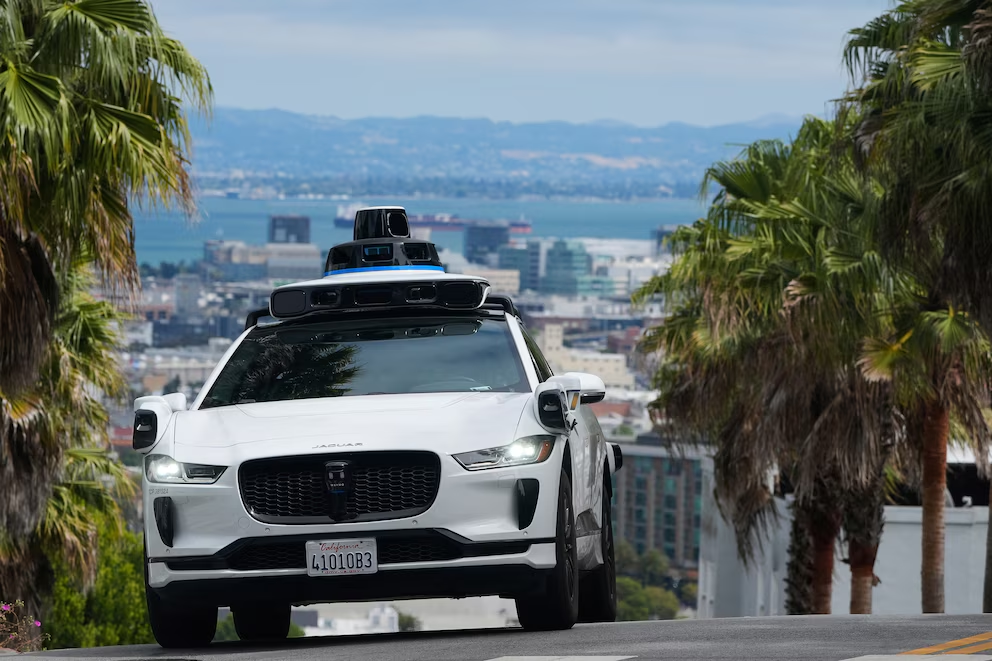
For Uber and Lyft, the move reflects a strategic recalibration rather than a technological gamble. Both companies have gradually shifted away from developing proprietary autonomous systems, opting instead for partnerships with firms that already possess mature platforms. This approach reduces capital intensity while allowing rapid entry into markets where regulatory frameworks are becoming more permissive. London’s legal environment, reshaped in recent years to clarify liability and operational responsibility for autonomous vehicles, has emerged as particularly attractive for large scale trials.
From a regulatory perspective, the United Kingdom has positioned itself as a European frontrunner in autonomous vehicle governance. Recent legislation establishes that responsibility for accidents involving fully autonomous vehicles rests with the operating entity rather than passengers, a crucial distinction that lowers legal uncertainty for companies deploying the technology. This clarity has been instrumental in attracting international players seeking predictable conditions for experimentation.
Baidu’s involvement adds a significant geopolitical layer to the initiative. The company has accumulated extensive operational data from millions of autonomous rides in Asia, giving it a practical advantage over many Western competitors still confined to limited pilot zones. Its expansion into Europe signals a broader ambition to export Chinese artificial intelligence systems into regulated Western markets, challenging the long standing dominance of US based technology firms in this domain.
The selection of London is not incidental. As one of the world’s most complex urban ecosystems, the city offers an unparalleled stress test for autonomous systems. Success in London would strengthen claims that driverless technology is ready for deployment in other global capitals, while failure would reinforce skepticism about its near term viability. The stakes, therefore, extend well beyond the British market.
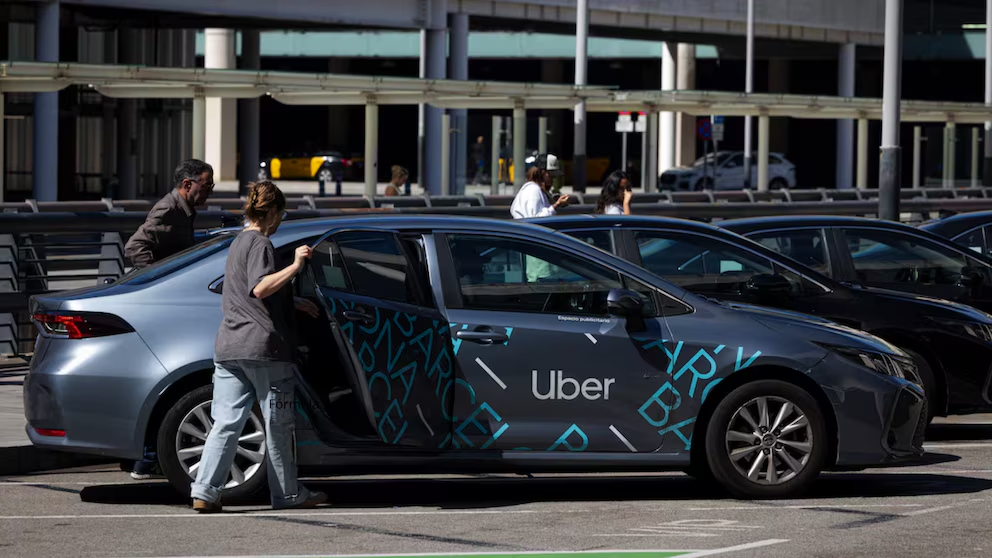
Public perception remains a critical variable. Surveys conducted across Europe indicate cautious optimism toward autonomous vehicles, tempered by concerns over safety, job displacement, and algorithmic accountability. In London, where taxi services and private hire vehicles employ tens of thousands of drivers, the social implications of widespread automation are particularly sensitive. Authorities and companies alike are aware that technical performance alone will not determine acceptance. Transparency, incident response, and clear communication will be essential to maintaining public trust.
Economically, the promise of robotaxis lies in reshaping cost structures. Removing the driver from the equation could significantly lower operating expenses over time, enabling cheaper fares or higher margins. However, this transition requires substantial upfront investment in infrastructure, fleet maintenance, and continuous software updates. The pilot phase in London is therefore less about immediate profitability and more about validating long term business models.
The trials are also likely to influence urban planning debates. Autonomous fleets could reduce private car ownership, alter demand for parking, and change traffic flow patterns. Conversely, they could also increase vehicle miles traveled if convenience leads to higher usage. Policymakers will be watching closely to assess whether robotaxis contribute to sustainability goals or complicate them.
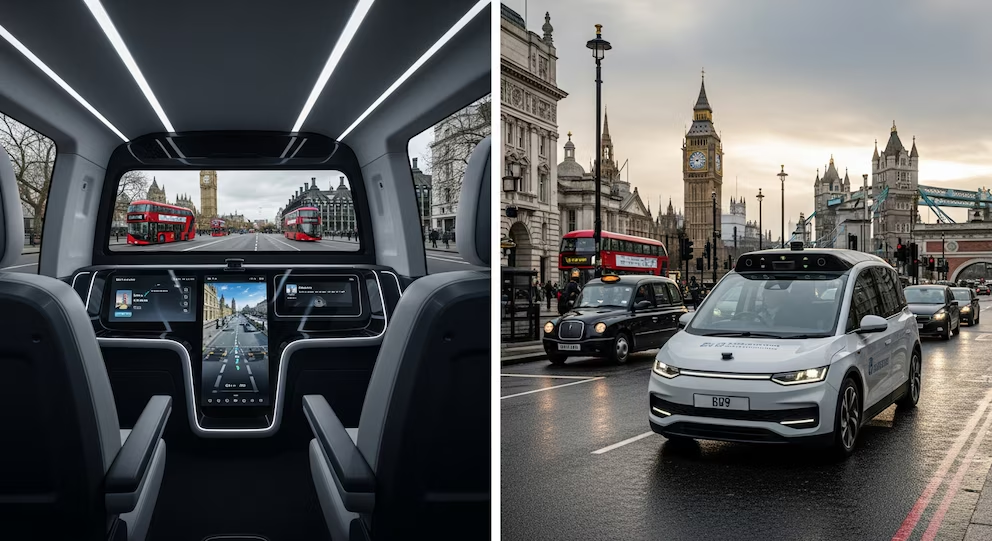
Internationally, the London tests will be closely observed by regulators in Europe, North America, and the Middle East. A successful deployment could accelerate harmonization of autonomous vehicle rules across jurisdictions, while technical or safety setbacks would likely slow regulatory momentum. In this sense, London functions as a bellwether for the global trajectory of autonomous mobility.
What is unfolding is not merely a transportation experiment but a negotiation between technology and governance. Autonomous vehicles challenge traditional assumptions about responsibility, control, and human agency in public space. By allowing robotaxis onto its streets, London is effectively testing not only machines but institutional readiness for a future where decision making is increasingly delegated to algorithms.
As pilot operations approach, the city stands at the intersection of innovation and caution. The outcome will shape how quickly autonomous mobility moves from novelty to norm, and whether public confidence can keep pace with technological ambition. London’s streets, long shaped by centuries of human judgment and improvisation, are now poised to become a proving ground for machine driven order.
Phoenix24: clarity in the grey zone. / Phoenix24: clarity in the grey zone.