

 Phoenix 24
Free chat stays, the interface gets priced.
Menlo Park, March 2026
Meta is preparing an optional paid tier for WhatsApp under the name WhatsApp Plus, positioning it as a premium layer of customization rather than a paywall on messaging itself. The concept, as described in reporting that cites the WhatsApp-focused leak outlet WaBetaInfo, is straightforward: the core product remains free, but users who want deeper control over the look and feel of the app, plus a few organization upgrades, would pay a monthly subscription for features that are deliberately non-essential. That design choice is not accidental. If Meta charged for basic chatting, it would risk breaking WhatsApp’s most important cultural asset, the assumption that the app is a utility. If Meta charges for status, aesthetics, and convenience, it monetizes the heaviest users and the most identity-driven users without triggering mass revolt.

The rumored feature list is revealing because it targets “experience control” rather than raw functionality. WhatsApp Plus is said to include visual personalization, themes, interface colors, and icon packs, including up to 14 new app icons that let users change the logo style and color combinations. It also raises the limit on pinned conversations from the current three to as many as twenty, a change aimed at people who treat WhatsApp as a workflow hub rather than a casual chat tool. On top of that, it reportedly introduces audio personalization, exclusive call ringtones and possibly other sounds that help users distinguish WhatsApp activity from regular device notifications. Additional exclusives under development are described as sticker packs and richer message reactions. None of this is necessary to send a message. That is the point. The paid tier sells identity and convenience without threatening the social baseline.
This is also why the name WhatsApp Plus matters more than it should. For years, WhatsApp Plus has been widely associated with unofficial modified apps, the kind of third-party clients that promise extra features but often violate platform rules and can expose users to security and privacy risks. WhatsApp itself has publicly described WhatsApp Plus as an example of an unofficial app in its help guidance, a category it discourages and can penalize. By using the same label for an official subscription, Meta is attempting a brand reversal: taking a name historically linked to grey-market customization and turning it into a sanctioned, paid, controlled version of the same appetite. It is a clever move if it works, because it converts a long-standing user desire into revenue while pulling customization back inside Meta’s governance. It is also risky, because it can create confusion. Some users may assume the new Plus legitimizes the old mods, while others may distrust the label precisely because it has a history.
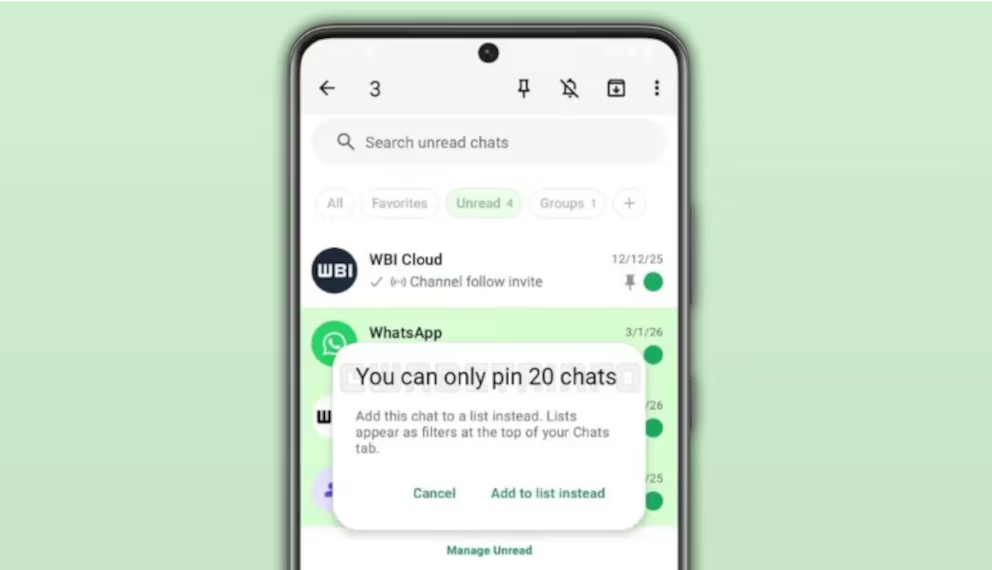
The deeper economic logic is consistent with where messaging platforms have been headed. WhatsApp has already been expanding monetization around business messaging, channels, and other attention surfaces. A consumer subscription tier is the cleanest way to add revenue without inserting friction into private chats, and it does not require WhatsApp to pretend it can out-advertise social networks. Personalization is a low-conflict monetization lever because it feels optional, it can be marketed as self-expression, and it scales globally without depending on local ad markets. Raising pinned chat limits is even more strategic, because it targets the users who create the most “stickiness,” the ones for whom leaving WhatsApp would mean reorganizing their daily life.
The subscription framing also signals a shift in how Meta thinks about product differentiation. For years, WhatsApp’s value proposition was simplicity and universality. The interface was almost ideologically minimal. That minimalism helped the app win, but it also limited monetization options. WhatsApp Plus suggests Meta now believes the product can carry segmentation without losing its core identity. In other words, WhatsApp can remain the default utility while still offering a status layer for those who want their app to feel unique. This mirrors the broader consumer internet trend where free remains the base, but identity features become the upsell.
There is a governance advantage for Meta as well. If users pay for personalization inside the official app, they have less incentive to chase unofficial clients. That reduces security risk, reduces platform fragmentation, and reinforces Meta’s control over the user experience. It also helps Meta respond to a structural reality: messaging apps have become infrastructure, and infrastructure attracts both regulation and abuse. A paid tier centered on personalization is easier to defend publicly than a paid tier that alters access or communications rights. It is also easier to implement without triggering complex legal debates about essential services, discrimination, or digital exclusion.
Still, the plan carries reputational and product risks. First, there is the risk of confusion with unofficial WhatsApp Plus mods, which could produce user harm if people search for Plus and download the wrong thing. Second, there is the risk of expectation creep. Once a paid tier exists, users will ask why genuinely useful features are not included, better search, advanced spam controls, stronger account recovery, or enhanced multi-device management. If Meta keeps Plus too cosmetic, critics will call it superficial monetization. If Meta makes Plus too functional, critics will argue WhatsApp is slowly becoming pay-to-use. The line is narrow, and messaging apps operate on trust more than most products.
The most honest reading is that WhatsApp Plus is a test of monetizing taste. It sells the feeling of ownership in a platform that billions of people share. It asks users to pay not to communicate, but to communicate with a personalized skin and a more organized inbox. If Meta can pull this off, it opens a new revenue stream that does not break WhatsApp’s social contract. If it misjudges the boundary, it risks turning the world’s most ordinary app into a new battlefield over what should remain free.
Narrative is power too. / La narrativa también es poder.