

 Phoenix 24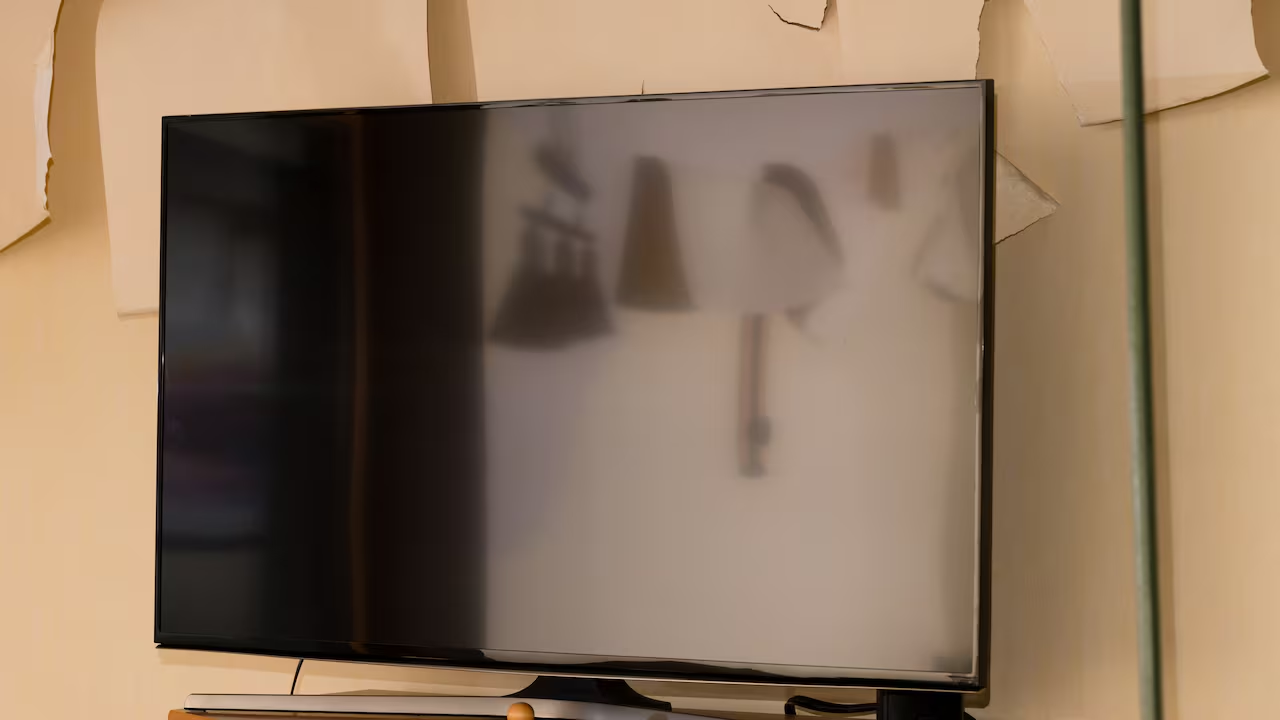
The safest diagnosis begins before pressing the power button.
Colombia, August 2026
A television that fails to switch on after an earthquake may have suffered anything from a temporary power interruption to serious internal or structural damage. Before attempting to restart it, however, occupants should prioritise personal safety, possible gas leaks, damaged wiring and the stability of the building.
Aftershocks can move furniture, detach screens from wall mounts and further weaken already damaged structures. No appliance should be inspected while shaking continues or before authorities have indicated that the property is safe to enter. If the television has shifted, fallen or remains unstable, it should not be touched until the surrounding area has been secured.

The presence of gas creates an immediate emergency. Anyone who smells gas or hears hissing should leave the building without operating light switches, electrical outlets, appliances or telephones inside. Even a small electrical spark can ignite accumulated gas, making an apparently harmless attempt to turn on a television potentially dangerous.
Visible sparks, scorched outlets, frayed wires or the smell of hot insulation also indicate that the electrical system may be compromised. If the main supply can be disconnected safely and without crossing standing water, power should be turned off. Otherwise, the inspection should be left to emergency personnel or a licensed electrician.
Once the building and its utilities have been declared safe, the first step is to determine whether the problem affects only the television. Household lights or another undamaged, low-risk device can indicate whether electricity has been restored. A regional outage, tripped breaker or damaged circuit may explain the failure without implying that the screen itself has been destroyed.
The television should then be disconnected from the outlet, but only if the plug, cable and surrounding area show no signs of physical or electrical damage. Pulling directly on a damaged cable can expose conductors or increase the risk of electric shock. The plug should be handled by its insulated body with dry hands.
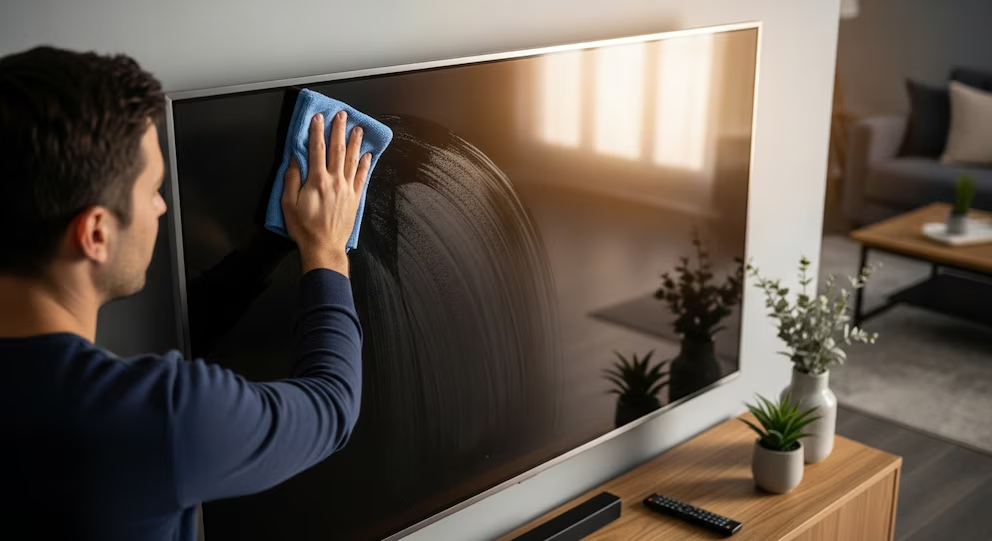
Modern televisions contain electronic protection systems that may shut the equipment down after an interruption or voltage fluctuation. Leaving the set unplugged for several minutes allows residual electrical charge to dissipate and may reset the internal power system. Manufacturer instructions vary, so the owner’s manual should take precedence over generic recommendations.
Before reconnecting the television, the power cable, plug, wall outlet and any surge protector should be examined carefully. Cracks, deformation, looseness, burn marks or unusual odours are reasons to stop immediately. A television that fell during the earthquake should not be powered on even when the exterior appears largely intact because internal boards, connectors or the panel may have fractured.
If no damage is visible and the electrical installation has been verified as safe, the set can be connected directly to a confirmed working outlet for a controlled test. Extension cords, damaged power strips and questionable voltage regulators should be avoided. External devices such as consoles, streaming boxes and decoders can remain disconnected during the initial diagnosis.
The standby indicator can provide useful information. A steady light usually shows that the television is receiving electricity, in which case the problem may involve the remote control, the physical power button or an internal component. If the device responds to its built-in button but not the remote, replacing or reseating the remote’s batteries may resolve the issue.
An absent standby light may indicate a failed outlet, disconnected cable, damaged power supply or loss of electricity. A blinking light commonly signals a power or internal hardware fault, although the meaning varies between manufacturers and models. Repeated attempts to switch on a television displaying this behaviour can worsen the damage.
A black screen does not always mean that the entire television is dead. If sound is present but no image appears, the failure may involve the backlight, display circuitry or panel connection. A faint picture visible under controlled inspection can suggest a lighting problem, but the television should still be evaluated professionally, especially after a physical shock.
Clicking sounds, smoke, burning smells, repeated shutdowns or unusual heat require immediate disconnection if that can be done safely. The device should not be opened at home. Televisions contain capacitors capable of retaining a dangerous electrical charge even after the power cable has been removed.
A qualified or manufacturer-authorised technician can determine whether the failure affects the power board, main board, backlight system or display panel. Power-supply and backlight problems may be economically repairable, while a fractured panel often costs nearly as much as replacing the television. A professional diagnosis prevents unnecessary replacement and unsafe experimentation.
Power restoration after an earthquake can also produce voltage instability. Unplugging sensitive electronics during an outage helps protect them when electricity returns. Surge protection can reduce exposure to some fluctuations, but it cannot compensate for damaged household wiring or guarantee protection against every electrical event.
Prevention begins before the next emergency. Large televisions should be secured with appropriate straps or seismic mounts attached to structural supports rather than only to drywall. Entertainment units should be anchored, heavy devices should remain away from exits and cables should have enough flexibility to avoid being torn from outlets during movement.
A television that remains dark may be inconvenient or expensive, but it is rarely the first problem that should be solved after an earthquake. The correct sequence is to protect people, verify the building, inspect the utilities and only then evaluate the equipment. Recovering a screen is useful. Avoiding electrocution, fire or structural injury is essential.
Safety begins where urgency ends. / La seguridad comienza donde termina la urgencia.