

 Phoenix 24
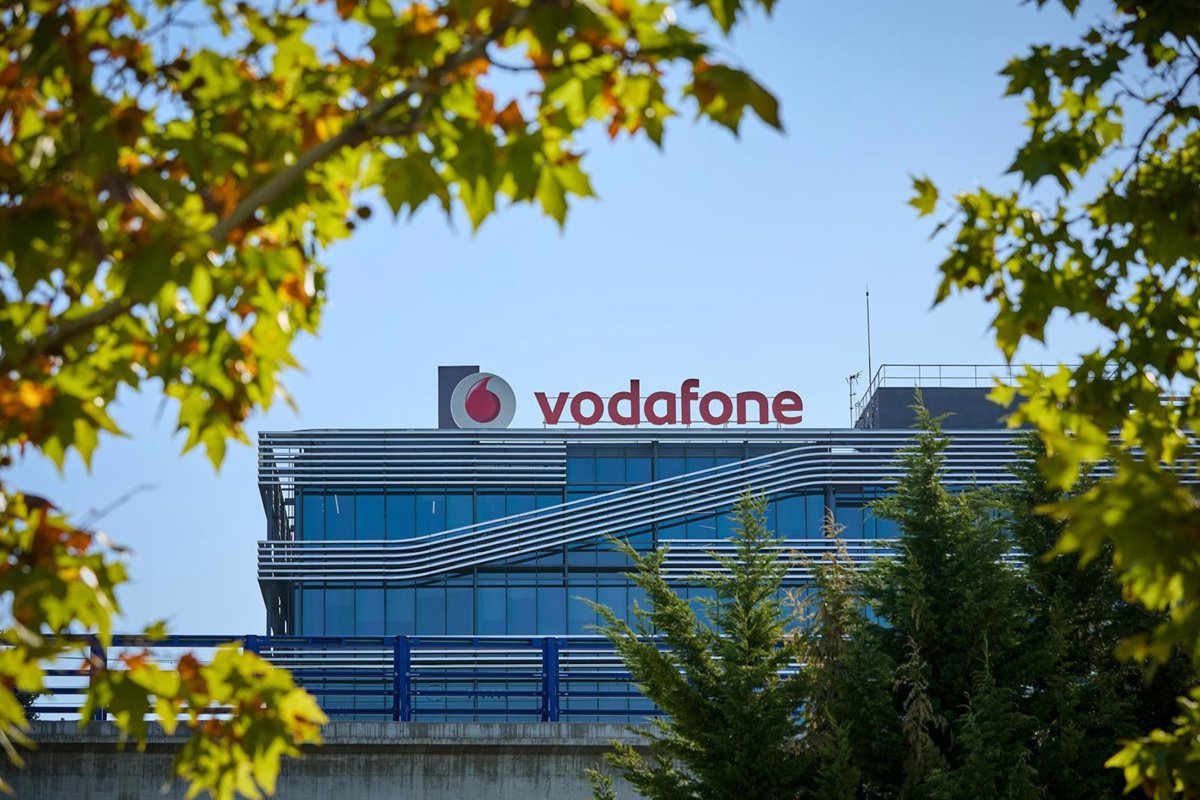
Stronger revenues contrast with mounting pressure in Europe’s largest economy.
LONDON, UNITED KINGDOM
Vodafone has raised its annual earnings and cash flow forecasts despite reporting a substantial first-half net loss, reflecting the contrasting fortunes of a telecommunications group benefiting from international expansion while struggling to restore profitability in Germany.
The British company announced on November 10 that it recorded a consolidated net loss of €3.6 billion for the six months ending September 30, 2026, compared with a €1.1 billion profit during the corresponding period a year earlier.
The loss attributable specifically to Vodafone’s parent-company shareholders reached €4.79 billion.
The deterioration was primarily associated with a €4.85 billion impairment charge against the value of its German business. Vodafone attributed the adjustment largely to higher German government bond yields, which increased the discount rate used to assess the operation’s expected future cash flows.
The impairment is a non-cash accounting charge rather than an equivalent immediate outflow of company funds. Nevertheless, it reflects a reduction in the assessed economic value of one of Vodafone’s most important businesses.
Germany remains the group’s largest European market, accounting for approximately 30% of service revenue. During the reporting period, German revenue reached €6.1 billion, while adjusted earnings declined 3.2% organically.
The business continues to face competition in mobile services and the consequences of regulatory changes that ended the widespread practice of including television subscriptions in residential rental arrangements.
Chief Executive Margherita Della Valle acknowledged that performance in Germany remains below the company’s expectations, while emphasizing the stronger results achieved across the broader group.
Vodafone reported total revenue of €21.85 billion, an increase of 11.4%, supported by the consolidation of Safaricom, VodafoneThree and Telekom Romania.
Organic service revenue increased 5.8%, while adjusted earnings before interest, taxes, depreciation and amortization, after lease costs, rose 12.6% to €6.45 billion.
These improvements prompted Vodafone to raise its fiscal 2027 adjusted earnings forecast to between €13.2 billion and €13.4 billion, compared with its previous range of €13.0 billion to €13.3 billion.
The company also increased its adjusted free cash flow guidance to €2.8 billion–€3.0 billion, signaling confidence in its operational restructuring and cost-management strategy.
That strategy carries significant employment consequences.
Vodafone reported approximately 3,000 job reductions across its European operations and shared services during the first half, generating more than €200 million in gross savings. It has also announced approximately 2,300 additional position reductions in Germany.
The broader restructuring began in 2023 and has involved the disposal of operations in Italy and Spain, alongside efforts to concentrate investment in markets offering stronger commercial opportunities.
Other accounting adjustments also affected the half-year results, including a €2.2 billion reduction in deferred tax assets in the United Kingdom. These charges were partially offset by a non-cash gain associated with the Safaricom transaction.
For investors, the financial announcement presents a complicated picture. Revenue growth, operational savings and improved forecasts indicate progress, but the German impairment highlights the difficulties of restoring value in mature telecommunications markets.
Vodafone’s next challenge will be demonstrating that its restructuring can deliver sustained earnings and cash generation without compromising the quality of services or its long-term competitive position.
The results illustrate a fundamental distinction in corporate finance: improving operational performance can coexist with substantial accounting losses when the value of major investments comes under pressure.
Beyond the Numbers, Financial Accountability Matters.