

 Phoenix 24
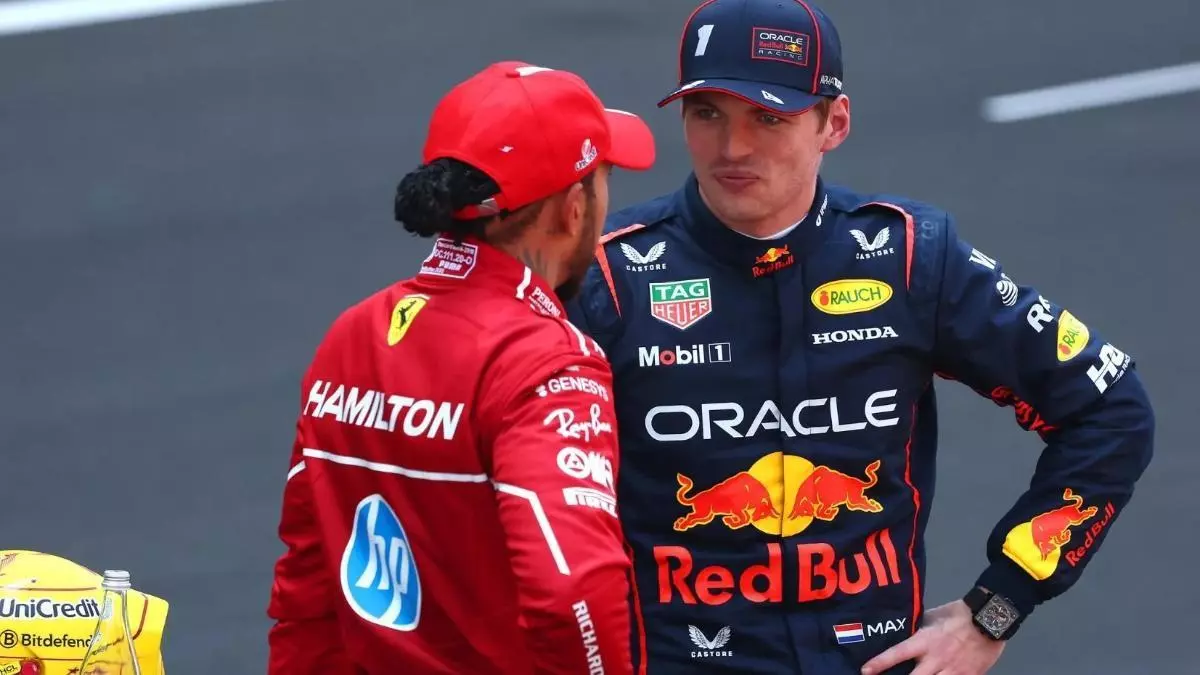
The Red Bull champion questions the value of equal leadership.
SÃO PAULO, BRAZIL
Max Verstappen has questioned Ferrari’s approach to managing Lewis Hamilton and Charles Leclerc, arguing that Formula 1 teams should establish a clear driver hierarchy rather than allow two leading competitors to pursue victories without defined priorities.
The four-time world champion made the comments during the São Paulo Grand Prix weekend, following a controversial confrontation between the Ferrari teammates at the Mexican Grand Prix.
Speaking to Viaplay, Verstappen explained that he would avoid signing two drivers who both expect to occupy the leading position within a team.
His argument centers on the difficulty of balancing individual ambitions with the collective objectives of a racing organization, particularly when both drivers believe they have a realistic opportunity to win.
The debate intensified after Hamilton and Leclerc fought for position during the opening lap in Mexico City.
Hamilton started from pole position, while Leclerc qualified third. Their confrontation at Turn 4 forced both drivers off the circuit, allowing Verstappen to exploit the situation and move ahead of Hamilton.
Leclerc subsequently received a five-second penalty for gaining an advantage outside the track limits.
Verstappen ultimately won the race, with Hamilton finishing second and Leclerc fourth.
The result intensified criticism of Ferrari’s internal management because the team had demonstrated sufficient competitiveness to challenge for victory.
Verstappen suggested that a clearly defined first and second driver could have protected Ferrari’s position and prevented unnecessary competition between teammates.
He acknowledged, however, that ambitious drivers naturally resist yielding to one another, particularly when they believe they possess the ability to win.
The Dutchman’s philosophy reflects his experience at Red Bull, where the team has generally organized its competitive strategy around a principal driver supported by a teammate capable of contributing valuable championship points.
He also pointed to Formula 1 history, where successful partnerships have frequently combined an established team leader with a supporting driver.
Nevertheless, the question remains controversial.
Allowing teammates to compete on equal terms can encourage performance and preserve sporting independence. Establishing a hierarchy can simplify strategic decisions but may restrict one driver’s opportunities, especially when both demonstrate comparable speed.
Ferrari team principal Frédéric Vasseur has already addressed the Mexican incident with Hamilton and Leclerc.
The discussions took place during the São Paulo Grand Prix weekend, although Vasseur declined to disclose the details of the conversations or announce changes to the team’s racing arrangements.
Ferrari has not publicly designated either driver as its permanent number one.
The disagreement illustrates a recurring management dilemma in Formula 1: whether internal competition strengthens a team or creates unnecessary risks when championship points are at stake.
For Ferrari, the issue extends beyond resolving a single racing incident. The organization must establish expectations that allow two accomplished drivers to compete without repeatedly compromising collective results.
Verstappen’s intervention offers one perspective on that challenge, informed by his own experience but not necessarily applicable to every team or competitive situation.
Ultimately, the debate concerns more than driver selection. It raises a fundamental question about leadership, competitive incentives and the balance between individual achievement and organizational performance.
Beyond the Finish Line, Strategy Defines Success.