

 Phoenix 24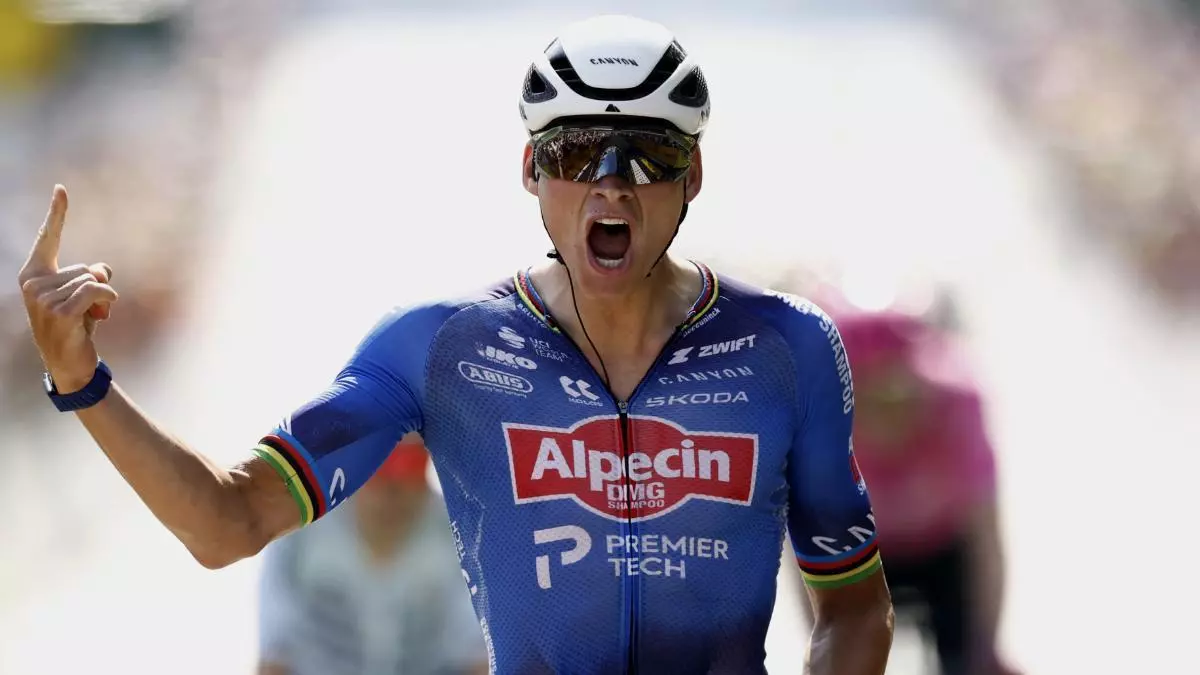
A brutal day restored the champion’s fiercest rhythm.
Ussel | July 2026
Mathieu van der Poel returned to the front of the Tour de France by winning the ninth stage after surviving an exhausting day of attacks, extreme temperatures and tactical uncertainty. The Dutch rider prevailed in Ussel after escaping with a select group and resisting the peloton’s final pursuit. His victory restored momentum after several difficult days.
The route crossed demanding terrain before reaching Ussel under conditions shaped by an intense heat warning. High temperatures transformed the stage into a test of physical resistance as much as cycling strategy. The pressure forced riders to manage hydration, energy and tactical ambition with unusual precision.
Van der Poel admitted that he had struggled during the opening week of the Tour. His physical sensations had not matched expectations, and his team had been unable to convert earlier opportunities into victory. The result therefore carried emotional significance beyond the stage itself.
The race was aggressive from its opening kilometres. Repeated attacks prevented the peloton from establishing a stable rhythm, while riders searched for a breakaway capable of surviving across the rolling terrain. Van der Poel remained patient until the decisive movement began to form.
The leading group eventually brought together riders with climbing ability, tactical intelligence and explosive finishing power. Their cooperation made the escape difficult to control, although the peloton continued reducing the advantage as the finish approached. Every acceleration increased the tension between collective survival and individual ambition.
Van der Poel produced his most important move during the final section of the stage. His acceleration reduced the leading group and confirmed that he had recovered the strength required to shape the race rather than merely endure it. The attack placed him in the position from which he could contest the victory.
The final kilometres became a struggle between cooperation and calculation. The escaped riders needed to maintain their advantage, but each understood that excessive effort could deliver the stage to a rival. That hesitation allowed the chasing peloton to move dangerously close.
Van der Poel entered the final sprint with the experience of a rider accustomed to the pressure of cycling’s greatest one-day classics. He waited for the decisive moment before launching his acceleration. The narrow margin at the finish demonstrated how close the breakaway came to being absorbed.
The victory also changed the atmosphere around Alpecin-Premier Tech. The team had entered the Tour seeking stage success rather than the general classification, but its opening performances had not produced the expected result. Van der Poel’s triumph validated its aggressive approach.
His performance reflected the qualities that have defined his career. He can attack on short climbs, sustain power across difficult terrain and finish with the speed of a specialist sprinter. That combination makes him particularly dangerous on stages resembling the great spring classics.
The Dutchman described the day as extremely difficult and acknowledged that he had been suffering before finding the legs needed to win. His reaction revealed relief as much as celebration. After days of uncertainty, the stage proved that his competitive instinct remained intact.
The heat became one of the central narratives of the race. Riders were forced to maintain elite speeds while confronting exceptional physiological stress. The conditions renewed questions about how professional cycling should respond to increasingly frequent episodes of extreme weather.
Van der Poel’s victory did not alter the general classification, where the principal contenders continued their separate battle for the yellow jersey. His renewed form nevertheless expands the tactical possibilities for the stages ahead. A rider who had been enduring the Tour has once again become capable of defining it.
Hechos que no se doblan. / Facts that do not bend.