

 Phoenix 24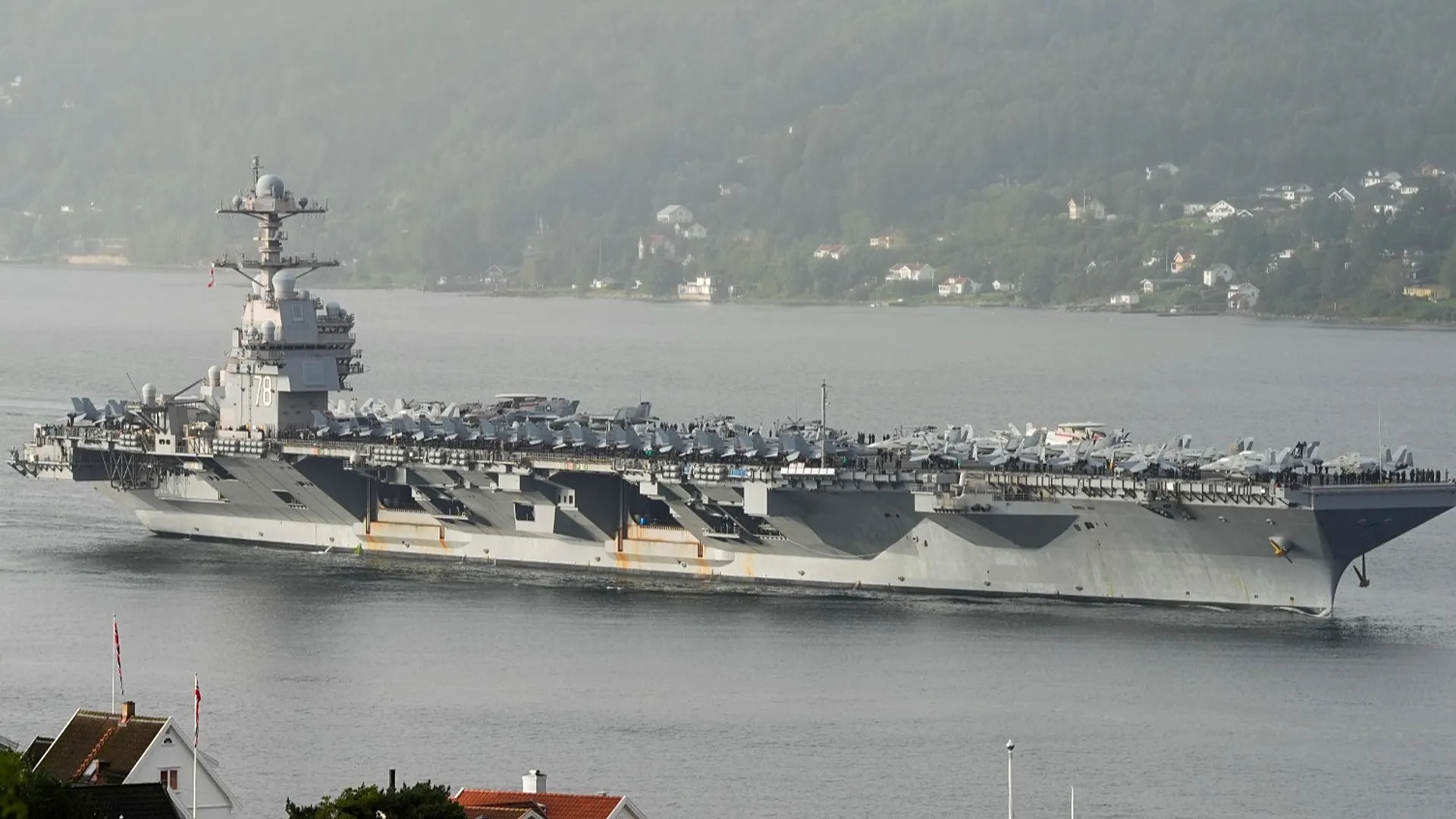
A maneuver that echoes the Cold War has stirred the waters of the Caribbean.
Panama, October 2025. The USS Gerald R. Ford, the largest and most technologically advanced aircraft carrier in the U.S. Navy, has entered Caribbean waters under the command of the U.S. Southern Command. Officially, the deployment is framed as an intensified counternarcotics operation, yet its scale and timing have raised concern among Latin American governments over its true intent.
The Pentagon reported that the mission involves more than five thousand personnel, around ninety aircraft, and an escort of destroyers and cruisers. Defense Department officials stated that the task force aims to “detect and dismantle illicit networks that threaten the stability of the Western Hemisphere.” Still, the magnitude of the force contrasts sharply with previous regional operations, which have typically relied on Coast Guard cutters or logistical vessels rather than a supercarrier strike group.
Security officials in Washington described the Gerald R. Ford’s presence as part of a broader deterrence effort. The carrier is expected to patrol between the Caribbean Sea and the western Atlantic, supported by maritime patrol aircraft and antisubmarine helicopters. Southern Command has not disclosed how long the mission will last or where the joint exercises will occur.
From Caracas, President Nicolás Maduro’s government denounced the deployment as “a provocation meant to justify covert actions.” The Venezuelan defense minister said the country’s armed forces were “on maximum alert to defend national sovereignty.” Local media reported new coastal exercises in Falcón and Nueva Esparta involving naval units and civilian militias.
In Brussels, a spokesperson for the European External Action Service urged “restraint and dialogue between the parties,” noting that the Caribbean remains a vital transit corridor for global trade and that any incident could escalate rapidly. The Center for Strategic and International Studies (CSIS) in Washington observed that the decision aligns with a pattern of “hemispheric re-assertion” after years of U.S. military focus on Asia.
On the economic front, analysts from the Organisation for Economic Co-operation and Development (OECD)warned that a prolonged standoff could affect energy and commodity flows through the Panama Canal. Any disruption or maritime sanctions, they noted, would increase logistical costs and strain fuel supply chains across Central America and the Caribbean.
Meanwhile, China’s Xinhua News Agency highlighted that Beijing maintains significant port and energy investments in Venezuela and neighboring islands, adding that “any alteration of the regional status quo impacts global interests.” Diplomats in Latin America interpreted the statement as an indirect message to Washington to avoid moves that could inflame great-power competition in the hemisphere.
Within the Organization of American States (OAS), several Caribbean nations requested an extraordinary session to evaluate how the deployment might affect collective-defense norms. Diplomatic sources said discussions revolve around whether the carrier strike group genuinely serves an anti-narcotics purpose or marks a doctrinal shift toward conventional power projection.
No incidents between U.S. and Venezuelan vessels have been confirmed so far, though coastal-watch reports mention increased reconnaissance flights and drone activity near Venezuela’s Paraguaná Peninsula. The Stockholm International Peace Research Institute (SIPRI) noted that the region historically maintains low levels of open military confrontation but warned that the arrival of a supercarrier “introduces a technical and political risk factor that should not be underestimated.”
Public opinion across Latin America remains divided. Some governments view the deployment as proof of Washington’s commitment to maritime security, while others fear it could precede a proxy confrontation. Social-media reactions from neighboring states reflect both support and unease, underscoring a shared sense of volatility in the region’s immediate future.
The Gerald R. Ford’s arrival marks a visible return of U.S. military muscle to a historically delicate space. Ostensibly a mission against drug trafficking, it also redefines the balance of power in a sea where every movement is a message.
Phoenix24: clarity in the grey zone. / Phoenix24: claridad en la zona gris.