

 Phoenix 24
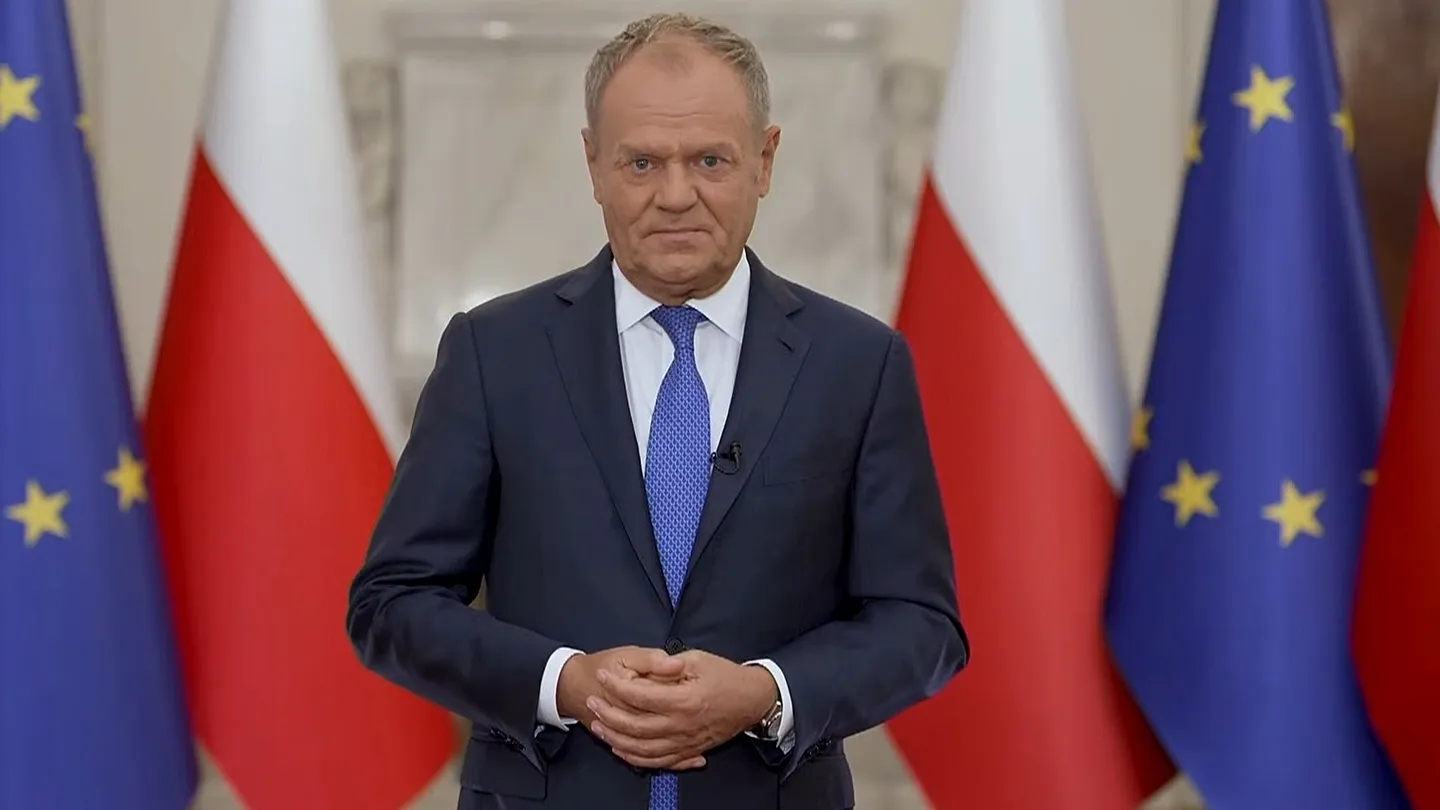
WARSAW, POLAND — November 2, 2026. Polish Prime Minister Donald Tusk has proposed a constitutional solution to the escalating confrontation over the country’s Constitutional Tribunal, urging President Karol Nawrocki to recognize judges elected by Parliament and allow them to assume their responsibilities without requiring amendments to the Constitution. His intervention comes ahead of a crucial General Assembly of Judges scheduled for Tuesday, November 3, when the tribunal must address disputed questions concerning its leadership, judicial membership and internal disciplinary procedures. The developments mark a new stage in a prolonged institutional conflict that has divided Poland’s executive, legislative and judicial authorities while attracting growing attention from European institutions.
In a statement published Monday, Tusk argued that resolving the confrontation would be straightforward if the president recognized the appointments made by the Sejm, Poland’s lower house of Parliament. He maintained that the Constitution already provides the necessary legal framework and that changing its provisions would therefore be unnecessary. The prime minister accused Nawrocki of choosing confrontation over an institutional settlement, warning that continued escalation could carry serious consequences for the country. His proposal, however, reflects the government’s interpretation of the constitutional dispute rather than an agreement accepted by the presidency, which continues to challenge the legitimacy of several judicial appointments and recent decisions concerning the tribunal’s leadership.
The immediate focus has shifted to the General Assembly of Constitutional Tribunal Judges, scheduled for November 3 at 3:30 p.m. local time at the court’s headquarters in Warsaw. Judge Anna Korwin-Piotrowska, who assumed responsibility for directing the tribunal following the suspension of President Bogdan Święczkowski and Vice-President Bartłomiej Sochański, announced the meeting as part of efforts to restore the institution’s administrative functioning. Its agenda includes organizational matters and potentially the selection of judicial panels responsible for examining disciplinary proceedings involving the suspended officials. Yet the meeting’s ability to adopt legally effective decisions remains uncertain because the tribunal’s own membership and leadership are contested.
The principal procedural difficulty concerns the number of judges required to establish a valid quorum. Poland’s Constitutional Tribunal has 15 legally established judicial positions, and the applicable rule cited by Korwin-Piotrowska requires the participation of two-thirds of its membership, ordinarily equivalent to ten judges. However, questions have emerged over whether the temporary suspensions of Święczkowski and Sochański, together with the disputed status of Judge Jarosław Wyrembak, could affect the calculation. Korwin-Piotrowska has indicated that the assembly itself must examine the issue, while emphasizing that she does not intend to determine the matter unilaterally. Any attempt to proceed with fewer than ten judges could generate further legal challenges if the interpretation of the quorum requirement remains disputed.
The controversy also involves the tribunal’s internal administration and the continuity of its public responsibilities. According to information concerning the assembly’s formal convocation, the judges must address preparations for the institution’s 2027 budget, an administrative responsibility requiring decisions about expenditure and operational resources. Justice Minister Waldemar Żurek has expressed the government’s intention to see the court resume examining cases in the coming weeks, highlighting delays affecting citizens seeking constitutional review. These concerns demonstrate that the institutional deadlock extends beyond political rivalry: unresolved disputes about judicial authority can interfere with ordinary court operations and the legal remedies available to individuals.
The confrontation intensified on October 30 when Korwin-Piotrowska announced the temporary suspension of the tribunal’s president and vice-president, accusing the existing leadership of obstructing judges appointed by Parliament. Święczkowski rejected the measure as unlawful, while President Nawrocki returned to Warsaw after interrupting a visit to Senegal and challenged developments at the court’s headquarters. Police secured the premises as demonstrators gathered outside, creating an unusual situation in which competing judicial authorities disputed both legal control and physical access to the institution. The presidency has characterized the actions as an attempted institutional takeover, while Tusk’s government maintains that they are necessary to restore the tribunal’s constitutional functioning.
Nawrocki has also initiated consultations with parliamentary representatives in an effort to address the crisis, although the political divisions remain substantial. Saturday’s discussions involved representatives from part of the opposition, while members of Tusk’s Civic Coalition and the Left did not participate. The competing approaches reveal different understandings of how the dispute should be resolved: the prime minister argues that recognizing parliamentary appointments would permit the tribunal to function, whereas the president and his political allies question the legitimacy of the procedures used to install certain judges and suspend the court’s leadership. Neither position has produced a mutually accepted mechanism capable of resolving the immediate confrontation.
European institutions are closely monitoring the developments because judicial independence and effective constitutional review form important components of Poland’s obligations under European legal frameworks. The European Commission has emphasized that appointing Constitutional Tribunal judges falls within the Sejm’s constitutional powers, while calling for respect for the rule of law. The Council of Europe’s Venice Commission has also addressed the limits of presidential authority in judicial appointments. Nevertheless, support for Parliament’s appointment powers does not automatically settle the separate question of whether every subsequent action taken by the tribunal’s competing leadership groups satisfies applicable legal requirements.
The crisis has its origins in disputes that began in 2015, when rival parliamentary majorities contested appointments to the Constitutional Tribunal. Subsequent reforms introduced during the Law and Justice party’s administration generated disagreements concerning the court’s independence and the recognition of its rulings. Since returning to government in December 2023, Tusk’s coalition has sought to reverse aspects of those arrangements, but disagreements over judicial appointments and presidential authority have continued. The current confrontation illustrates a fundamental difficulty in institutional reconstruction: efforts to correct disputed appointments can produce additional uncertainty when the procedures used to implement those corrections are themselves contested.
Tuesday’s assembly therefore represents an important procedural test, but not necessarily a definitive resolution of Poland’s constitutional crisis. Even if participating judges reach agreement on the quorum and internal organizational matters, the legitimacy of their decisions may continue to be challenged by excluded or suspended officials and by political authorities opposing the process. Conversely, failure to establish a valid quorum could prolong administrative paralysis and deepen uncertainty over pending proceedings. The broader challenge is to develop a framework in which constitutional appointments, judicial decisions and the court’s internal governance can operate without depending on the political affiliation of the government or presidency.
Tusk’s latest proposal places the responsibility for an immediate political breakthrough squarely on Nawrocki, but the forthcoming judicial meeting demonstrates that the dispute involves more than presidential recognition alone. Questions concerning lawful appointments, disciplinary authority, procedural validity and institutional continuity must also be resolved if the tribunal is to regain a stable operating environment. As Poland approaches another decisive moment in its decade-long constitutional controversy, the central issue remains whether the country’s political and judicial institutions can establish a legally credible settlement that restores public confidence while preserving the separation of powers.
Phoenix24: Beyond the headline, the constitutional stakes. / Más allá del titular, las implicaciones constitucionales.