

 Phoenix 24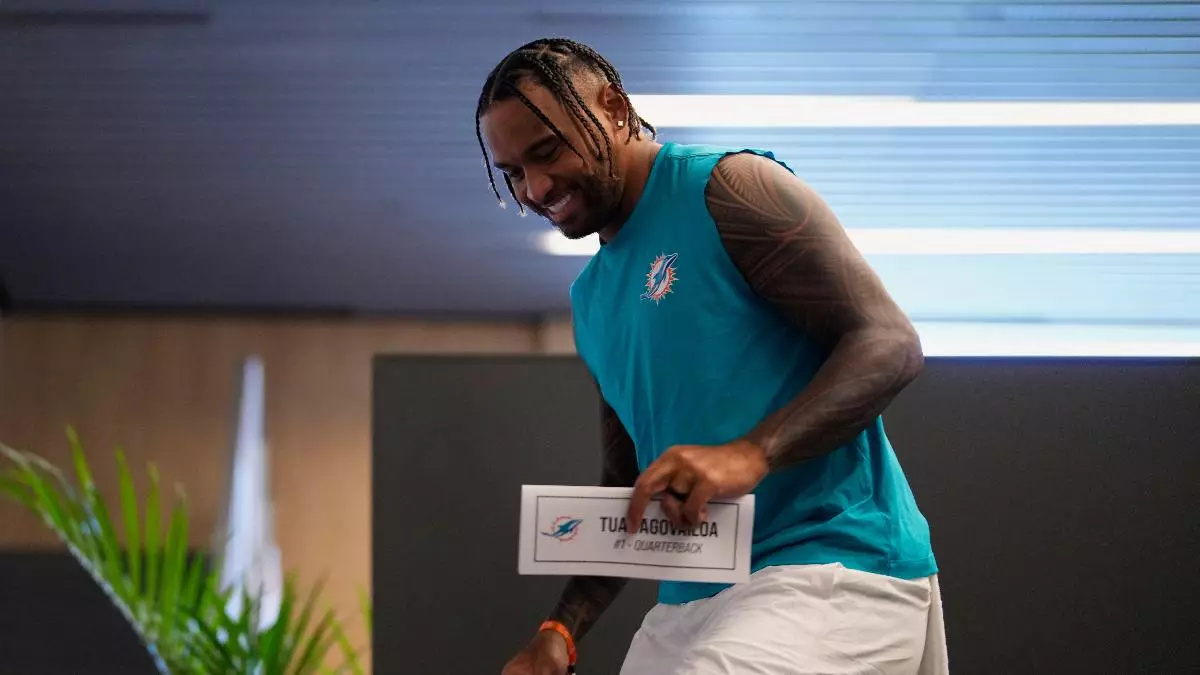
Momentum, confidence and identity converge on a single position that Miami can no longer afford to mishandle.
Miami, November 2025
The Miami Dolphins placed their full public backing behind Tua Tagovailoa, yet the quarterback enters the latest stretch of the season under intense scrutiny as performance volatility and organisational expectations collide. Team officials acknowledged privately that his recent outings have oscillated between flashes of strong decision making and moments of costly hesitation that shifted the rhythm of key drives. Observers around the league note that Miami’s offence has become increasingly dependent on Tagovailoa’s ability to establish tempo early, a factor that amplifies any inconsistency under pressure.
Within the United States, analysts who monitor team dynamics highlight that quarterback instability can ripple across a franchise by affecting locker room cohesion, offensive planning and long-term roster construction. Senior voices inside Miami insist that Tagovailoa remains committed to regaining peak form, yet the tension around his role has prompted internal conversations about leadership, execution and situational awareness. His recent performances have shown both precision in short windows and vulnerabilities when confronted with aggressive defensive schemes that disrupt timing routes.
Across Europe, specialists who follow the NFL from a strategic angle point out that Tagovailoa’s current moment mirrors the trajectory of quarterbacks entering seasons that redefine their long-term standing within a franchise. They argue that the Dolphins must evaluate not only physical performance but also the psychological resilience required of players who operate under sustained scrutiny. In Asia, analysts studying elite athletic behaviour emphasize the interplay between confidence cycles and decision making, noting that Tagovailoa’s style depends heavily on rhythm, anticipation and trust in his receivers.
The contractual dimension adds further complexity. With his extension securing him through 2028, Miami finds itself balancing loyalty with operational realism. Team executives are aware that a franchise quarterback is both an asset and a strategic obligation, meaning that reassessing offensive structures, protection schemes and developmental support becomes essential if the organisation intends to maximise long-term competitiveness. Coaches familiar with the situation describe this phase not as a crisis but as an inflection point in which clarity and adaptability are crucial.
The public narrative surrounding Tagovailoa has also shifted. Commentators point out that he has responded to criticism with openness, acknowledging performance gaps while reiterating his confidence in the team’s direction. That posture has been well received inside the locker room, where teammates emphasize that trust in the quarterback remains intact as long as communication stays transparent and effort visible. The challenge ahead lies in transforming that internal unity into consistency on the field, particularly as Miami confronts a schedule filled with opponents who target timing-based offences with disruptive tactics.
Ultimately, the Dolphins are assessing more than statistics. They are evaluating leadership under stress, the durability of a long-term project and the organisational capacity to maintain stability when external pressure intensifies. Tagovailoa stands at the center of that equation. Whether he re-establishes firm control of the offence or forces Miami into structural reconsiderations will define not only the remainder of the season but the broader trajectory of the franchise.
Facts that do not bend. / Hechos que no se doblan.