

 Phoenix 24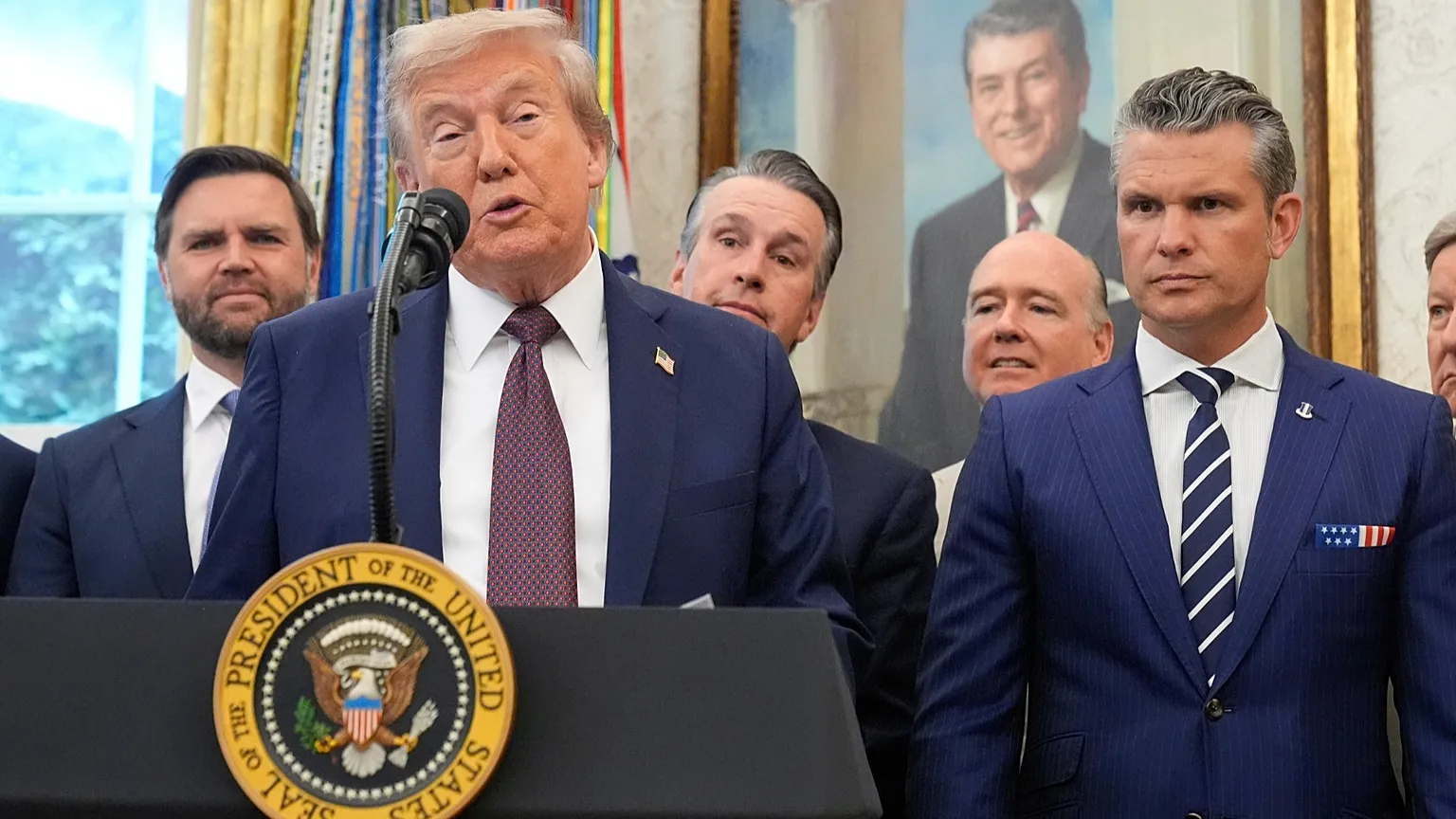
Diplomacy is no longer abstract.
Washington, May 2026. Donald Trump’s claim that a deal to end the war with Iran is “practically closed” places the conflict at a decisive but unstable threshold. The statement does not mean peace is secured, but it does suggest that Washington, Tehran and several regional capitals are now operating inside a narrow diplomatic corridor. At stake is not only the suspension of hostilities, but the reopening of the Strait of Hormuz, the recalibration of sanctions and the political survival of every actor involved in selling the agreement at home.
The reported framework would reopen Hormuz and establish a 30 to 60 day negotiation window for a broader settlement. That timeline is critical because it separates immediate military de-escalation from the more complex question of Iran’s nuclear program. Tehran, according to the reported sequence, wants the war to end before discussing deeper concessions, while Washington seeks to convert battlefield pressure into diplomatic leverage. The result is a formula built on ambiguity: enough progress to stop the bleeding, but not enough clarity to guarantee a lasting settlement.
Trump’s contact with leaders from Saudi Arabia, Qatar, the United Arab Emirates, Pakistan, Turkey, Egypt, Jordan and Bahrain reveals the regional depth of the negotiation. This is not merely a bilateral U.S.-Iran channel, nor a limited crisis management exercise. It is a broader containment structure designed to prevent the war from spilling into energy markets, maritime chokepoints and allied security systems. Gulf states, in particular, understand that even a limited escalation around Hormuz can become an economic earthquake with global consequences.
The Strait of Hormuz remains the pressure valve of the crisis. Its closure has already turned a military confrontation into an economic weapon, affecting oil, gas, shipping routes and industrial supply chains. Reopening it would not simply restore traffic; it would signal that both sides are willing to convert force into bargaining power. In geopolitical terms, Hormuz is no longer only a maritime corridor, but the symbolic center of the negotiation.
Iran’s challenge is to avoid appearing defeated while accepting a temporary mechanism that reduces pressure. Trump’s challenge is the opposite: he must present restraint as dominance, not retreat. Israel’s position adds another layer of uncertainty, because any perception of insufficient guarantees could reactivate pressure for a harder security posture. The framework therefore rests on a fragile equation where each actor needs the agreement, but none can afford to look dependent on it.
The most delicate part is sequencing. If sanctions relief comes too early, Washington risks appearing to reward coercion. If it comes too late, Tehran may conclude that the agreement only freezes Iranian concessions while preserving U.S. pressure. If nuclear talks are pushed too aggressively, the ceasefire mechanism could collapse before it matures. That is why the reported 30 to 60 day window is less a peace timetable than a test of political discipline.
The deal’s real purpose may be to create silence before structure. It buys time for governments to reframe the war, markets to stabilize and intelligence channels to verify whether the other side is complying. But time can also become a trap if maximalist factions in Washington, Tehran or Jerusalem interpret the pause as weakness. In this type of conflict, the danger is not only the next attack, but the next narrative failure.
For now, the agreement appears close, but not consolidated. Its strength will depend on whether the reopening of Hormuz, sanctions discussions, military restraint and nuclear sequencing can be managed without forcing any side into public humiliation. The Middle East may be entering a pause, but not yet a settlement. What is emerging is a choreography of controlled ambiguity, where diplomacy survives only because every actor still fears the cost of escalation.
Más allá de la noticia, el patrón. / Beyond the news, the pattern.