

 Phoenix 24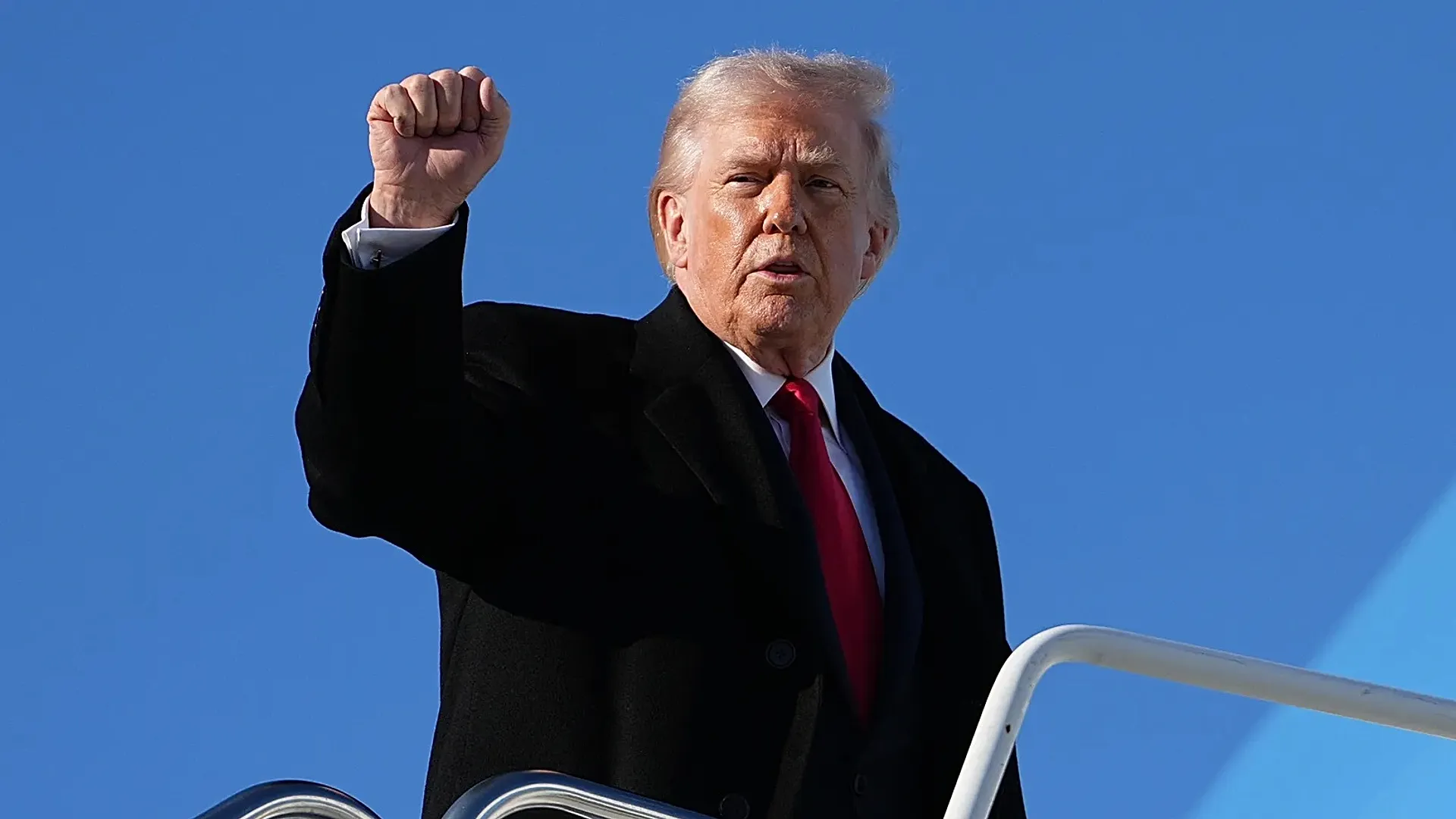
Words can move fleets faster than orders.
Fort Bragg, February 2026.
President Donald Trump has reintroduced a phrase that most US administrations treat as strategically toxic: the idea that a “change in power” in Iran would be “the best thing that could happen.” The remark, delivered after he spoke with troops at Fort Bragg, did not land as an offhand comment because it arrived alongside a visible military signal. Multiple outlets reported that Trump confirmed the redeployment of a second aircraft carrier group toward the Middle East, with the USS Gerald R. Ford leaving the Caribbean to join an already significant US posture in the region. In the grammar of coercion, the combination matters. Deployments communicate capability. Language communicates intent. When intent starts to sound like regime removal, even indirectly, the escalation ladder becomes steeper.
This is not merely semantic. “Deterrence” and “regime change” point to different end states, and adversaries plan for end states, not for press briefings. If Washington’s objective is to pressure Tehran into a narrower nuclear arrangement or stronger constraints on regional proxies, the signal is conditional: comply and pressure can ease. If the signal becomes existential, meaning the leadership itself is the target, the incentive flips. De escalation begins to resemble surrender, and hardliners inside Iran gain the simplest argument of all: compromise will not save you, it will only weaken you. That internal political effect is often the first strategic consequence of regime change rhetoric, long before any missile is launched.
Reporting around the carrier movement has emphasized an administration balancing pressure with continued diplomacy. Reuters and the Associated Press described ongoing indirect negotiations and mediation channels, with Oman frequently cited as a facilitation point in past US Iran talks and again referenced in current reporting. The problem is that diplomacy under a regime change cloud becomes structurally fragile. Negotiations require a minimum assumption that the other side is negotiating for behavior change, not for collapse. Once collapse is discussed by the US president as a desirable outcome, even if not declared policy, Tehran’s security apparatus tends to treat every diplomatic track as a cover for coercion. That does not end talks automatically, but it compresses the range of concessions Iran can accept without triggering internal revolt.
The military move itself, while dramatic, is also a message to multiple audiences. For allies in the Gulf and for Israel, a second carrier strengthens the perception that Washington is willing to escalate if Iran pushes too far, whether through enrichment thresholds, proxy attacks, or maritime disruption. For Europe, the signal is read through a different lens: energy volatility, shipping risk, and the possibility that a Middle East crisis becomes a second front of instability layered onto an already stressed security environment. European policy circles have repeatedly warned that regional escalation does not remain regional when it touches chokepoints, insurance rates, and political cohesion. A carrier group is hardware, but its shadow reaches markets.
Trump’s phrasing also invites the question that always follows regime change talk: what comes after. Here the administration’s public posture has been intentionally vague. That vagueness can be tactically useful because it keeps options open, but it is strategically destabilizing because it makes adversaries assume worst case intentions. Iran’s leadership has spent decades building resilience precisely against scenarios framed as external engineering of internal change. In that worldview, heightened US military posture is not a bargaining chip. It is a rehearsal. As a result, Iran’s likely response is to harden its own deterrence posture, both overt and deniable, because ambiguity works both ways.
The nuclear dimension remains the central fuse. Even without detailing any specific enrichment claims, the structural reality is that Iran’s nuclear program is monitored within a framework that depends on verification, access, and political decisions about compliance and sanctions. Institutions like the International Atomic Energy Agency have long functioned as the technical anchor for what is otherwise a political storm, and their assessments become the reference point for European positions as well as for US congressional and allied debates. When leaders shift from verification language to regime language, the verification ecosystem becomes easier to dismiss as irrelevant by those who prefer decisive confrontation. That is how technical guardrails erode: not because they failed, but because politics stopped treating them as central.
A second layer is the role of indirect actors and parallel diplomacy. Financial Times reporting referenced consultations with Israel’s leadership and the insistence from Jerusalem that any arrangement must address not only nuclear issues but also missile programs and proxy networks. That linkage is not new, but it becomes more combustible when the White House’s language suggests that Iran’s political system itself is the core problem. Proxy dynamics do not require formal orders to intensify. In a region where armed groups operate with varying degrees of autonomy, a single presidential line can be interpreted as permission, countdown, or provocation, depending on the listener. The more public the signal, the less control Washington has over how third parties weaponize it.
There is also a domestic political logic that shapes this kind of rhetoric. “Strength” is rewarded in American politics, while restraint is often sold as weakness even when restraint is strategically rational. That incentive can push language ahead of policy, and once language is ahead, adversaries plan for the language. The risk is a strategic trap: rhetoric escalates faster than the system can safely operationalize, and the other side begins to preempt what it thinks is coming. Crisis history shows that miscalculation rarely begins with a single irrational act. It begins with mutually reinforcing assumptions under time pressure.
The pattern here is familiar across regions. When a major power combines visible force posture with leadership language that hints at political replacement, it changes the negotiation environment from bargaining over behavior to bargaining over survival. That shift narrows off ramps and increases the value of deniable action. If Washington’s objective is to extract constraints and restore deterrence, the most effective pressure is calibrated and paired with credible exits. If the objective is perceived as regime collapse, calibrated pressure becomes indistinguishable from preparation. In that space, every move becomes a test, and tests are how crises become wars.
Beyond the news, the pattern.