

 Phoenix 24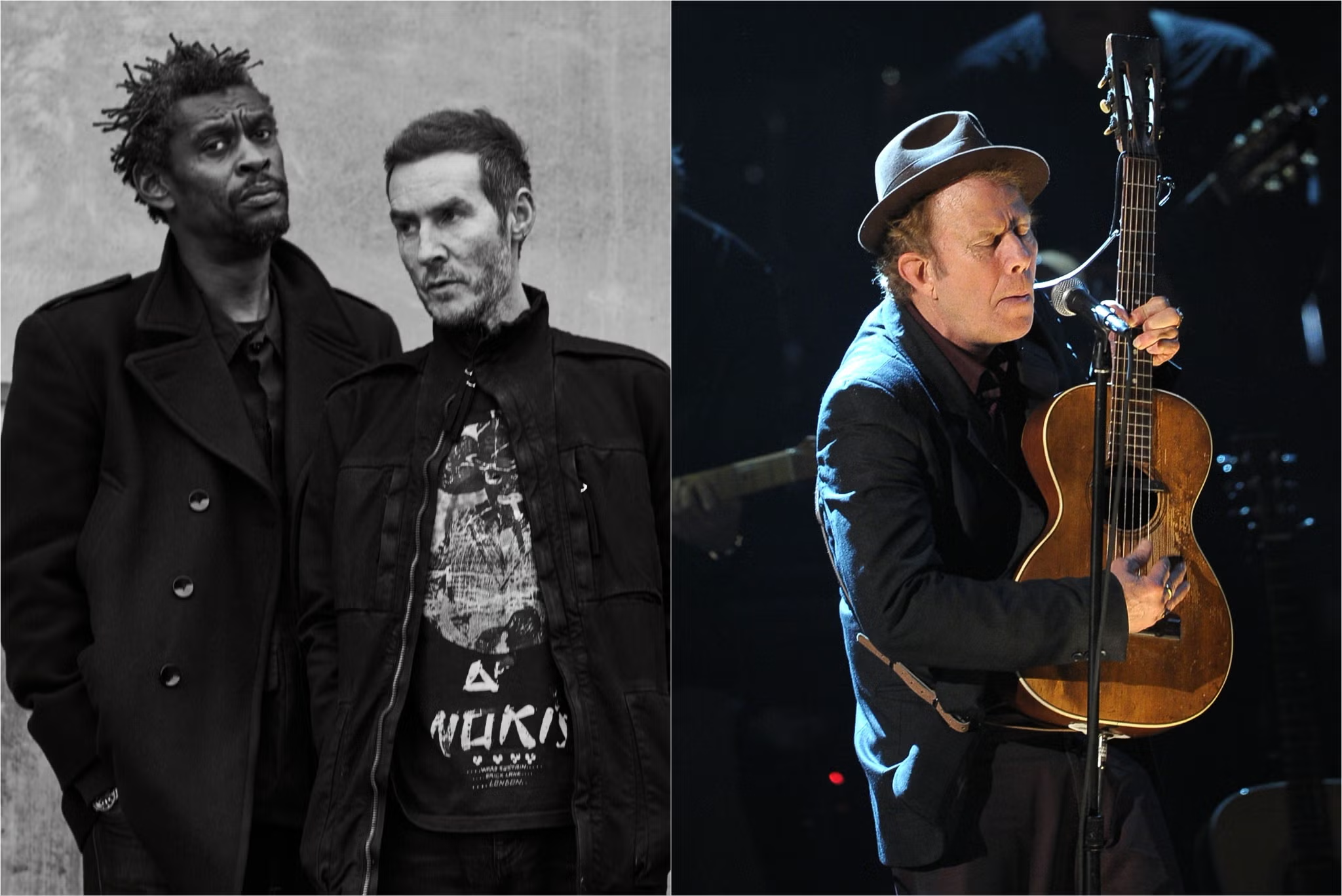
Some songs do not seek comfort. They seek confrontation.
London, April 2026. The new collaboration between Tom Waits and Massive Attack is not just a musical return. It is a political act staged through atmosphere, timing, and refusal. “Boots on the Ground” arrives as a deliberately charged intervention, aimed at a climate marked by authoritarian drift, police militarization, and intensifying ideological conflict in the West. What gives the release its weight is not only the force of the message, but the fact that two artists with very different sonic legacies have converged to produce something that sounds less like a single than like an alarm.

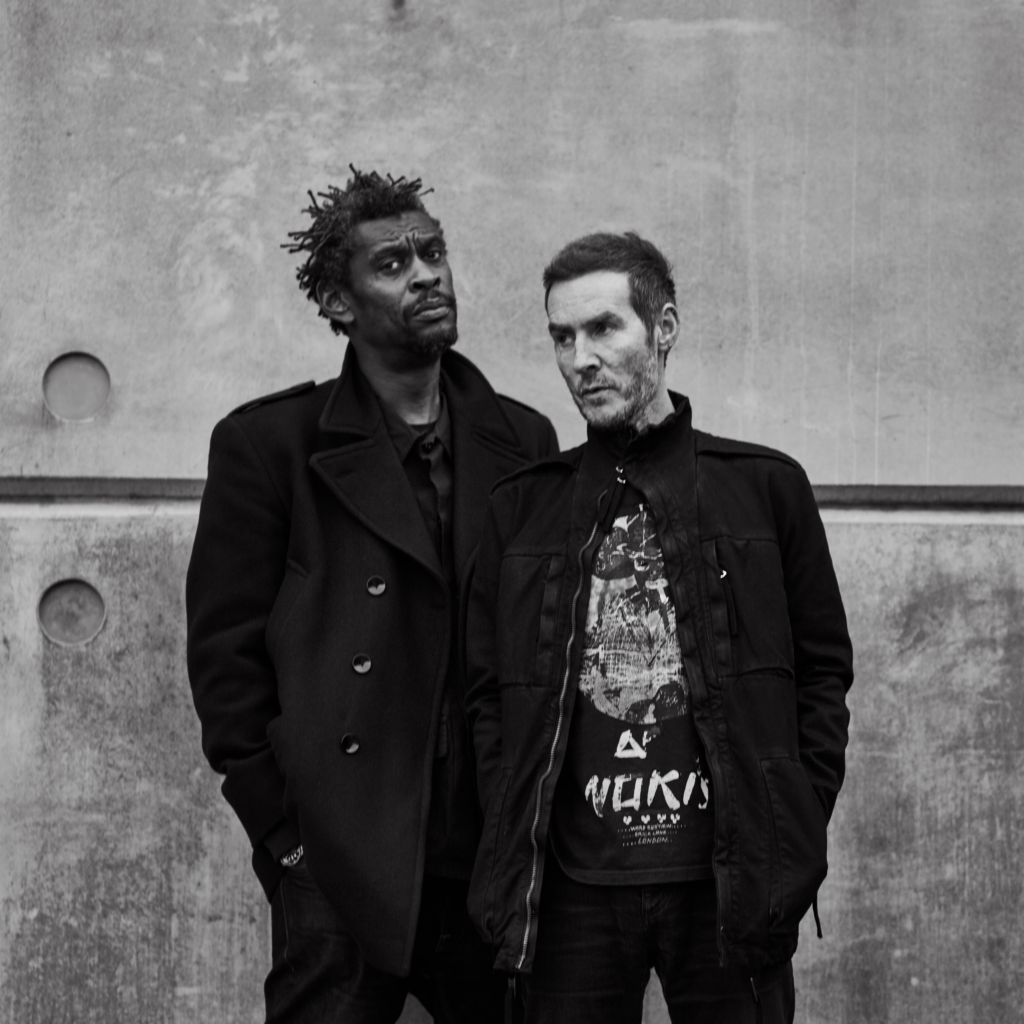
The cultural significance begins with the pairing itself. Tom Waits has spent years at a distance from the center of commercial music, preserving a rare kind of artistic gravity, while Massive Attack has long occupied the darker edge of political sound, where mood and critique reinforce each other. Their alliance therefore feels unusually coherent. One brings the weathered authority of American dissent, the other the cold architecture of electronic unease. Together, they do not offer a polished anthem. They offer a landscape of tension.
That tension is central to the song’s function. This is not protest music in the old didactic sense, where the message is carried by clarity and slogan. It is protest music for a more disoriented era, one in which fear, institutional aggression, and moral exhaustion are experienced as atmosphere before they are processed as argument. The song appears designed to immerse rather than reassure. It does not simply tell listeners that something is wrong. It makes the wrongness feel ambient and invasive.
The timing also matters. Waits’s return to original recorded music after such a long silence turns the release into an event in its own right, while Massive Attack’s reappearance after years without major new material gives the track the feel of a strategic reentry rather than a casual collaboration. In both cases, absence amplifies meaning. When artists who do not need attention choose to speak at a particular political moment, the act of speaking becomes part of the message.

There is another layer here that extends beyond lyrics and sound. The decision not to circulate the song through Spotify adds a distinctly industrial dimension to the protest. This is not only a critique of political power in the abstract. It is also a critique of the infrastructures through which culture is distributed, monetized, and normalized. In that sense, the project rejects the convenient separation between artistic statement and economic platform. The protest is embedded not just in the content, but in the channel.
That gives the release unusual integrity. Many politically charged cultural products still rely on the same systems they claim to resist, producing a tension between message and mechanism. Here, the refusal of a dominant platform becomes part of the overall composition. The work is saying that dissent cannot always be reduced to lyric or image. Sometimes it must also reshape the route through which the art reaches the public. Protest, in this reading, is both aesthetic and logistical.
What emerges is a broader lesson about the role of artists in moments of democratic stress. Waits and Massive Attack are not trying to appear neutral, above the conflict, or vaguely humanitarian. They are choosing antagonism. That matters because much of contemporary culture, especially at scale, is built around soft ambiguity, brand safety, and political dilution. A song like this moves in the opposite direction. It names its climate, takes a side, and accepts friction as part of its meaning.
This also explains why the collaboration resonates beyond music journalism. It speaks to a larger hunger for cultural works that do not merely reflect instability, but answer it with deliberate form. In an era saturated with reactive content and moral fatigue, a track that sounds committed rather than decorative acquires unusual force. It reminds audiences that art can still function as pressure, not just consumption.
The deeper significance of “Boots on the Ground” is that it treats music not as escape from the political atmosphere, but as a way of entering it more truthfully. Waits and Massive Attack do not present resistance as uplifting spectacle. They present it as abrasion, unease, and witness. That may be why the collaboration feels so timely. It understands that in moments of civic corrosion, the most honest soundtrack is often the one that refuses to soothe.
Detrás de cada dato, hay una intención. Detrás de cada silencio, una estructura.
Behind every data point, there is an intention. Behind every silence, a structure.