

 Phoenix 24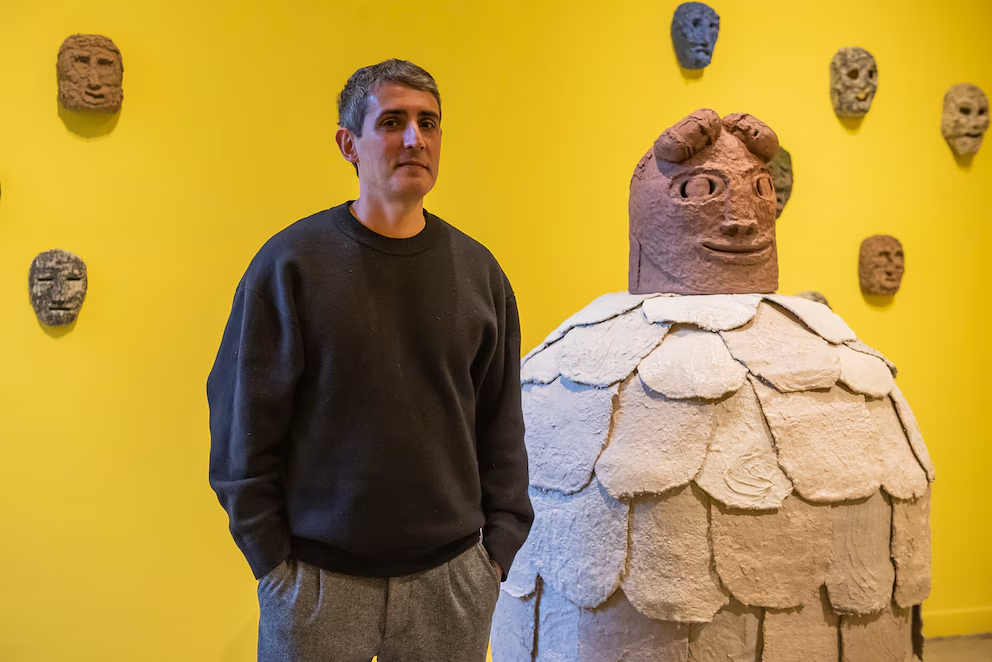
Water, masks and discarded wood become cultural evidence.
BUENOS AIRES, ARGENTINA
Centro Cultural Recoleta has opened three contemporary art exhibitions that explore memory, identity and social transformation through remarkably different materials. Selected through the institution’s 2026 Federal Annual Visual Arts Call, the projects by Andrés Aizicovich, Manuel Sigüenza and Flor Alvarado occupy rooms 4, 10 and 11. Paintings, ceramics, masks, water installations and discarded produce crates turn the venue into a conversation about what societies inherit, conceal and assign value to. The exhibitions are open to the public free of charge and are scheduled to remain on view until November 8.
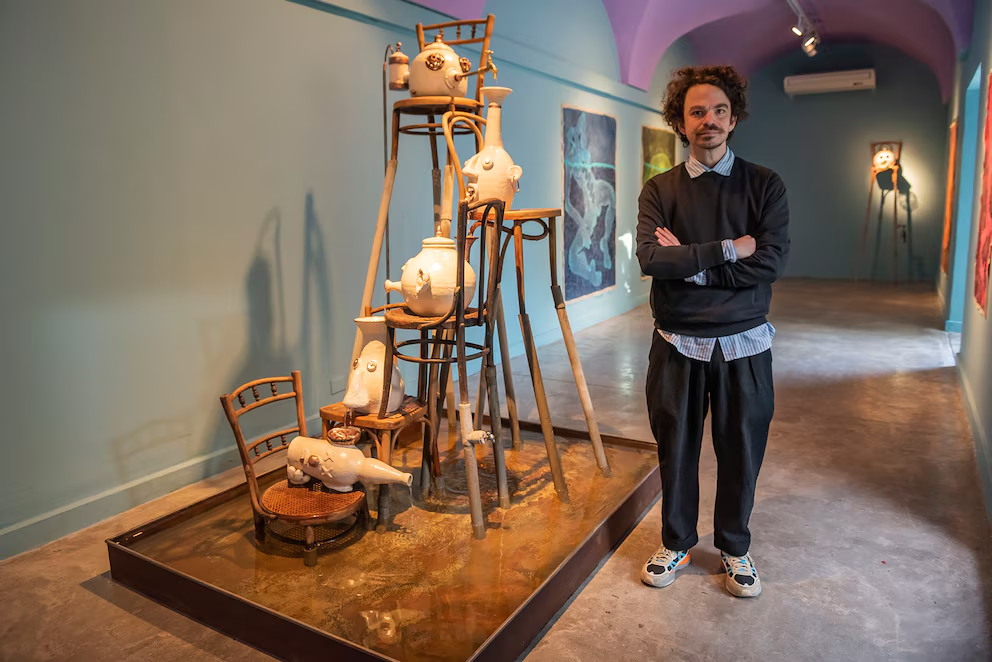
In Melodía encadenada, curated by Javier Villa, Aizicovich uses immersion as a metaphor for entering the unknown and returning transformed. His paintings depict floating and contorted bodies divided by a waterline, presenting the body as a vessel that receives and transmits individual and collective experience. A sculptural installation connects five vessel-like heads through a closed circuit of flowing water, suggesting that memory survives through circulation and exchange. Another work extends a solitary head’s mouth into a trumpet ending in blown glass, visually freezing the voice and asking what happens when communication can no longer move or change.
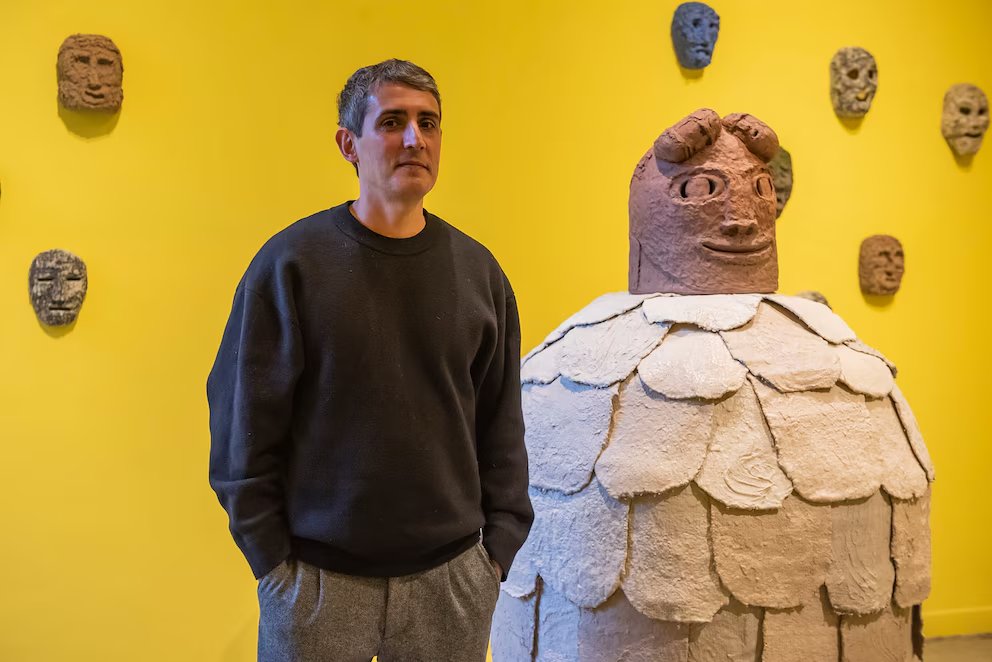
Manuel Sigüenza’s Eslabón Leyes, also curated by Villa, revisits a controversy surrounding ceramics discovered near Arroyo Leyes in Santa Fe during the 1930s. Some researchers associated the objects with Afro-descendant communities largely excluded from Argentina’s official history, while others considered them fabrications created by local fishermen for the antiquities trade. Sigüenza does not attempt to resolve the dispute, instead using ceramics, vessels, pipes, reliefs and paintings to investigate how objects generate competing narratives. Masks occupy a central place in the exhibition as symbols of transformation, multiplicity and the identities that each generation projects onto uncertain evidence.
Flor Alvarado brings labor, migration and desire into the foreground with Fantasía de valor, curated by Carla Barbero. Working from a brown and Indigenous perspective rooted in her family’s migrant history, Alvarado creates drawings, paintings, sculptures and installations on wood recovered from vegetable crates. The material recalls the “Bolivian ladder,” a term describing the occupational paths followed by many Bolivian migrants within Argentina’s horticultural economy. Her work also reinterprets Alasitas, the Andean tradition of acquiring and blessing miniature representations of desired possessions, connecting ancestral celebration with fashion, mobility and contemporary consumption. Together, the three exhibitions demonstrate how emerging Argentine art can transform ordinary matter into a critical archive of voices, journeys and histories that conventional institutions have often overlooked.
Art begins where discarded materials recover their memory. / El arte comienza donde los materiales descartados recuperan su memoria.