

 Phoenix 24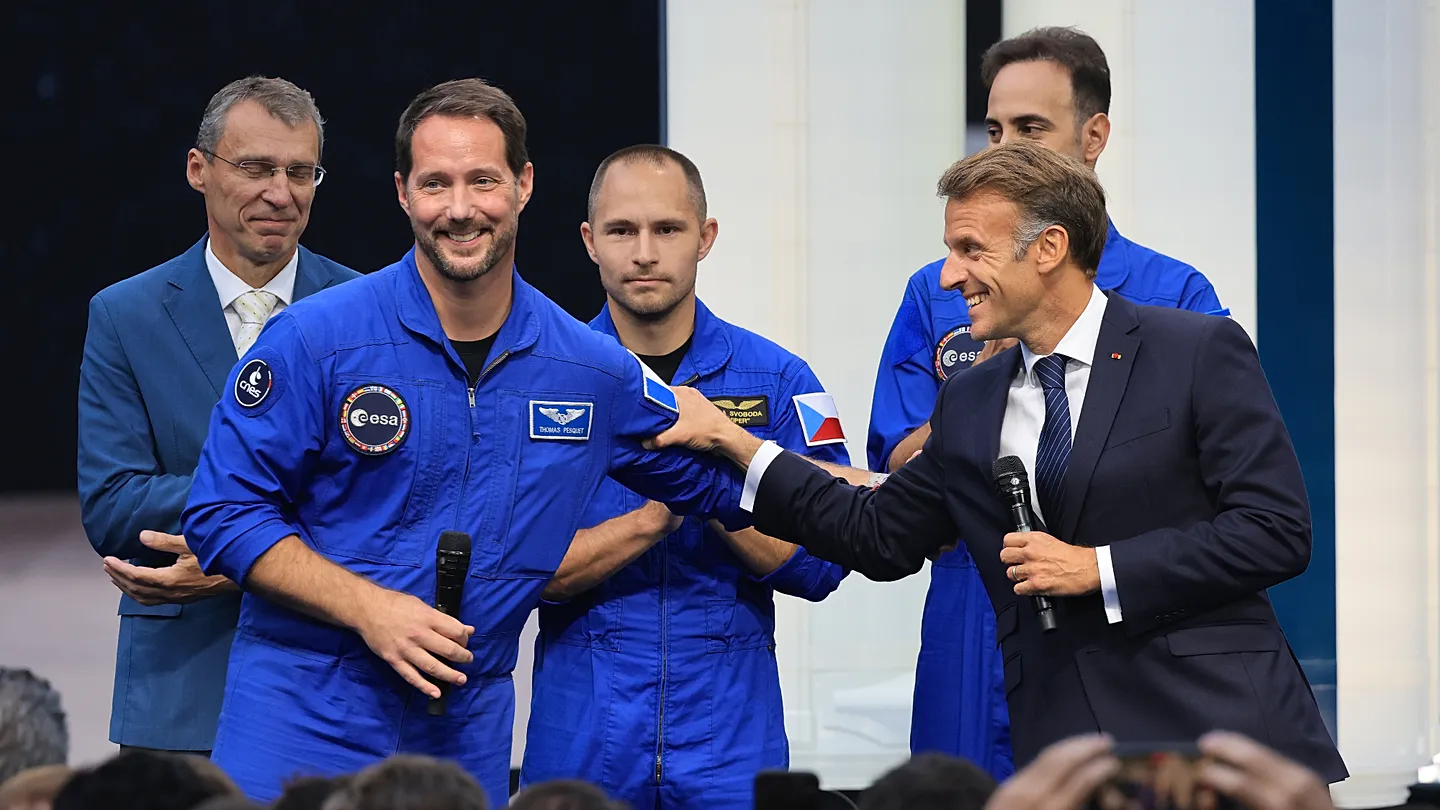
The station’s approaching closure turns every remaining European mission into a strategic opportunity.
PARIS, FRANCE
French astronaut Thomas Pesquet has urged Europe to extract the greatest possible scientific value from its remaining access to the International Space Station before the orbital laboratory is retired. Pesquet will lead the European Space Agency’s PAM-6 private mission to the station in the summer of 2027, a flight he considers particularly important because Europe’s next opportunity for a comparable mission remains uncertain.
The ISS is scheduled to be deorbited around 2030 after more than three decades of continuous human presence. Ageing infrastructure, increasing maintenance requirements and the emergence of commercial space stations are accelerating the transition. Since its first components were launched in 1998, the laboratory has enabled research under microgravity conditions in medicine, materials science, biology, physics and climate observation.
Pesquet wants European and French researchers to coordinate ambitious experiments for the 2027 mission instead of treating it primarily as a symbolic return to orbit. Long-duration assignments are distributed among international partners, meaning that European astronauts cannot independently determine when they will fly. The closing operational window therefore places additional pressure on ESA to select projects offering lasting scientific and technological value.
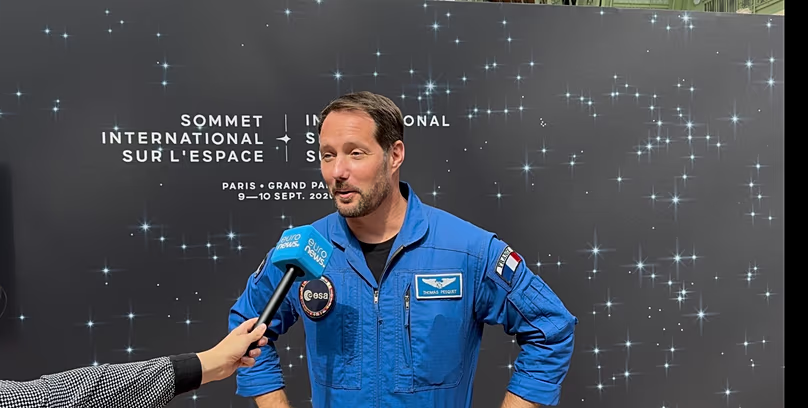
His argument extends beyond laboratory research. Speaking at the International Space Summit in Paris, Pesquet said geopolitical instability has made long-term international partnerships increasingly difficult to predict. Europe currently has no operational crewed spacecraft or launcher and depends principally on American systems to transport its astronauts. This reliance limits European autonomy even though the continent possesses advanced satellites, scientific laboratories and launch technologies.
Russia’s war against Ukraine has reinforced the strategic importance of orbital infrastructure. Satellite systems now support communications, navigation, intelligence gathering and military coordination, while Ukraine’s reliance on Starlink has demonstrated how private companies can influence national-security capabilities. Europe’s renewed investment in space consequently combines scientific ambition with demands for technological sovereignty and defence resilience.
Pesquet nevertheless defended the cooperative culture aboard the ISS. He explained that astronauts and cosmonauts continue working together because crew safety depends on trust, shared procedures and collective intelligence. Political tensions between governments may complicate institutional relationships, but they cannot be allowed to undermine operations in orbit.
The ISS may eventually be replaced by several smaller American, European, Indian or Chinese stations rather than another single international laboratory. Europe must therefore decide whether it intends to remain a participant dependent on external transportation or become an autonomous partner capable of placing its own crews in orbit.
Scientific cooperation expands knowledge, but strategic autonomy determines who can continue the journey.