

 Luciana Almada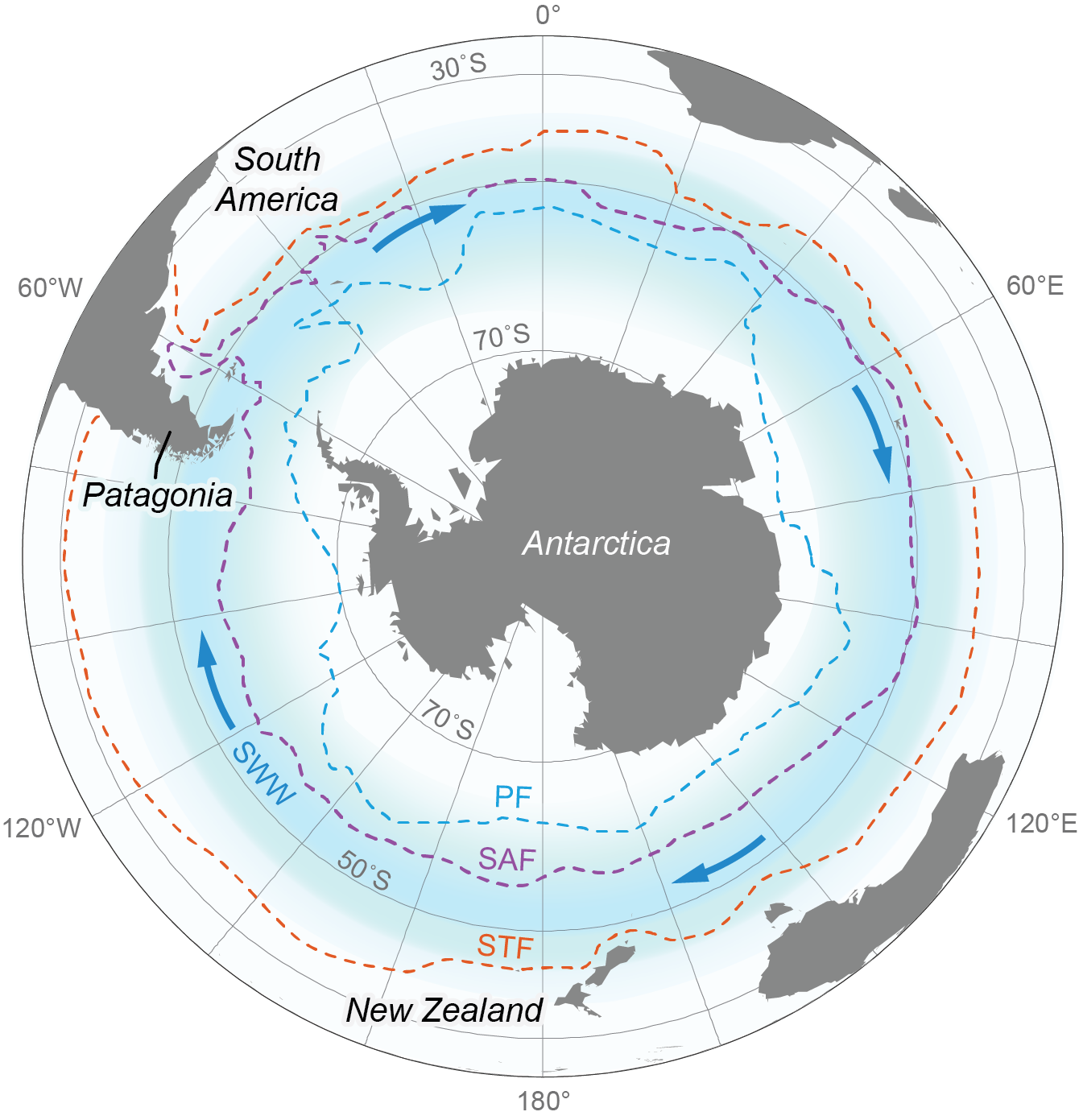
The South is no longer peripheral. It is becoming strategic again.
Buenos Aires, April 2026
For too long, Patagonia, Antarctica, and the Lithium Triangle were treated as separate conversations. One belonged to energy and mining. Another to climate science and sovereignty rituals. The third to logistics, military symbolism, and maps that seemed too remote to matter. That separation no longer holds. What is emerging now is a single geopolitical corridor, one in which critical minerals, debt pressure, maritime projection, Antarctic access, and technological rivalry are starting to converge into the same strategic picture. The Southern Cone is not being pulled into the future gently. It is being drafted into it.
Argentina sits at the center of that shift, and not comfortably. On one side, it holds one of the world’s most valuable lithium positions at a time when the United States, China, and the European Union are all trying to secure cleaner, shorter, and politically safer supply chains for the energy transition and the battery economy. On the other, it is still trapped inside a familiar Latin American contradiction: exporting strategic value without fully controlling the terms under which that value is monetized, industrialized, or defended. The country is rich in relevance and poor in leverage. That imbalance is where dependency begins.
The language of opportunity is already everywhere. Lithium is sold as development, as green prosperity, as insertion into the industries of the future. Some of that is true. But the Southern Cone has heard this kind of music before. Commodities always arrive wrapped in strategic optimism. Then come the asymmetries: foreign financing, weak downstream capacity, local environmental stress, infrastructure designed for extraction rather than integration, and political elites eager to celebrate exports while postponing the harder question of sovereignty. A country can become indispensable to the future and still remain subordinate inside it. In Argentina, that danger is not theoretical. It is historical.
What makes the current moment different is that lithium no longer stands alone. It now connects directly to a wider geography of power that runs southward through Patagonia and outward into the South Atlantic and Antarctica. Ports, shipping lanes, satellite infrastructure, dual-use logistics, southern military presence, undersea routes, polar research, and Antarctic campaigns are no longer peripheral issues for defense planners and economic strategists. They belong to the same conversation because the future of technology is no longer only about software and semiconductors. It is also about minerals, territory, corridors, and access.
That is why the Southern Atlantic matters more than many governments still pretend. It is not merely an oceanic backdrop to national narratives or a ceremonial extension of maritime sovereignty. It is becoming a zone of renewed strategic density. The militarization may not yet look spectacular by Cold War standards, but the signals are accumulating: infrastructure investment, naval presence, research logistics, polar access, satellite attention, and the growing recognition that Antarctica is no longer just a scientific frontier. It is also a geopolitical horizon. Whoever controls approach routes, logistical depth, and operational legitimacy in the South will not control Antarctica outright, but will shape the conditions under which its future is negotiated.
Patagonia, in that context, stops being a domestic periphery and starts looking like a hinge. Its energy potential, low population density, logistical value, and proximity to southern maritime and polar routes give it an importance that exceeds the old center-periphery logic of Argentine politics. The problem is that Buenos Aires has rarely governed Patagonia as strategic territory in a sustained way. It has often governed it as an extraction zone, an electoral afterthought, or a symbolic reservoir of land, wind, gas, and myth. That is no longer enough. A territory that becomes central to resource diplomacy and southern projection cannot be managed with the political imagination of administrative neglect.
There is another layer that makes the moment even more delicate: debt and deregulation. Argentina’s current political turn has elevated the language of shock, efficiency, and market release, often with the implicit promise that fewer restraints will finally allow strategic sectors to flourish. But deregulation in a zone of high geopolitical value is never neutral. It can accelerate investment, yes. It can also accelerate dependency, weaken bargaining capacity, and thin out the institutional defenses that a country needs precisely when foreign interest in its resources and territory is intensifying. A deregulated frontier may look efficient from a spreadsheet. It often looks very different from the ground.
This is where the green transition starts to resemble an older imperial pattern, only dressed in cleaner language. The world wants decarbonization, but it wants it without surrendering control over supply chains. It wants lithium, but also predictability. It wants access, but not necessarily South American bargaining power. That is why the competition among China, the United States, and the European Union is not simply commercial. It is architectural. Each actor is trying to build a version of the future in which critical resources remain available without becoming politically uncontrollable. The Lithium Triangle matters because it sits inside that design struggle. Patagonia and the South Atlantic matter because they shape the broader territorial envelope through which that struggle moves.
Antarctica sharpens the whole picture. Climate change, scientific competition, logistics, fisheries, and the long shadow of future resource debates ensure that the continent can no longer be treated as a frozen legal abstraction. No treaty system survives forever by inertia alone. The more the Southern Atlantic heats up strategically, the more Antarctica will be drawn into the imagination of states that are already thinking in decades, not news cycles. For Argentina, that means the Antarctic question cannot remain trapped in patriotic ritual. It has to be connected to maritime capability, logistical depth, scientific seriousness, and southern infrastructure. Otherwise, sovereignty will continue to sound grander than it operates.
The real danger is fragmentation of perception. Lithium is debated as mining. Patagonia as a domestic region. Antarctica as diplomatic symbolism. The South Atlantic as defense trivia. Each conversation is too small on its own. Together they describe a map of strategic restructuring. That is the map Argentina and the wider Southern Cone need to start reading with more discipline. Because the countries that fail to connect their resource frontiers to their territorial and maritime doctrine usually discover, too late, that someone else already has.
The Southern Atlantic is heating up because the world has entered a phase in which geography once again matters in the old, unforgiving way. Minerals matter. Corridors matter. Ports matter. Research stations matter. Political stability matters. Regulatory control matters. And states that still imagine these as separate files will keep negotiating from weakness against actors who already understand the whole board.
The South is no longer a distant edge of global affairs. It is becoming one of the places where the future will be extracted, routed, monitored, and contested. The question is whether Argentina and the wider region will approach that reality as sovereign strategists or merely as suppliers standing on top of their own importance without fully governing it.