

 Phoenix 24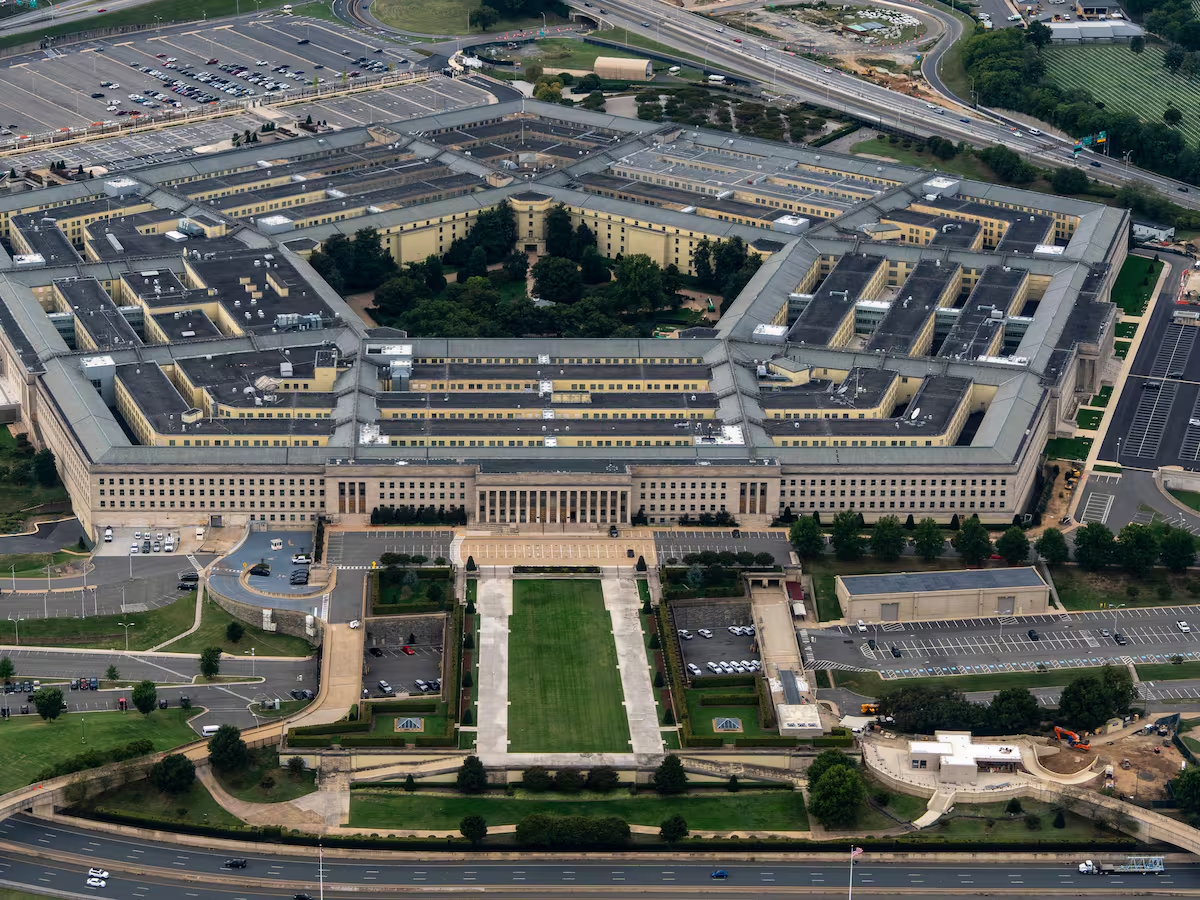
America wants algorithms on the front line.
WASHINGTON, May 2026. The Pentagon is accelerating one of the most ambitious technological transformations in modern military history, pushing artificial intelligence deeper into the operational structure of the United States Armed Forces. The objective is to build a force capable of using AI across intelligence analysis, battlefield awareness, logistics, planning and decision support.
The effort reflects Washington’s growing belief that artificial intelligence will define the next era of strategic competition. Military planners view AI not as a secondary tool, but as a force multiplier capable of processing massive volumes of information, identifying threats faster and supporting decisions across land, sea, air, cyber and space operations.
The Pentagon’s strategy also depends on partnerships with major technology companies. Cloud infrastructure, machine learning systems and advanced language models are becoming increasingly relevant to classified networks and military workflows. This marks a deeper convergence between Silicon Valley and national defense.
The shift has triggered serious ethical and operational concerns. Senior military officials have warned that AI should not replace human judgment in life-and-death decisions. The central risks involve autonomous targeting, algorithmic error, biased data, accountability gaps and decision-making timelines that may move faster than meaningful human oversight.
The debate also exposes a cultural fracture inside the technology sector. Some developers support defense applications as necessary for national security, while others fear that commercial AI systems could become part of surveillance, targeting or autonomous weapons infrastructure. The question is no longer whether AI will enter war planning, but under what rules and with whose consent.
Behind the modernization push lies a broader geopolitical calculation. U.S. defense planners increasingly view military AI through the lens of competition with China, Russia and other technologically capable powers. The assumption is that the country able to integrate AI fastest into command, intelligence and operations may gain a decisive strategic advantage.
Yet speed is not the same as wisdom. Artificial intelligence can detect patterns, accelerate analysis and expand operational reach, but it cannot fully replace political judgment, battlefield ethics or human responsibility. The more powerful these systems become, the greater the consequences when they fail.
The Pentagon’s AI strategy is therefore more than a technology program. It is the opening phase of a global contest over how future wars will be planned, fought and controlled. The United States is betting on algorithmic advantage. The unresolved question is whether future conflict will remain governed by human command, or by machines designed to think faster than the people who deploy them.
Information that anticipates futures. / Información que anticipa futuros.