

 Phoenix 24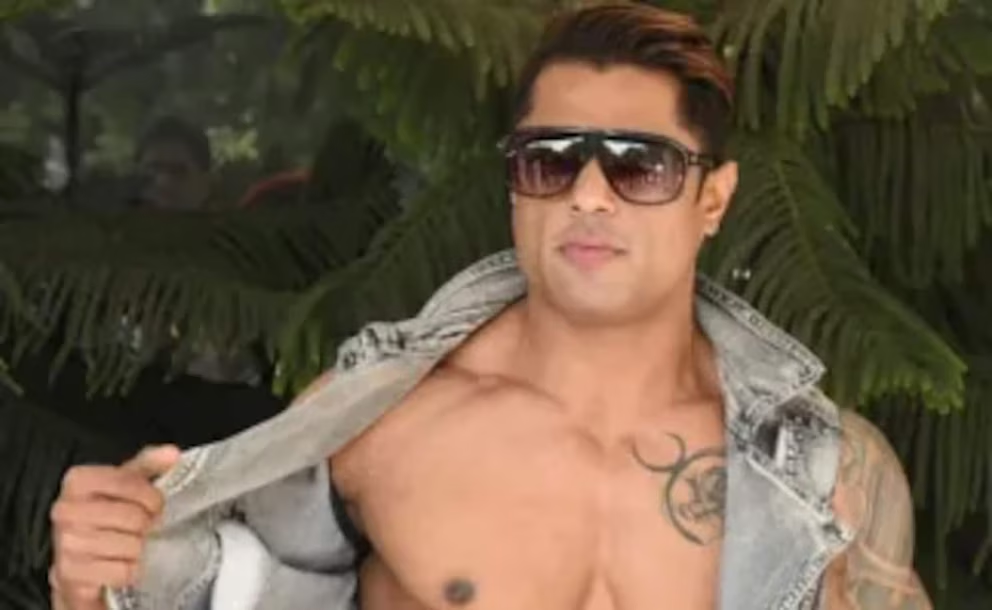
A champion’s image can project control while the human reality remains far more vulnerable.
Mumbai, February 2026
The death of Indian bodybuilder and television personality Mayank Pawar at age 37 has sent shockwaves through fitness and entertainment circles across South Asia, not only because of his age, but because he represented a powerful public image of discipline, strength, and physical mastery. Spanish language coverage described him as a seven time Mr India winner, while some Indian reports refer to him as a six time titleholder and Mr Asia winner, a discrepancy that does not alter the central fact. Pawar was widely recognized as a prominent figure in Indian bodybuilding culture and a familiar face beyond it due to his appearance on reality television.
What makes this kind of news hit so hard is the symbolic contradiction. Bodybuilders, especially champions, are often perceived by the public as embodiments of control over the body, routine, and personal limits. When one dies suddenly at a relatively young age, the shock is not only emotional. It destabilizes a broader cultural assumption that visible physical excellence is the same thing as long term health security. In reality, performance aesthetics, competitive conditioning, and public fitness identity are not always reliable indicators of underlying physiological stability or overall wellbeing.
The first wave of reporting has focused on grief, tributes, and the abruptness of the loss, and that is understandable. In many cases like this, official details about the cause of death emerge slowly or remain limited, which creates an information vacuum quickly filled by speculation. That dynamic is especially common when the deceased is part of a fitness culture where audiences are already primed to connect any sudden death to extreme training, supplementation, pressure, or past lifestyle shifts. The most responsible reading at this stage is restraint. Public shock is real, but certainty without confirmed medical information is not.

Even so, the reaction reveals something larger than one tragic event. Pawar’s death has reopened a recurring question in bodybuilding and fitness culture about the gap between external physique and internal health. Competitive environments reward visible transformation, low body fat, muscular size, and relentless discipline, while the long term physical and psychological cost of maintaining such standards is often discussed only after a crisis. This does not mean bodybuilding itself should be reduced to risk narratives, nor does it justify careless assumptions in a specific case. It does, however, expose how quickly the culture is forced into self examination when a high profile figure dies young.
Pawar’s profile also made the impact broader than a niche sports story. He was not known only inside gyms or competition circuits. His appearance on MTV Splitsvilla gave him crossover recognition and turned him into a more visible public personality, which means his death is being processed by multiple audiences at once, fitness communities, reality television viewers, and younger followers who knew him primarily through social media and viral clips. That crossover visibility changes the scale of mourning and also changes the way the story is framed in media coverage.
There is a psychological layer here that deserves attention. Public figures in fitness often become aspirational screens onto which audiences project discipline, recovery, and self reinvention. When one of those figures dies unexpectedly, the grief is mixed with a quieter form of disorientation. People are not only mourning a person. They are confronting the limits of a narrative they trusted, that enough discipline can protect you from collapse. The answer, as events like this remind us, is that discipline can shape many outcomes, but not all of them.
At the same time, the media reaction should be handled with caution because sensational framing can convert a human loss into a morality tale too quickly. Sudden deaths in the fitness world often generate immediate speculation about steroids, heart events, mental health, or hidden personal struggles before facts are verified. That pattern may attract attention, but it can also dehumanize the person and distort public understanding. The more responsible approach is to acknowledge both the legitimate public concern and the limits of what is currently known.
What remains undeniable is Pawar’s cultural footprint within India’s fitness ecosystem. Whether described as a six time or seven time Mr India winner, he represented a generation of aspirational bodybuilding visibility that blended competition success, media presence, and lifestyle influence. His death at 37 is therefore not only a personal tragedy for family, friends, and fans. It is a moment that will likely trigger renewed conversations about health monitoring, performance pressure, and the hidden vulnerabilities inside image driven fitness cultures.
The immediate story is one of shock and mourning. The deeper pattern is more uncomfortable. Strength as performance can be public, measurable, and celebrated, while fragility remains private until it breaks into view. Pawar’s death has forced that contradiction into the open, and that is why this loss is resonating so widely across both sport and popular culture.
Lo visible y lo oculto, en contexto. / The visible and the hidden, in context.