

 Phoenix 24
Consumption hides where habit feels harmless.
Madrid, January 2026.
Most households believe they already know which device consumes the most electricity. Refrigerators are blamed because they never sleep, televisions because they are always on, and air conditioners because they feel powerful. Yet recent comparative studies of domestic electricity use reveal a different reality. The electric clothes dryer, used only a few times a week in many homes, often surpasses all other appliances in total energy cost. This result challenges everyday intuition and shows how power intensity matters more than visible time of use.
European consumer research groups that track household electricity behavior explain that energy use must be measured by both duration and demand. A refrigerator runs constantly but at relatively low power. A dryer runs briefly but at very high power. When those short but intense cycles repeat week after week, the cumulative cost becomes higher than many continuous use devices. Analysts describe this as a perception trap: people fear what they see often, not what consumes most per minute.
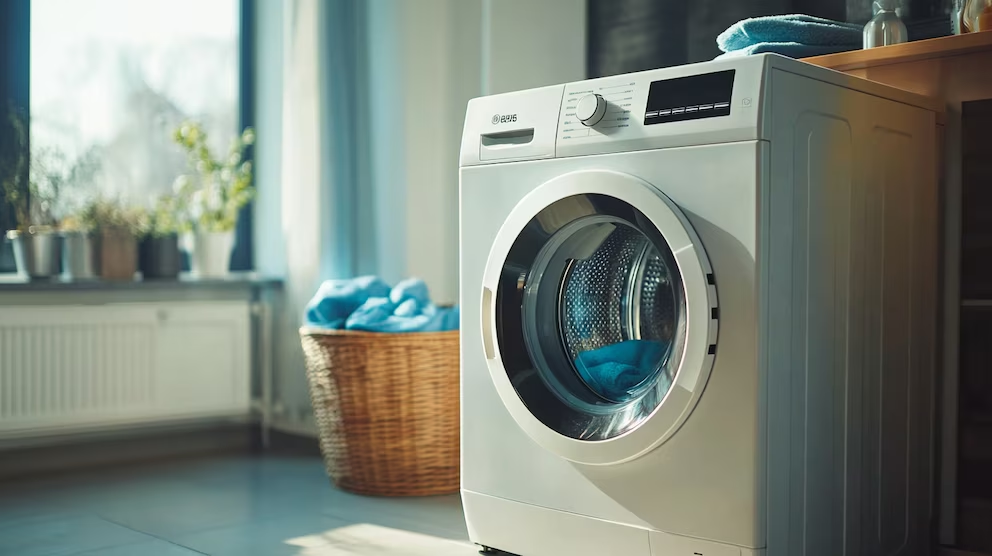
In typical usage patterns, a dryer used three or four times per week can generate a monthly electricity cost that exceeds refrigerators, televisions and even many air conditioning systems in moderate climates. Each drying cycle requires heating, air circulation and mechanical motion at the same time. That combination creates a surge in energy demand. In contrast, modern refrigerators are built to cycle efficiently, reducing their peak load even though they never turn fully off.
North American energy agencies emphasize that this pattern becomes clearer when households track real consumption instead of guessing. Smart meters and digital billing systems show sharp spikes whenever a dryer runs. Those spikes often represent the largest single appliance event in a household’s weekly energy profile. Energy advisors note that many families underestimate dryers because they associate energy waste with duration, not intensity.
Asian research institutes studying residential efficiency add another layer. In dense urban housing, dryers are often shared among multiple users, multiplying their impact. In warmer regions, people dry clothes outdoors, reducing dryer dependence. In cooler or humid regions, dryers become essential, increasing their dominance in energy statistics. This shows that geography and culture influence which appliance becomes the main energy burden.
Other appliances still matter. Dishwashers, washing machines and electric ovens also consume significant energy, especially because they involve heating water or air. However, their cycles are often shorter or less intense than those of dryers. Televisions, laptops and lighting systems consume relatively little power per hour compared to heavy mechanical and heating devices. Even when used daily, their cumulative cost usually remains below that of dryers in comparable homes.
Energy specialists also warn about hidden contributors such as standby consumption. Many devices draw electricity even when not actively used. Individually, these amounts are small. Collectively, they can form a noticeable share of a household’s bill. Still, even when standby losses are added together, they rarely surpass the total energy used by repeated high power dryer cycles.
Public policy discussions increasingly focus on appliance efficiency labeling. Governments promote clear ratings so consumers can compare energy demand before buying. High efficiency dryers can reduce consumption significantly, but they still remain among the most demanding appliances in absolute terms. Experts recommend combining efficient models with behavioral change, such as drying full loads instead of small batches and using lower heat settings when possible.
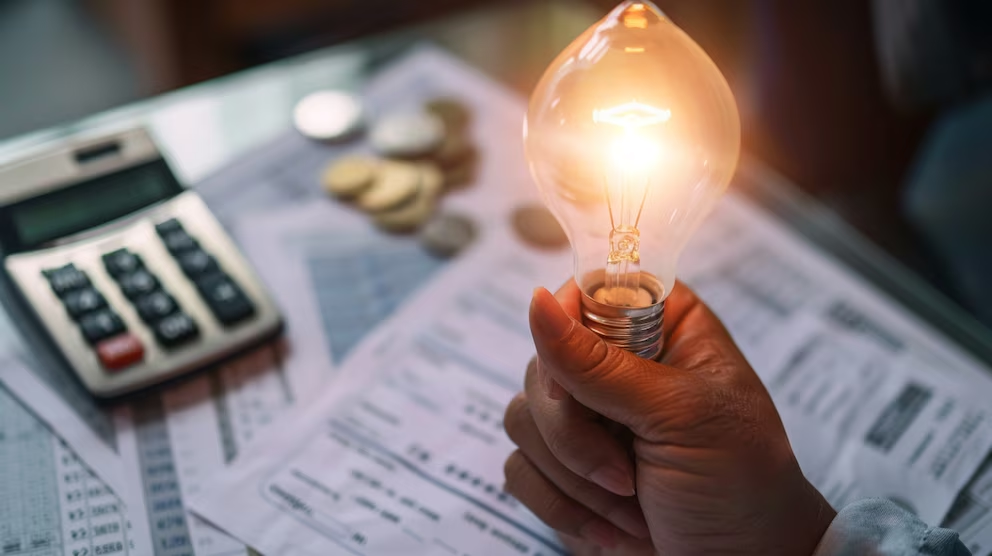
From a psychological view, energy behavior follows routine more than calculation. People repeat what feels normal. Laundry is part of weekly rhythm, so its cost fades into background noise. Yet when households consciously reduce dryer use, many report noticeable drops in their electricity bills. This confirms that perception, not reality, often guides energy habits.
The dryer’s dominance does not mean other appliances are harmless. It means that priorities must be adjusted. Reducing one dryer cycle per week can save more energy than turning off lights for hours. Strategy matters more than sacrifice. Energy saving is not about doing everything less, but about doing the most expensive actions more wisely.
Understanding real energy use is a form of domestic power. When families know where electricity truly goes, they can choose better without feeling deprived. The biggest enemy of efficiency is not technology, but illusion. The dryer teaches that lesson quietly, every time it hums.
Cada silencio habla. / Every silence speaks.