

 Phoenix 24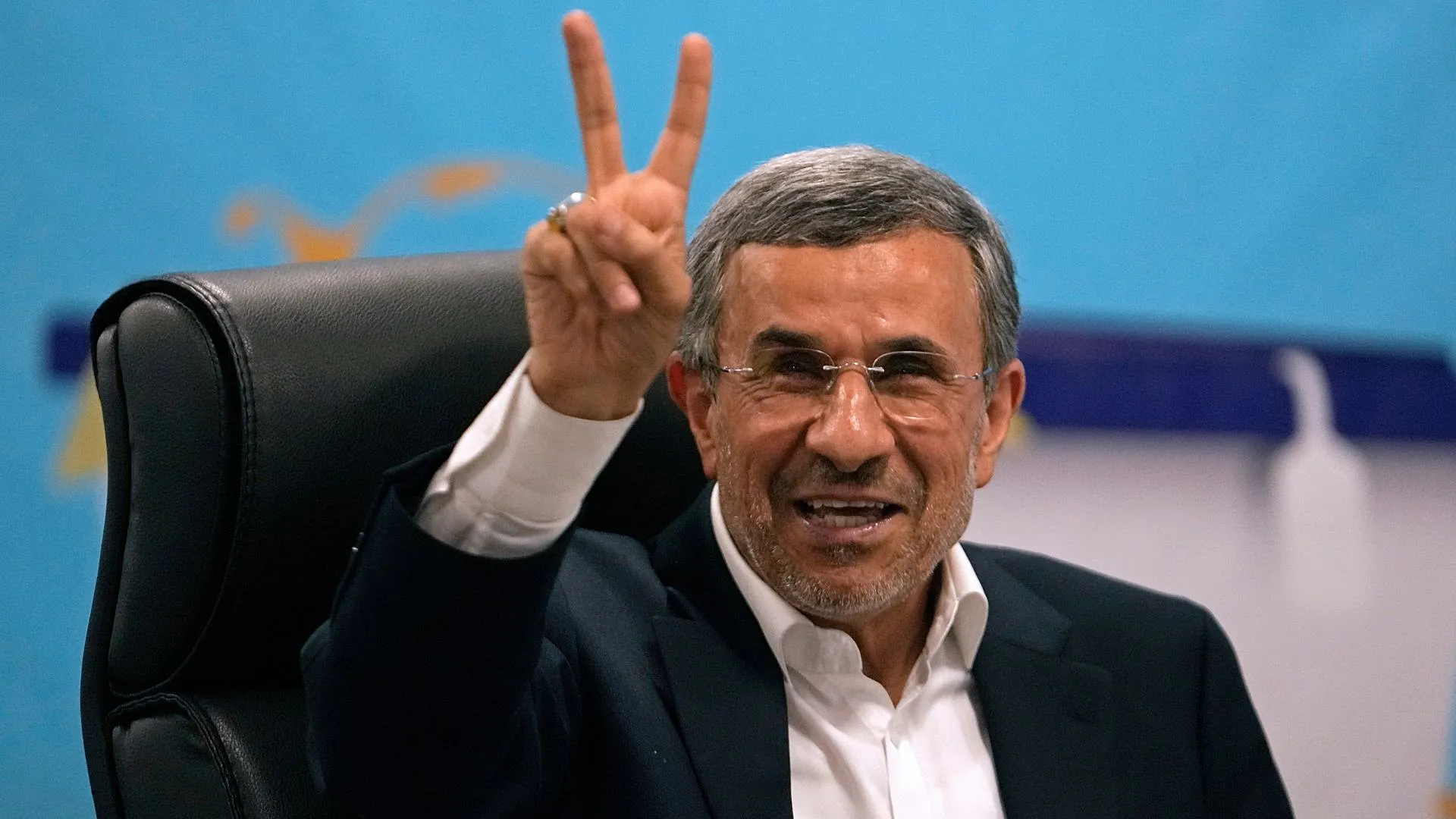
Regime change always returns as strategic uncertainty.
Washington, May 2026. The reported idea that the United States and Israel considered Mahmoud Ahmadinejad as a possible figure in Iran’s political transition exposes one of the most dangerous contradictions of regime-change strategy: the temptation to use yesterday’s radical as tomorrow’s stabilizer. What appears at first as an intelligence maneuver is, in reality, a window into the uncertainty surrounding any post-Khamenei scenario inside the Islamic Republic.
Ahmadinejad is not a neutral actor in Iran’s modern political memory. His presidency was marked by confrontation with the West, inflammatory rhetoric against Israel, nuclear escalation and a populist style that helped harden Iran’s international image. Yet his later rupture with the clerical establishment, his exclusion from presidential races and his friction with the Guardian Council turned him into an ambiguous figure: not a reformist, not a Western ally, but a disruptive insider with residual symbolic capital.
That ambiguity may explain why strategic planners reportedly viewed him as useful. In fractured states, external powers often seek figures who can break internal coalitions, mobilize discontent or create an illusion of continuity after a rupture at the top. But Iran is not an empty board. Its institutions, military networks, clerical factions and nationalist reflexes make any externally designed transition volatile, especially when the proposed figure carries the ideological weight of Ahmadinejad.
The deeper problem is not only the name involved, but the doctrine behind it. The episode suggests that Washington and Tel Aviv were not merely thinking about military pressure, but about political engineering after military disruption. That moves the Iran war into a more complex category, where airstrikes, covert influence, leadership scenarios and narrative control become parts of the same battlefield.
For Israel, the attraction of such a maneuver would be tactical: weaken the Islamic Republic by exploiting its internal fractures. For the United States, the temptation would be strategic: avoid a chaotic vacuum by identifying a figure with enough domestic recognition to absorb the shock. But both calculations risk underestimating Iranian nationalism, which has historically reacted against foreign intervention even when large segments of society oppose the ruling elite.
The Ahmadinejad option therefore reveals less about confidence than anxiety. It suggests that the architects of pressure against Tehran understand the danger of collapse without replacement, but may still be reaching for instruments that reproduce the same instability they seek to manage. In that sense, the story is not only about a former president. It is about the recurring illusion that external power can redesign political legitimacy inside a wounded state.
The visible and the hidden, in context. / Lo visible y lo oculto, en contexto.