

 Phoenix 24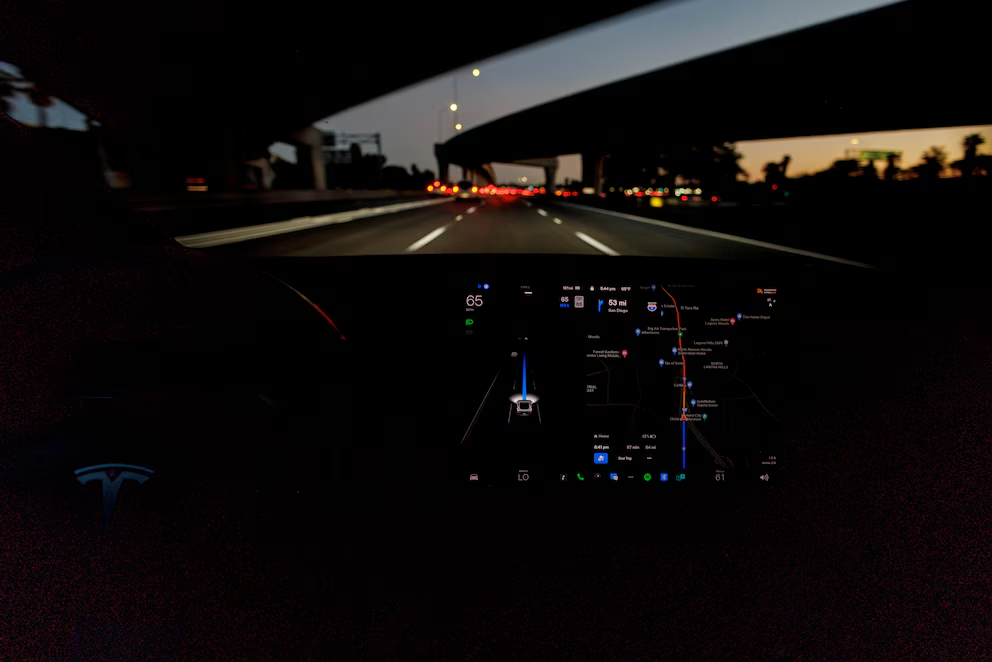
The battle over autonomous driving is becoming a regulatory test for the European Union.
Brussels, Belgium
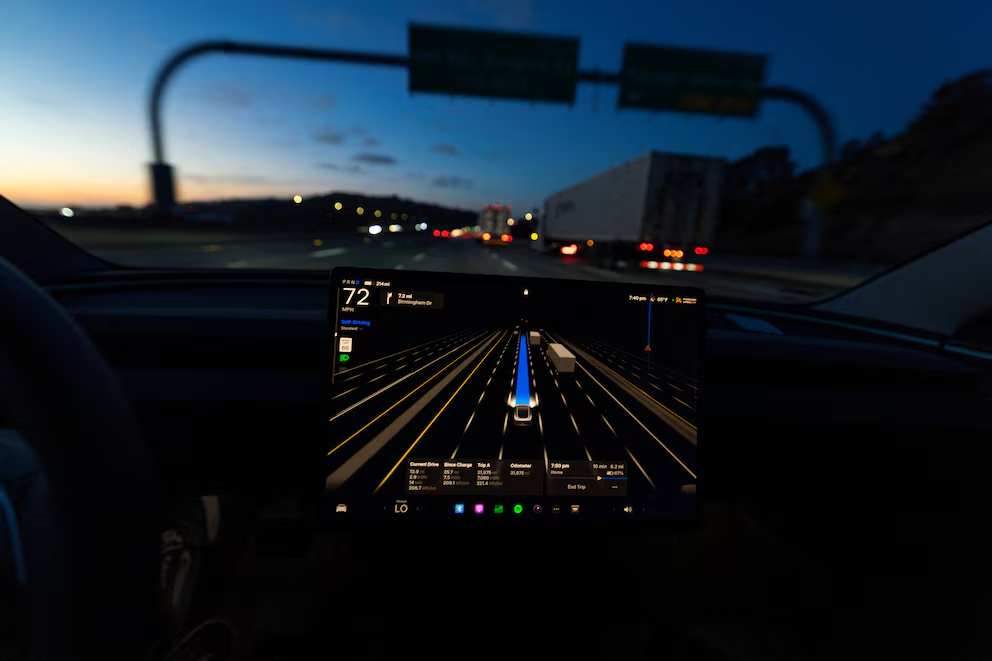
Tesla is intensifying efforts to expand its Full Self-Driving technology across Europe as national regulators gradually open the door to the company’s advanced driver-assistance system. Despite its name, the technology does not make vehicles fully autonomous. Drivers must remain attentive and ready to intervene, a distinction that has become central to the regulatory debate surrounding its approval.
The Netherlands provided an important breakthrough by backing the system earlier this year, creating a regulatory reference point for other European countries. Belgium, Croatia, Slovenia and several additional states have since moved toward allowing the technology, while Slovakia is expected to join them. Germany has also expressed support for faster approval across the European Union, although technical and liability issues remain under discussion.
Tesla’s broader objective is an EU-wide authorization rather than a fragmented market in which approval differs from one country to another. That goal matters commercially because Europe has become increasingly important to the company’s vehicle business at a time when competition from Chinese electric-car manufacturers is intensifying. Expanding software-based driving assistance could give Tesla another way to differentiate its vehicles beyond batteries, range and price.
The regulatory dispute, however, remains complex. Safety researchers have questioned some of the evidence used to support Tesla’s claims, arguing that measures such as braking behavior or horn use cannot substitute for direct crash and fatality data. Another controversial issue involves the system’s ability under some configurations to tolerate speeds above posted limits, a feature that has generated objections from several European countries.
Tesla has attempted to respond to part of that criticism by proposing a different name for the technology in Europe. “Tesla Assisted Driving” would more clearly communicate that the system supports the driver rather than replacing the human behind the wheel. The potential rebranding reflects a wider challenge facing the autonomous-vehicle industry: technological capability is advancing faster than public understanding, legal definitions and regulatory frameworks.
The debate is therefore no longer only about Tesla. Europe is being forced to define how much autonomy should be permitted, what evidence manufacturers must provide and who carries responsibility when software participates directly in driving decisions. Those questions will shape the competitive environment for every company developing advanced mobility systems.
Tesla may be pushing for regulatory access, but Europe is simultaneously writing the rules for the next generation of mobility.
Autonomy begins with software, but legitimacy begins with trust.