

 Phoenix 24
In celebrity culture, denial often arrives after the algorithm has already won.
Rhode Island, April 2026. The latest rumor surrounding Taylor Swift and Travis Kelce did not reveal a secret wedding plan so much as expose the mechanics of modern celebrity speculation. Reports claiming that the couple would marry on June 13 at the Ocean House in Rhode Island were publicly undercut after celebrity planner Tara Guérard stated that she is handling a different wedding at that venue on that date and that Swift is not the bride. Separate entertainment coverage likewise treated the supposed date and venue as effectively debunked.
What matters here is not only that the rumor appears false. It is that the story spread with the force of plausible fantasy, drawing energy from Swift’s connection to Rhode Island, the symbolic appeal of the number 13 in her public mythology, and the public’s fixation on turning high visibility romance into scheduled destiny. The rumor gained traction after a wedding planning platform circulated the claim, illustrating how adjacent lifestyle media can now operate as accelerants of celebrity misinformation rather than neutral observers of it.
This episode also reveals how little confirmation is required for a wedding narrative to harden online. Swift and Kelce have kept details of their private life tightly controlled, and recent reporting emphasized that family members are not sharing plans publicly. Kylie Kelce, speaking on her podcast days earlier, pushed back sharply against repeated questions about the wedding and made clear that such information is private and not for public consumption.
That privacy gap is precisely what sustains the machine. In the absence of verified details, rumor becomes content, speculation becomes community activity, and denial becomes merely the final stage of a profitable cycle. The modern celebrity ecosystem does not need certainty to generate engagement. It only needs enough symbolic material for audiences to project a narrative onto famous people who have become larger than ordinary chronology. Rhode Island, summer, Swift, Kelce, a wedding venue, and a meaningful date were more than enough to manufacture temporary belief.
There is also a structural lesson beneath the gossip. Celebrity culture now rewards anticipatory fiction, stories not about what has happened, but about what audiences want to believe is about to happen. The wedding rumor fit that template perfectly. It offered a clean, emotionally satisfying script around one of the most marketable couples in global entertainment and sports, and it did so in a form that could circulate faster than verification. Once that happens, correction rarely erases the original impact. It merely becomes the next content beat in the same spectacle.
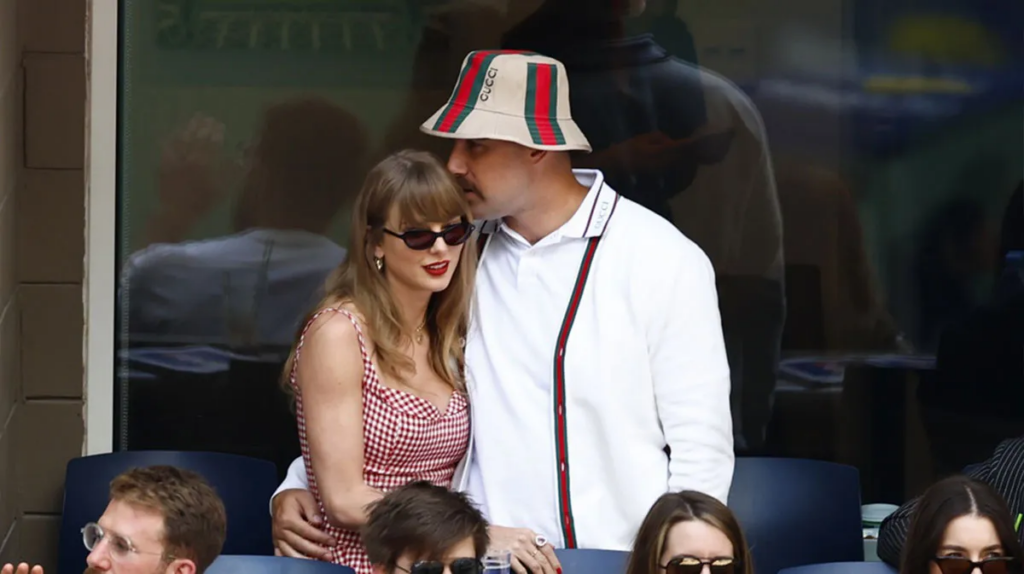
What collapsed in Rhode Island, then, was not just a false wedding date. It was another reminder that celebrity narratives are now built in real time by a volatile mix of branding, lifestyle media, fan desire, and algorithmic repetition. The wedding may or may not happen quietly later. But this particular version of it was less a plan than a projection, and like many projections in the digital age, it traveled far because it was emotionally tidy long before it was factually sound.
Detrás de cada dato, hay una intención. Detrás de cada silencio, una estructura.
Behind every data point, there is an intention. Behind every silence, a structure.