

 Phoenix 24
The alien myth becomes cinema’s mirror of human curiosity
Los Angeles, United States | June 2026
Steven Spielberg’s return to the UFO universe with Revelation Day reconnects one of cinema’s most influential directors with a theme that has shaped his career for decades: the encounter between humanity and the unknown. His latest comments, including a playful reflection on what he would say to an alien, reinforce the emotional tone that has long distinguished his science fiction from colder visions of extraterrestrial contact.
Spielberg’s relationship with alien stories has never depended only on spectacle. From wonder to fear, from childhood imagination to collective anxiety, his films have often treated the unknown as a way to examine human vulnerability. The alien is rarely just an external presence; it becomes a mirror of what societies hope, fear and fail to understand about themselves.

The cultural power of UFO narratives lies in that ambiguity. They combine science, myth, technology, religion, conspiracy and entertainment. In an era marked by artificial intelligence, geopolitical instability and renewed public interest in unexplained aerial phenomena, Spielberg’s return to the subject arrives at a moment when audiences are once again asking what lies beyond the limits of official knowledge.
For Hollywood, Revelation Day also signals the durability of high-concept cinema built around mystery. While streaming platforms have fragmented attention, the UFO genre still carries theatrical force because it offers scale, suspense and existential imagination. It invites audiences not only to watch, but to wonder.
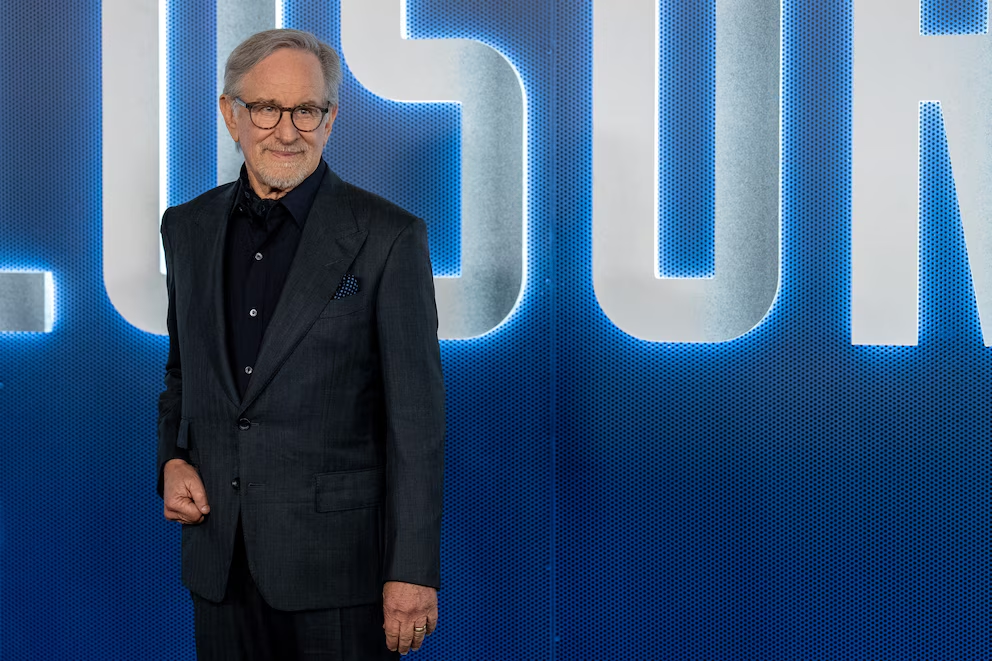
Spielberg’s humor about speaking to an alien matters because it softens the cosmic anxiety around the subject. His best work has often balanced awe with intimacy, making the extraordinary feel emotionally accessible. That sensibility may once again define how the film approaches contact, revelation and the fragile human desire to be understood.
The return to UFOs is therefore more than a nostalgic gesture. It is a reminder that cinema remains one of the few spaces where modern societies can collectively confront the unknown without needing immediate answers.
Where the unknown enters the screen, humanity begins to recognize itself.
Donde lo desconocido entra en la pantalla, la humanidad comienza a reconocerse.