

 Phoenix 24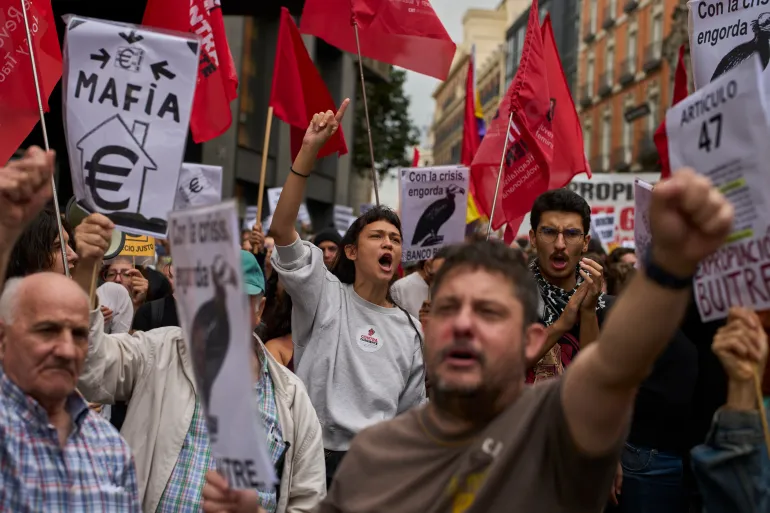
Her death has turned one eviction into a national symbol.
Madrid, Spain
Spain has paid tribute to Maricarmen, the elderly woman whose eviction became a powerful symbol of the country’s housing crisis. Demonstrations and public acts of remembrance have transformed her case from an individual dispute into a broader expression of anger over access to affordable housing. Her death has intensified a debate already shaped by rising rents, evictions, shortages and growing pressure on vulnerable tenants. What began with one apartment has now become part of a national argument about dignity, property and social protection.
Maricarmen’s case resonated because it condensed several of Spain’s housing tensions into a single story. Elderly tenants, low-income households and younger generations increasingly face a market where housing costs consume a larger share of household income. Her eviction gave that structural problem a human face and made it harder to discuss housing only through statistics, regulations or market indicators. Public reaction showed how quickly a private conflict can become a collective grievance when it reflects a broader social condition.
The tributes have also increased political pressure. Housing organizations, unions and social movements are demanding stronger protections against evictions, greater investment in public housing and tighter regulation of rental markets. At the same time, property owners and market-oriented groups continue to warn that excessive intervention could reduce supply and discourage investment. The confrontation therefore remains unresolved because the central question is not whether Spain has a housing problem, but how the costs of solving it should be distributed.
Her story also reveals the symbolic power of individual cases in shaping public policy. Governments often respond to structural crises through budgets, legal reforms and administrative programs, but public opinion frequently shifts when those abstractions become attached to a recognizable person. Maricarmen became that person for Spain’s housing debate. Her image helped transform housing from an economic issue into a question of social legitimacy.
The challenge now is whether public emotion will produce durable policy or fade as the political cycle moves forward. Spain still faces shortages, affordability pressures and territorial differences that cannot be resolved through a single measure. Yet the social meaning of the debate has changed. Housing is increasingly being treated not only as an asset or commodity, but as an essential condition of security and belonging.
Maricarmen’s legacy may therefore extend far beyond the protests held in her name. Her case has become a reminder that housing policy is ultimately measured not only in prices and supply, but in the lives disrupted when a home is lost.
A house is property. A home is something more.